
Stucco Contractor Near Me: A London Homeowner's Guide
If you've typed "stucco contractor near me" into a search engine, there's a good chance you're picturing the textured exterior finish common on American and Mediterranean homes. In the UK, the closest equivalent is external rendering — sometimes still called stucco by older generations or by homeowners who've lived abroad. Whether you need a full render on a Victorian terrace, repairs to a cracked Edwardian facade, or internal skimming to match, finding the right contractor matters far more than the label used to describe the finish.
London Plastering Service has spent over 20 years working across all 32 London boroughs, from period conversions in Islington to modern new-builds in Croydon, and we're regularly asked to quote for "stucco" jobs that turn out to be render repairs, pebbledash removal, or smooth K Rend finishes. This guide explains what you actually need, what a good contractor looks like, and how to get moving quickly.
What Does "Stucco" Mean in a UK Context?
In the United States, stucco typically refers to a cement, sand and lime mixture applied in multiple coats over a wire lath, finished with a textured or smooth topcoat. In the UK, we generally call this external rendering, and it comes in several forms:
- Traditional sand and cement render — the most common finish on older London properties, often painted or pebbledashed
- Lime render — used on period and listed buildings where breathability is essential
- Monocouche render — a modern, through-coloured single-layer system popular on newer developments
- K Rend and silicone renders — low-maintenance, weatherproof finishes increasingly used on refurbishments
So when someone searches for a stucco contractor near me, they usually need a rendering and external plastering specialist. This is a distinct skill set from internal plastering, though many established firms — including ours — offer both under one roof, which is genuinely useful when you're matching internal skims to external repairs or replacing a whole wall section.
What to Look For in a Plasterer or Render Contractor
Not every plasterer is comfortable working externally, and not every renderer does neat internal skim work. Before hiring anyone, check the following:
Relevant experience with your property type. A Victorian terrace with solid brick walls behaves very differently to a 1990s cavity-wall semi or a modern flat with insulated render systems. Ask whether the contractor has worked on similar properties in your area.
Portfolio and reviews. Genuine before-and-after photos and honest customer reviews tell you more than a slick website. Look for consistency across multiple jobs, not just one polished example.
Clear, written quotes. A reputable contractor should be able to explain what's included — materials, labour, scaffolding if needed, and any preparation work — in writing before starting.
Local knowledge. Someone who regularly works across London boroughs will understand common issues like damp solid walls, period cornicing, and the quirks of converted flats where you may need permission from a freeholder or management company before external work begins.
Availability and communication. A contractor who responds promptly, turns up when promised, and communicates clearly during the job is often more valuable than the cheapest quote on the table.
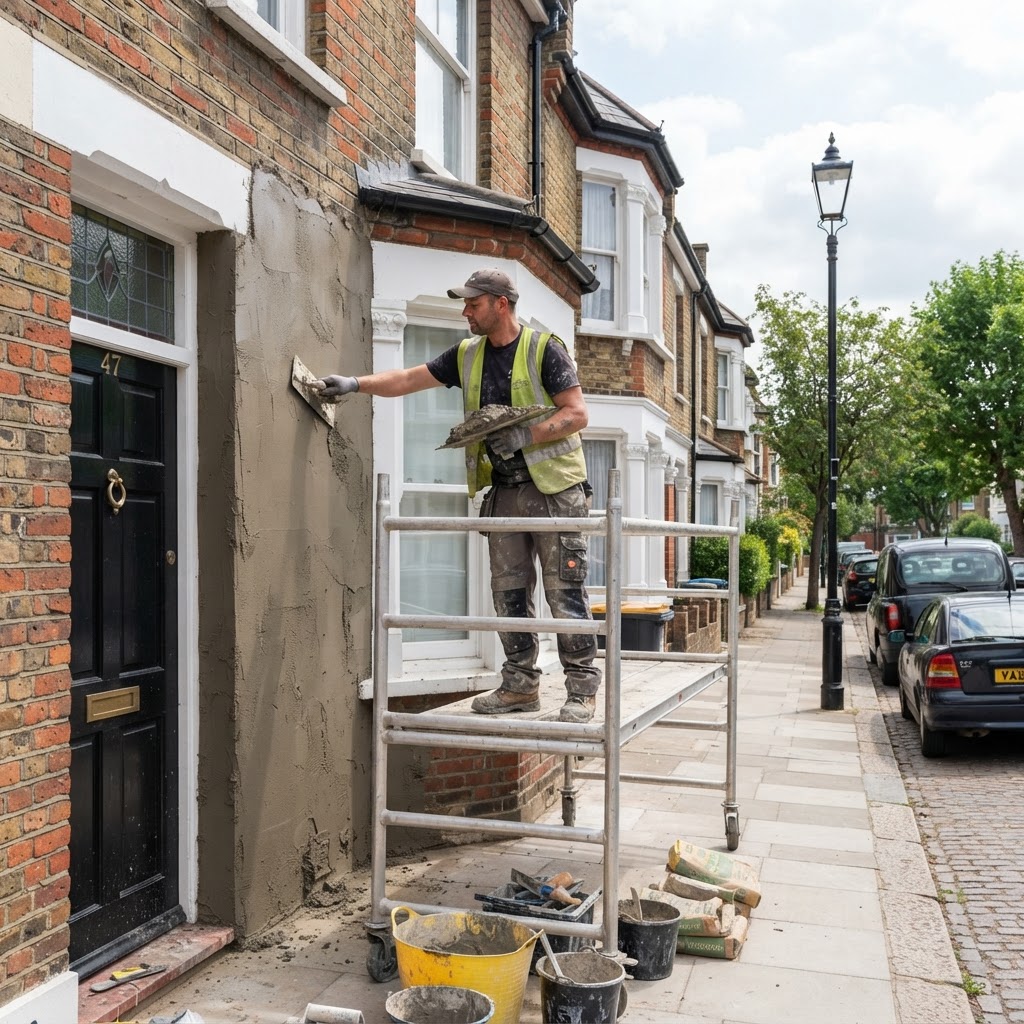
![A plasterer applying render to the exterior wall of a London terraced house using(/PlasterersNearMe) a hawk and trowel]
Types of Plastering and Rendering Work Covered
A versatile local plastering team should be able to handle a broad range of work, including:
- Wall skimming — a thin finishing coat applied over plasterboard or existing plaster to create a smooth, paint-ready surface
- Ceiling plastering and ceiling plaster repair, including patching cracks, water-damaged sections, or full re-skims
- Patch repairs for holes, cracks, and damaged corners
- Full room re-skims and full house replastering for renovations or after removing old artex
- Artex covering and removal, common in properties built or renovated between the 1970s and 1990s
- Dry lining and plasterboarding for new partitions or upgrading old lath-and-plaster walls
- External plastering and rendering, including sand and cement, monocouche, and lime systems
- Lime plastering for period and conservation-sensitive properties
- Decorative plastering and cornicing to restore or replicate original period details
- Insulated plasterboard installation to improve thermal performance on external walls
If your search for a stucco contractor near me is really about repairing or refreshing an exterior wall, it's worth asking specifically about external plastering and rendering experience, since this work involves different mixes, weather considerations, and drying times compared to internal skimming.
Questions to Ask Before Hiring
Before committing to any quote, it's worth asking:
- Have you worked on properties like mine before (Victorian, Edwardian, converted flat, new-build)?
- What type of render or plaster mix do you recommend for my walls, and why?
- How long will the job take from start to finish, including drying time between coats?
- Will you need scaffolding or access equipment, and is that included in the quote?
- What preparation work is needed before plastering or rendering can begin?
- Do you offer a written quote, and what happens if unexpected issues (like damp or unstable brickwork) are found once work starts?
Asking these questions upfront avoids surprises later and helps you compare quotes on a like-for-like basis rather than just by headline price.
Common Plastering Jobs in London Properties
London's housing stock is unusually varied, and the plastering work needed often depends on the era and construction of the building.
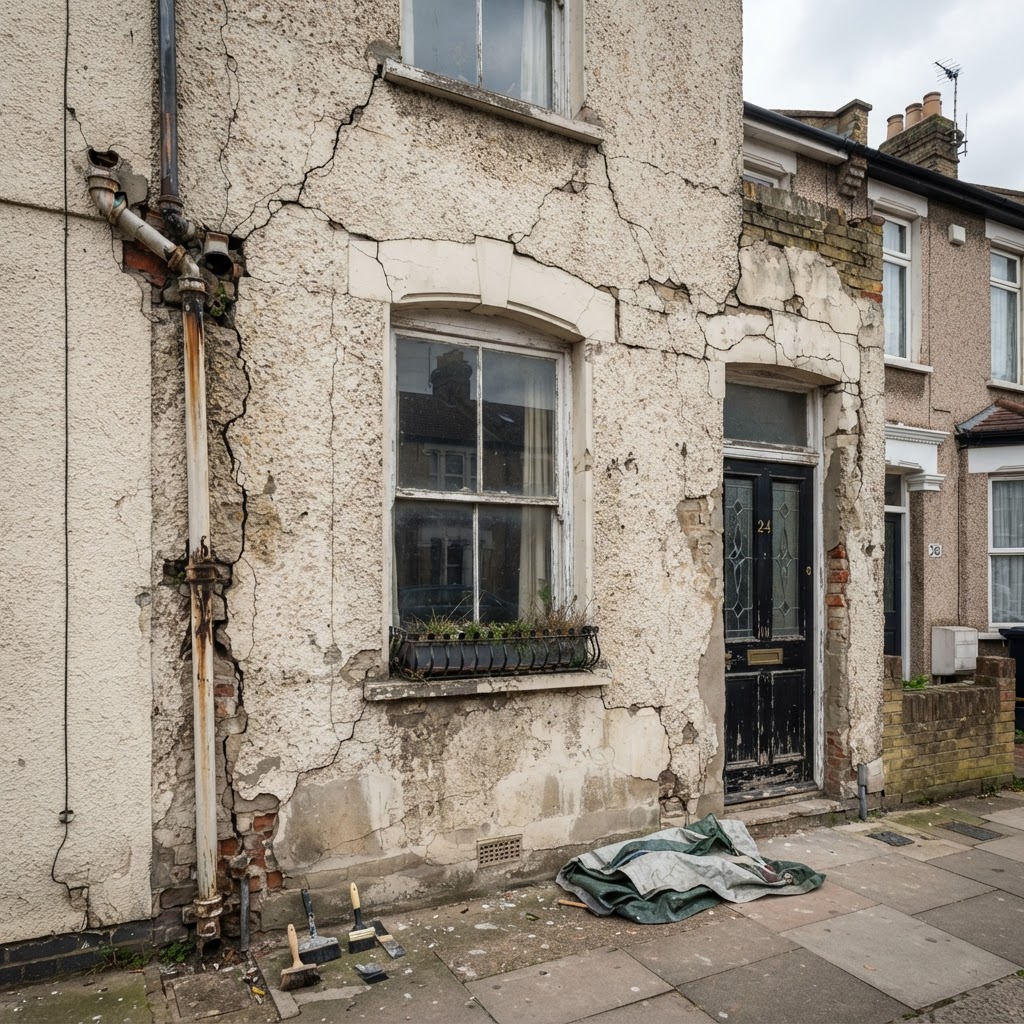
Victorian and Edwardian terraces frequently have solid brick walls with lime-based plaster underneath later layers of gypsum. Cracking, damp staining, and crumbling render are common, particularly on the front and side elevations exposed to weather. Original cornicing and ceiling roses often need careful decorative plastering to repair rather than replace.
Converted flats in period buildings sometimes have a mix of original lath-and-plaster ceilings and more modern plasterboard partitions, which can create uneven surfaces and inconsistent finishes that need skilled patching and skimming to blend seamlessly.
1960s–1990s properties are the most likely to still have artex ceilings and walls, which many homeowners now want covered or removed for a smoother, more contemporary look.
New-build flats and modern extensions typically use plasterboard with a skim finish throughout, and any external render is usually a modern lightweight system rather than traditional sand and cement.
Understanding which category your property falls into helps a contractor recommend the right materials and approach, whether that's a lime render for breathability on an older solid wall or a modern monocouche system on a rendered extension.
When You Need a Professional Plasterer
Small cosmetic touch-ups — filling a nail hole or a hairline crack — are within reach of a confident DIYer. However, most plastering and rendering work benefits from professional skill because:
- Getting a smooth, even finish on walls and ceilings takes years of trowel practice; uneven skimming shows up badly once painted
- External rendering must be mixed and applied correctly for weather resistance — get it wrong and you risk cracking, water ingress, or premature failure
- Larger repairs often reveal underlying issues like damp, unstable plaster, or structural movement that need proper diagnosis
- Working at height on external walls requires appropriate access equipment and safe working practices
- Matching old plaster or render (especially lime-based systems on period homes) requires specific material knowledge
If you're dealing with anything beyond a very small patch, it's generally worth calling in a professional rather than risking a costly redo.
How Long Does the Work Take?
Timescales vary considerably depending on scope. A small patch repair or ceiling crack might be completed within a day, including drying time. A full room re-skim typically takes a few days to allow proper drying between coats before decorating. External rendering on a full house elevation is a bigger undertaking — preparation, scaffolding, multiple coats, and weather-dependent drying times mean this can take anywhere from several days to a couple of weeks. A good contractor will give you a realistic timeframe once they've assessed the property in person, rather than a generic estimate.
How Much Does It Cost?
Costs depend heavily on the size of the job, the type of finish (lime render costs more than standard sand and cement, for example), the condition of the existing surface, and whether access equipment like scaffolding is needed. Rather than relying on rough online estimates, the most reliable way to understand pricing for your specific property is to get a tailored quote based on an actual assessment of the walls or ceilings involved.
How to Get a Quote Quickly
Getting a reliable quote doesn't need to be a slow process. London Plastering Service offers free quotes, often within 60 minutes of getting in touch, covering everything from small patch repairs to full external rendering projects. To get started:
- Call +44 7460 892826 or email office@londonplasteringservice.com with details of the work and, ideally, a few photos
- Describe your property type (terrace, semi, flat, new-build) and the area affected
- We'll arrange a convenient time to assess the job and provide a written quote
- Once agreed, we'll schedule the work at a time that suits you
We're available Monday to Friday, 7am to 7pm, and Saturday 8am to 5pm, and we cover all 32 London boroughs, so wherever you're based — from Barnet to Bromley, Ealing to Enfield — there's a local team ready to help.
Why Choose a Family-Run, Local Team
After 20+ years in the trade and a 4.9-star reputation, we've learned that homeowners value straightforward communication, tidy work, and a fair price as much as technical skill. Being family-run means the same standards apply whether you're booking a small ceiling repair or a full house replastering and external render project. Because we work across the whole of London, we've encountered pretty much every property type and plastering challenge the city has to offer, from damp solid-wall Victorian terraces to insulated render systems on contemporary new-builds.
FAQ About Hiring a Plasterer or Render Contractor
What is a stucco contractor near me, and when do I need one? In the UK, this search usually means you need an external rendering or plastering specialist to repair, refresh, or apply a new finish to the outside of your property. You'd typically need one if you have cracked, crumbling, or water-damaged render, or if you're renovating and want to update the exterior finish.
How much does external rendering or plastering cost in London? Costs vary widely based on the size of the area, the type of render or plaster used, and the condition of the existing surface. The most accurate way to get a figure is to request a free, tailored quote based on your specific property.
How long does rendering or plastering work take? Small repairs can often be completed in a day, while full room re-skims typically take a few days to allow proper drying. Full external rendering on a house elevation can take anywhere from several days to a couple of weeks depending on scope, weather, and access requirements.
Can I do this myself, or should I hire a professional? Very small cosmetic repairs may be manageable for a confident DIYer, but achieving a smooth, durable finish — especially externally — takes considerable skill and the right materials. For anything beyond minor patching, hiring a professional reduces the risk of cracking, poor adhesion, or an uneven finish.
Do you cover my area of London? Yes, London Plastering Service covers all 32 London boroughs, so whether you're in central London, the suburbs, or outer boroughs, we can arrange an assessment and quote.
How quickly can you start work once I get a quote? We aim to provide free quotes quickly, often within 60 minutes of enquiry, and we'll work with you to schedule the job at a time that suits your availability, subject to the scope of work and any necessary preparation.
If you're ready to move forward, get in touch with London Plastering Service on +44 7460 892826 or email office@londonplasteringservice.com for a fast, free quote on your rendering or plastering project anywhere in London.
Related Plastering Guides & Services
Need Professional Plastering?
Get expert plastering services in London. Free quotes within 60 minutes.