
Lime Plasterer Near Me: A London Homeowner's Guide
If you've typed "lime plasterer near me" into a search bar, you're probably staring at a crumbling Victorian ceiling, a damp solid-wall property, or a period home that's been flagged by a surveyor as needing traditional materials rather than modern gypsum plaster. Lime plastering is a specialist skill, and not every general plasterer will have the experience or the right materials on hand. This guide explains what lime plastering actually involves, when you genuinely need it, what it costs, and how to find a reliable specialist covering your part of London.
What Is Lime Plastering and When Do You Need It?
Lime plaster is a traditional, breathable material made from lime putty or hydraulic lime mixed with sand and sometimes natural fibres such as hair. Unlike modern gypsum-based plaster, lime plaster allows moisture to pass through the wall rather than trapping it, which makes it the correct choice for solid brick or stone walls in older properties — particularly pre-1920s Victorian terraces, Georgian townhouses, and some Edwardian semis that were never built with a cavity or damp-proof membrane.
You typically need a lime plasterer when:
- Your property has solid walls (no cavity) and is showing signs of damp trapped behind modern gypsum or cement render
- A conservation officer or heritage consultant has specified lime as a requirement for listed buildings or properties in a conservation area
- You're repairing or matching existing historic lime plaster, cornicing, or decorative mouldings
- Previous non-breathable repairs (cement render, gypsum skim) are causing blown plaster, damp patches, or peeling paint
- You're renovating a period property and want to retain its original breathable wall build-up
If your home is a modern flat, a post-war build, or has cavity walls with plasterboard already fitted, you almost certainly don't need lime plaster — a standard gypsum skim will be quicker, cheaper, and entirely appropriate. Getting this distinction right at the outset saves money and avoids specifying the wrong material for the job.
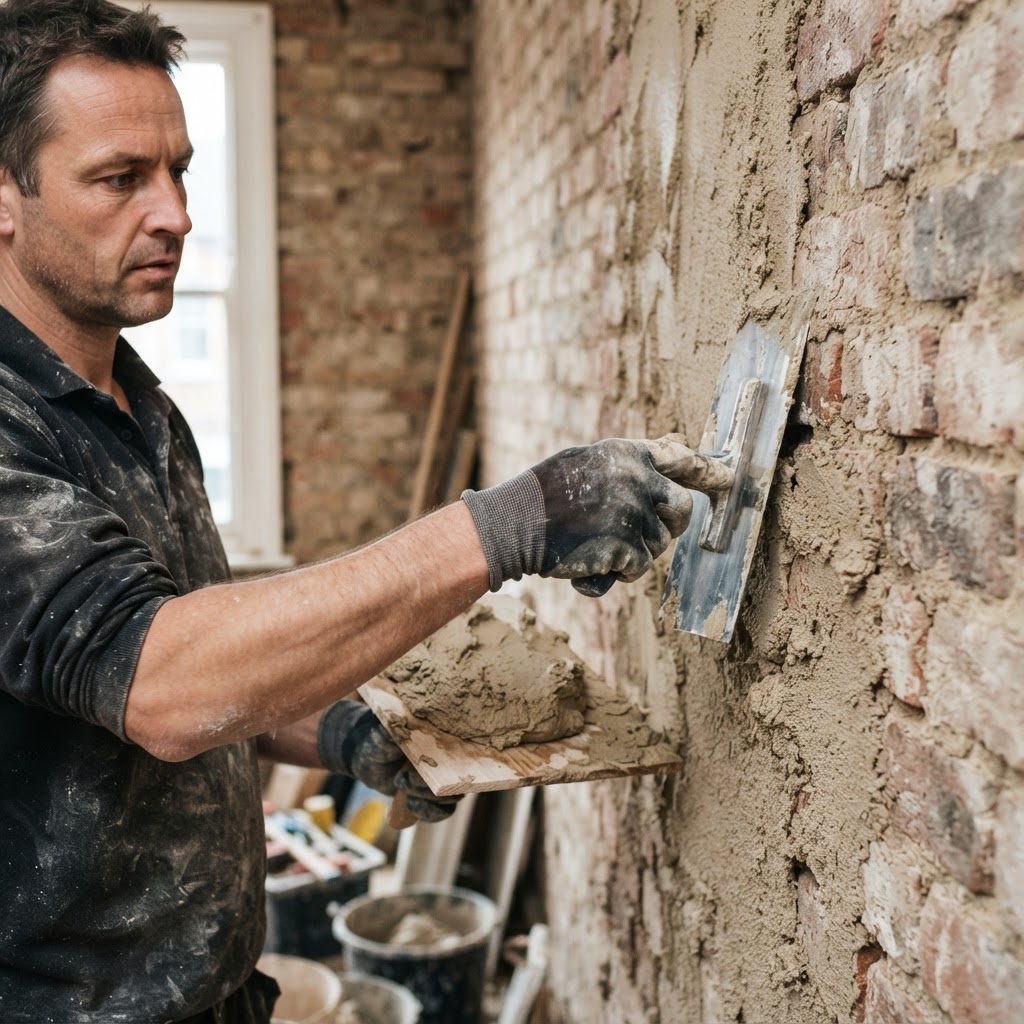
![Close-up of a plasterer applying traditional lime plaster with a hawk and trowel to an exposed brick wall in a period London property(/blog/east-london-plasterers-reliable-same-week-service-experts)]
What to Look for in a Plasterer
Not every plasterer who advertises online has genuine lime experience. Lime work behaves very differently from gypsum — it dries slower, needs different curing conditions, and requires a proper understanding of coat build-up (typically a scratch coat, a floating coat, and a finishing coat). When vetting a plasterer, look for:
- Demonstrable lime experience — ask to see photos of completed lime jobs, ideally in similar period properties
- Knowledge of breathable systems — they should be able to explain why lime is being used and how it interacts with the existing wall build-up
- Local reviews and a genuine track record — a company rated 4.9 stars with a long history of work across London boroughs is a good sign
- Clear, itemised written quotes — avoid vague verbal estimates
- Appropriate materials on hand — lime putty, hydraulic lime, and hair reinforcement aren't always stocked by general plasterers, so ask what products they intend to use
- Realistic drying time expectations — anyone promising a same-day lime finish and paint job is cutting corners
A good plasterer near me search should also filter for someone who covers your specific borough reliably, rather than a company that only occasionally travels to your area. London Plastering Service covers all 32 London boroughs, so scheduling and travel time are rarely an issue.
Types of Plastering Work Covered
While lime plastering is a specialist niche, most reputable plastering companies — including ours — offer the full range of plastering services so you can get everything sorted through one trusted contractor rather than juggling multiple tradespeople. Typical services include:
- Wall skimming (gypsum, for modern walls)
- Lime plastering (for period and solid-wall properties)
- Ceiling plastering and full ceiling replacement
- Plaster repairs and patch repairs for cracks, holes, and damage
- Full room re-skims and full house replastering
- Artex covering and removal
- Dry lining and plasterboarding
- Rendering (external)
- Decorative plastering and cornicing (particularly relevant for period properties with original mouldings)
- Insulated plasterboard for improving thermal performance
If your ceiling has suffered a leak, you may also need water damaged ceiling repair rather than a straightforward re-skim — a competent plasterer will assess whether the plaster has blown, whether the joists or laths behind it need attention, and whether lime or gypsum is the right replacement material given the age of the property.
Questions to Ask Before Hiring
Before you commit to a plasterer, a short conversation can save you a lot of hassle later. Worth asking:
- Have you worked with lime plaster before, and can I see examples? — This filters out generalists who might attempt the job without the right technique.
- What products will you use — lime putty or hydraulic lime, and why? — Different jobs call for different lime types depending on exposure, existing substrate, and drying conditions.
- How many coats will the job need, and how long between coats? — Lime typically needs several days between coats, unlike gypsum's same-day turnaround.
- What's the total drying time before decorating? — Lime plaster can take weeks to fully cure depending on thickness, ventilation, and weather, so get a realistic timeframe.
- Is the quote itemised and does it include materials, labour, and any making-good work? — Written quotes protect both parties.
- Can you provide references or recent local jobs? — A company that's been trusted across London boroughs for 20+ years should have plenty to point to.
We've covered this topic in more depth in our guide on questions to ask a plasterer before hiring, which is worth a read if you want a fuller checklist before signing off any work.
Common Plastering Jobs in London Properties
London's housing stock is a mix of eras, and the plastering needs vary considerably:
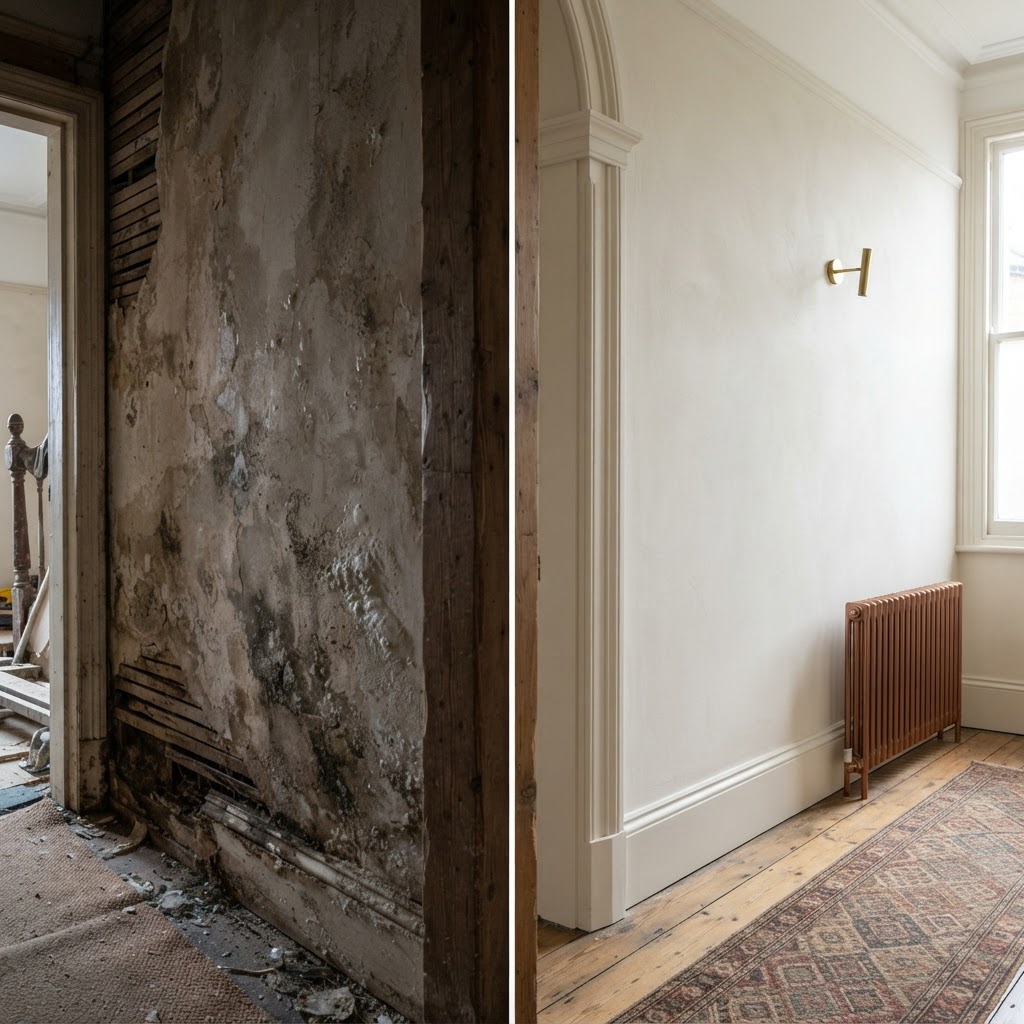
Victorian terraces — Often solid brick walls with original lime plaster underneath layers of later gypsum or cement patches. When damp appears, it's frequently because a non-breathable repair has trapped moisture. Reinstating lime in these sections is usually the correct long-term fix.
Edwardian semis — Similar solid-wall construction to Victorian properties, often with decorative cornicing and ceiling roses that need careful lime or traditional plaster repair rather than a modern skim that would lose the detail.
Modern flats and new-builds — Typically plasterboard and gypsum skim throughout, with no lime requirement at all. Common jobs here are patch repairs, ceiling cracks from settlement, and re-skimming after removing a wall or fitting new sockets.
Converted period properties — A common London scenario where a house has been split into flats. These often have a mix of original lime-plastered walls and later plasterboard partitions, so the plasterer needs to identify which material is behind each wall before quoting.
Basement conversions — Increasingly common in London, and often requiring lime or specialist breathable systems given the higher moisture risk below ground level.
When You Need a Professional Plasterer
Small cosmetic touch-ups — a nail hole, a hairline crack — are reasonable DIY jobs with a tub of ready-mixed filler. Lime plastering is not. It requires:
- Correct mixing ratios and curing conditions that affect the plaster's long-term strength and breathability
- Experience reading the wall's condition — is the damp coming from the plaster system itself, or from an external source like a failed gutter or rising damp that needs addressing first
- Skill applying multiple coats to the correct thickness without cracking or slumping
- An understanding of how lime interacts with existing masonry, especially in listed or conservation-area properties where the wrong material could cause long-term damage
If you attempt lime plastering without experience, the most common outcomes are poor adhesion, cracking as it dries too fast, or an uneven finish that doesn't match the surrounding wall. Given the cost of materials and the time investment, it's rarely worth the risk compared to hiring a professional plasterer from the outset.
How Much Does a Lime Plasterer Cost in London?
Costs vary depending on the size of the area, the number of coats required, whether decorative work like cornicing needs reinstating, and the condition of the substrate underneath. Lime plastering generally costs more than standard gypsum skimming because the materials are more specialist and the labour takes longer — multiple coats with drying time in between, rather than a single-day gypsum finish. Rather than quoting a fixed figure that may not reflect your specific property, the most reliable approach is to get a written, itemised quote based on a site visit or clear photos and measurements. This also lets the plasterer confirm whether lime is actually necessary or whether a cheaper gypsum-based approach would suffice.
How Long Does It Take?
A small patch of lime plaster repair might be completed within a day or two of work, but the overall project timeline is usually longer than gypsum because of drying time between coats — often several days per coat depending on ventilation, humidity, and wall thickness. A full room may take a week or more from start to a paint-ready finish. Your plasterer should give you a realistic schedule upfront rather than rushing coats, which risks cracking and premature failure.
How to Get a Quote Quickly
Getting an accurate quote doesn't need to be slow or complicated. The quickest route is usually to:
- Take clear photos of the affected walls or ceilings, including any visible damp, cracking, or damage
- Note the approximate room dimensions and the age/construction of the property
- Mention if you know or suspect lime is required (e.g. a surveyor has flagged it, or the property is listed/in a conservation area)
- Call or email with this information for a fast, informed response
London Plastering Service has been trusted across all 32 London boroughs for over 20 years, with a 4.9-star reputation built on reliable, well-executed work — including specialist lime plastering for period properties. Whether you need a single wall repaired or a full room replastered, call us on +44 7460 892826 or email office@londonplasteringservice.com. We're available Monday to Friday, 7am–7pm, and Saturday 8am–5pm, and we can usually arrange a site visit or quote quickly depending on your location and the scale of the job.
FAQ
What is lime plastering and when is it needed? Lime plastering is a traditional, breathable plaster system typically used on solid-wall period properties like Victorian and Edwardian homes, or where a conservation requirement specifies it. It's needed when the existing wall build-up requires moisture to pass through rather than be trapped, which modern gypsum plaster doesn't allow.
How much does a lime plasterer cost in London? Costs depend on the size of the area, number of coats, and condition of the substrate, and lime work generally costs more than standard gypsum skimming due to the specialist materials and longer application process. The most accurate way to get a figure is a written quote based on photos or a site visit.
How long does lime plastering take? Expect a longer timeline than gypsum plastering because lime needs several days of drying time between each coat, depending on humidity and ventilation. A full room can take a week or more from start to a paint-ready finish.
Can I do lime plastering myself, or should I hire a professional? Lime plastering requires specific mixing, application, and curing knowledge that's difficult to get right without experience, and mistakes can lead to cracking, poor adhesion, or an uneven finish. For anything beyond very minor patch repairs, it's best left to a professional plasterer.
Do you cover my area of London? Yes, London Plastering Service covers all 32 London boroughs, so wherever your property is located, we can arrange a visit and quote.
How quickly can a plasterer start work? This depends on the scale of the job and current scheduling, but our team aims to respond quickly to enquiries and can often arrange a site visit or quote within a short timeframe. Call +44 7460 892826 to check current availability for your area.
Related Plastering Guides & Services
Need Professional Plastering?
Get expert plastering services in London. Free quotes within 60 minutes.