
Lime Plasterers Near Me: A London Homeowner's Guide
If you've typed "lime plasterers near me" into a search engine, chances are you own or manage a period property — a Victorian terrace, Edwardian semi, or older solid-wall building — and you've been told (or discovered the hard way) that modern gypsum plaster isn't the right material for it. Lime plastering is a traditional, breathable system that works with older buildings rather than against them, and finding a plasterer who actually understands the material matters just as much as finding one who's simply local.
This guide covers what lime plastering is, when it's genuinely needed, what it costs, how long it takes, and exactly what to check before you hire someone. As London Plastering Service has spent 20+ years working across all 32 London boroughs, we've seen firsthand how many period properties suffer from damp, cracking, and trapped moisture caused by the wrong plaster being applied decades ago — and how much of a difference it makes when the job is done properly.
What Is Lime Plastering and When Is It Needed?
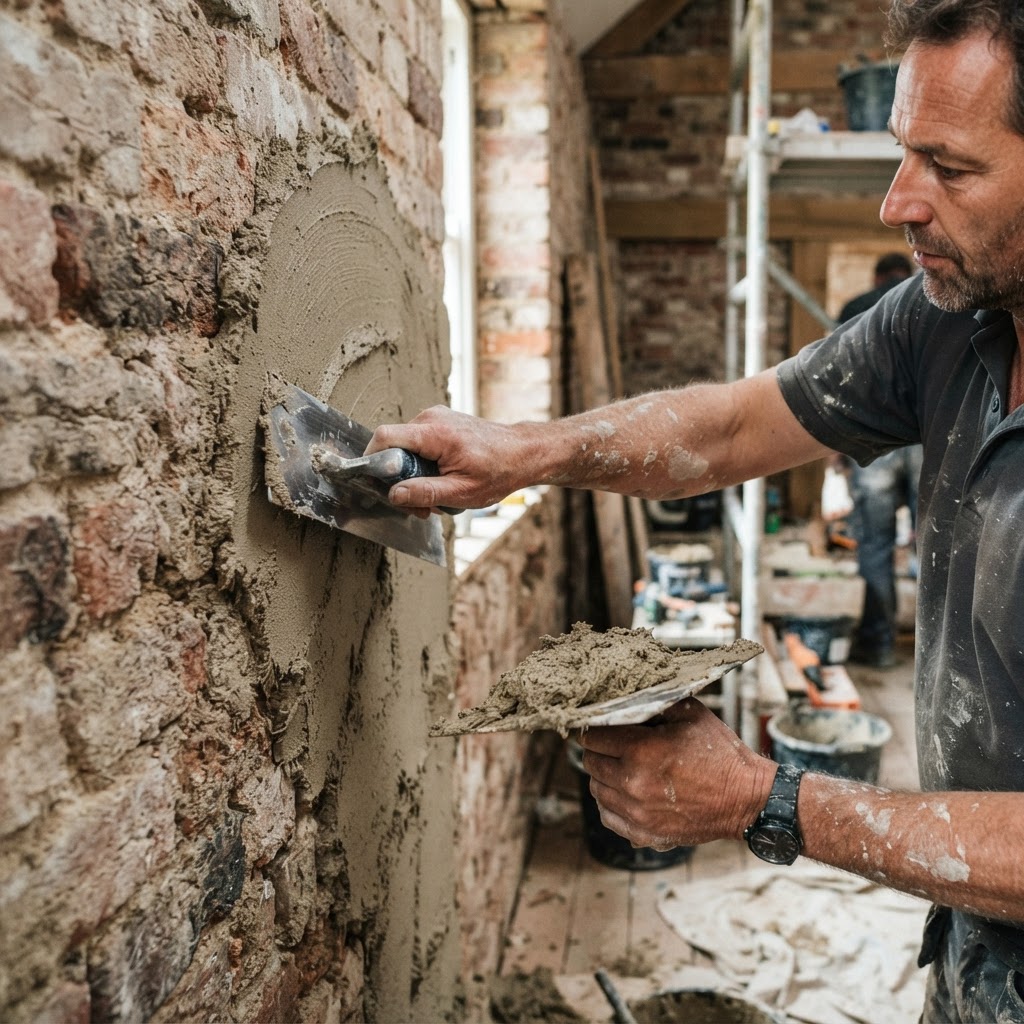
Lime plaster is a traditional building material made from lime putty or hydraulic lime mixed with sand (and sometimes animal hair for reinforcement in older applications). Unlike modern gypsum plaster, it's breathable — meaning it allows moisture to pass through the wall and evaporate, rather than trapping it inside.
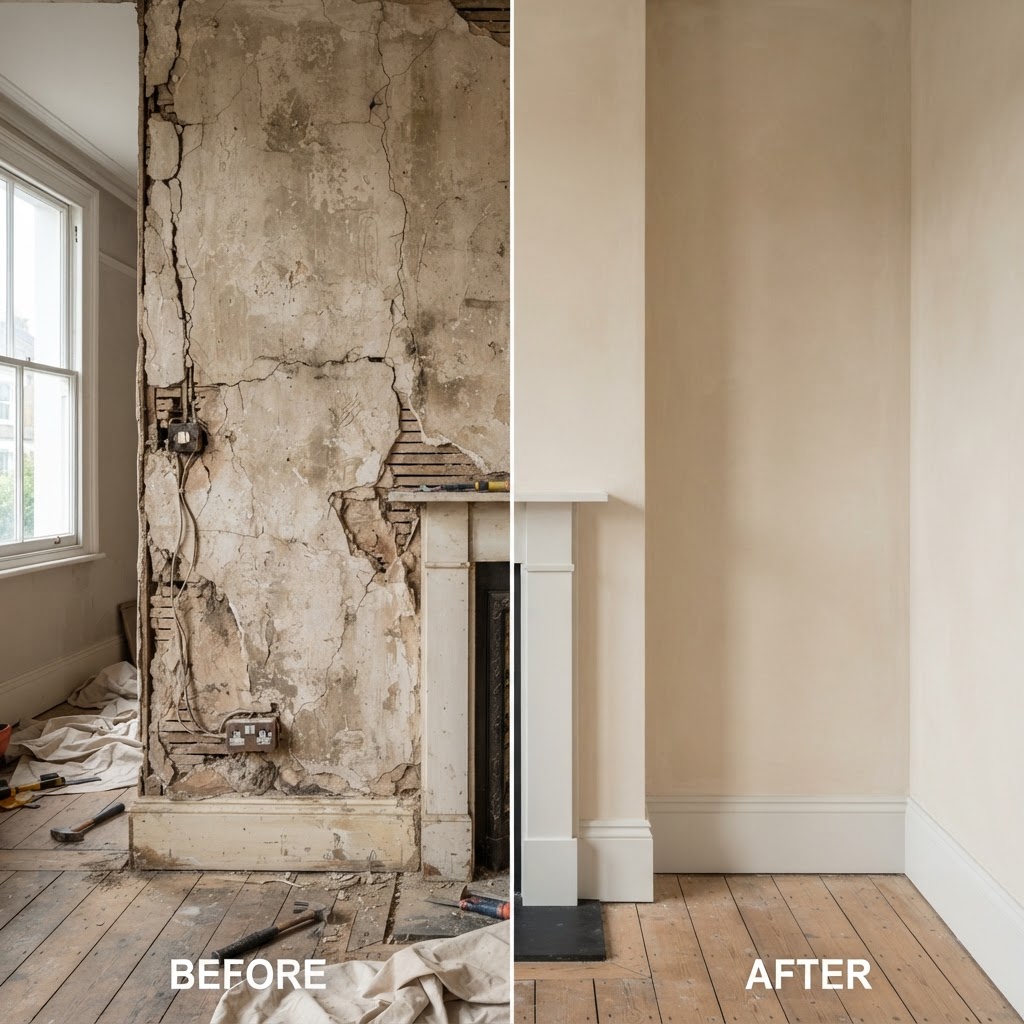
This matters enormously for solid-wall properties built before the 1920s, which typically don't have a cavity wall or damp-proof membrane. These walls are designed to let moisture move through them naturally. When gypsum plaster or cement render is applied to a solid wall, it can trap damp inside the structure, leading to cracking, blown plaster, mould, and in some cases damage to timber joists and lintels.
You likely need lime plastering if:
- You own a period property with solid brick or stone walls (pre-1920s in most cases)
- You're seeing damp patches, blown or crumbling plaster, or salt staining on internal walls
- You're restoring original lath and plaster ceilings or walls
- You have a listed building or property in a conservation area where breathable materials are often preferred
- Previous cement-based repairs have failed or made damp problems worse
If your property is a modern flat or a house built with cavity walls, standard gypsum skimming and plasterboarding is usually the right choice — lime isn't necessary and isn't typically used for that kind of construction.
What to Look For in a Lime Plasterer
Not every general plasterer works regularly with lime, and it's a genuinely different skill from gypsum skimming. Lime sets by carbonation (reacting slowly with air) rather than drying quickly like gypsum, and it needs to be applied and cured correctly across multiple coats. When you're comparing lime plasterers near you, look for:
- Demonstrable experience with lime, not just general plastering — ask to see photos of previous lime work, ideally on properties similar to yours
- Understanding of breathability principles — a good lime plasterer should be able to explain why lime is right for your walls and how it interacts with damp
- Knowledge of traditional and modern lime mixes — including lime putty, NHL (natural hydraulic lime), and haired lime for ceilings
- Experience with period features — cornicing, ceiling roses, and decorative plasterwork often need matching or restoring alongside general lime work
- A methodical approach to preparation — removing failed cement render or gypsum, and understanding what's underneath before applying new material
- Clear communication about timescales — lime plastering takes longer to cure than gypsum, and a rushed job is usually a poor one
A plasterer who's vague about curing times or pushes for a fast turnaround on a lime job is often a red flag — it suggests limited hands-on experience with the material.
Types of Plastering Work Covered
While lime plastering is a specialist service, most reputable London plastering companies — including ours — offer the full range of plastering work, which is useful if your project involves more than one type of surface. Typical services include:
- Lime plastering for period and listed properties, damp walls, and heritage restoration
- Wall skimming — a fresh, smooth gypsum finish for standard modern walls
- Ceiling plastering, including lath and plaster ceiling repairs
- Plaster repairs and patch repairs for cracks, holes, or damaged sections
- Full room re-skims when a whole room needs refreshing
- Full house replastering for major renovations or after damp remediation
- Artex covering to remove or skim over dated textured ceilings
- Dry lining and plasterboarding for new stud walls or loft conversions
- Rendering for external walls
- Decorative plastering and cornicing to restore or replicate period detailing
- Insulated plasterboard for improving thermal performance
Many London properties end up needing a mix of these — for example, lime plastering on the original solid-wall sections combined with standard skimming on a later extension.
Questions to Ask Before Hiring
Before committing to a plasterer, it's worth asking:
- How much lime plastering have you done, and can I see examples or references?
- What's causing the problem in my walls, and how will lime plaster address it?
- How many coats will be applied, and how long will each need to cure?
- Will you remove existing cement render or gypsum first, and how will you assess what's underneath?
- What preparation is needed before you start (e.g. addressing the source of damp, not just the symptom)?
- What's included in your quote — materials, labour, waste removal, dust protection?
- How soon can you start, and how long will the whole job take?
A plasterer confident in their lime experience should answer these clearly and without hesitation. If answers feel vague, it's worth getting a second opinion before proceeding.
Common Plastering Jobs in London Properties
London's housing stock is a real mix, and the plastering needs vary significantly by property type:
Victorian and Edwardian terraces — These solid-wall properties are the most common candidates for lime plastering. Common issues include blown plaster from previous cement or gypsum repairs, damp at skirting level, and cracked ceilings on original lath and plaster.
Georgian and listed buildings — Often require lime plastering as standard, sometimes with conservation officer input on materials and finish, particularly for decorative cornicing or ceiling roses.
1930s semis — Some have solid walls, others cavity construction, so it's worth having a plasterer assess which material is appropriate rather than assuming.
Modern flats and new-builds — Typically plasterboard and gypsum skim throughout; lime plastering usually isn't relevant here, though rendering may still apply externally.
Converted properties — Loft conversions and extensions often mix old and new construction, meaning a single project might need both lime plastering on original walls and standard plasterboarding on new stud walls.
When You Need a Professional Plasterer
Lime plastering is not a straightforward DIY job, and it's one of the areas where hiring a professional really pays off. The material behaves differently to modern plaster — it needs specific mixing ratios, proper coat thicknesses, controlled drying conditions, and an understanding of how it will cure over days and weeks rather than hours. Applying lime incorrectly can lead to cracking, poor adhesion, or a finish that doesn't perform as it should.
You should call in a professional if:
- You're dealing with a period or listed property with solid walls
- There are existing signs of damp, blown plaster, or failed previous repairs
- The job involves ceilings, cornicing, or decorative plasterwork
- You're unsure whether your walls need lime or standard gypsum
- The project is large enough that mistakes would be costly to correct
Small, cosmetic touch-ups on modern gypsum walls are sometimes manageable for a confident DIYer, but lime work — particularly on period properties — is best left to someone with genuine experience in the material.
How Much Does Lime Plastering Cost and How Long Does It Take?
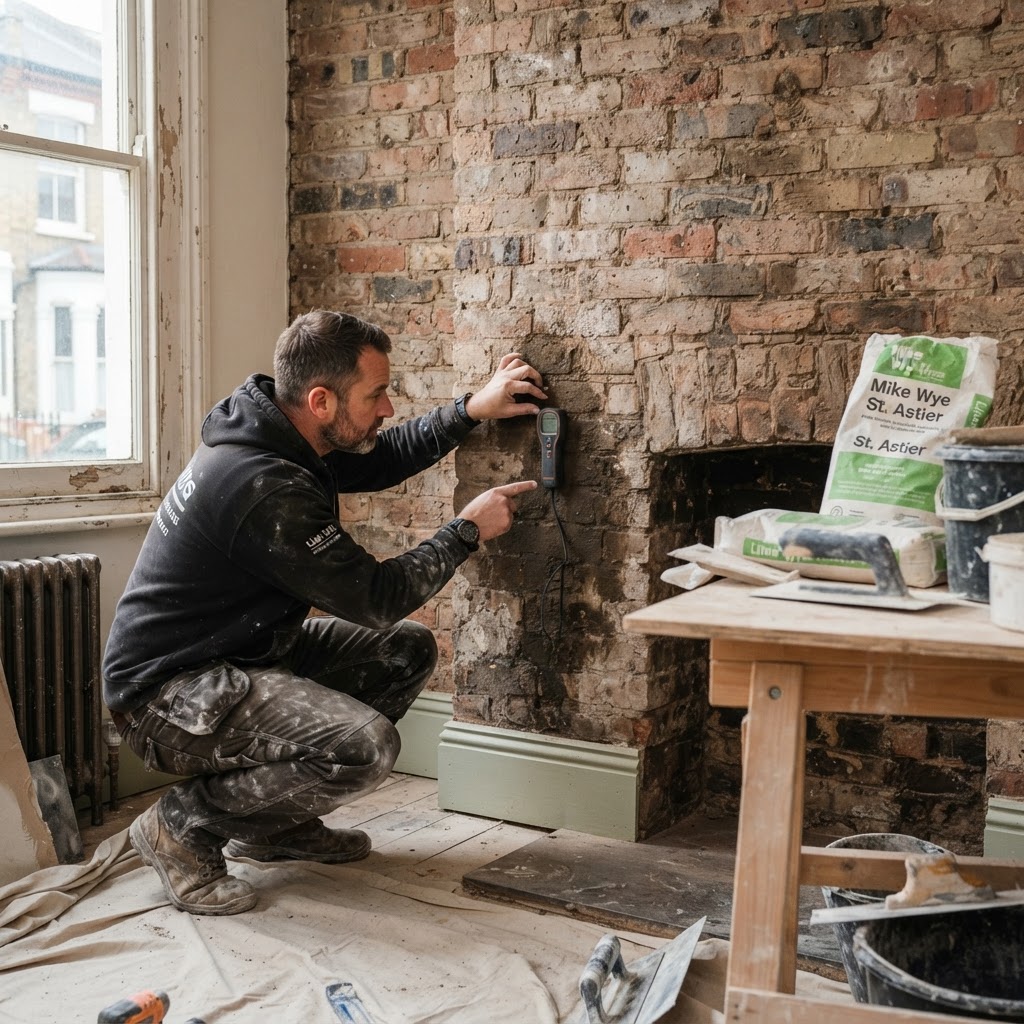
Costs for lime plastering vary depending on the size of the room, the condition of the existing walls, how much preparation and removal of old material is needed, and whether decorative features like cornicing need to be restored. Because lime plastering involves multiple coats with curing time between each, it generally takes longer than a standard gypsum skim — a single room can take several days to a couple of weeks depending on scale and drying conditions, whereas a full house replastering project will take considerably longer.
Rather than estimate a fixed price here, the most reliable way to understand cost and timescale for your specific property is to get an assessment from a plasterer who can see the walls, understand the extent of the damp or damage, and confirm exactly what work is needed.
How to Get a Quote Quickly
Getting a reliable quote doesn't need to be a lengthy process. At London Plastering Service, we offer a free quote within 60 minutes for most enquiries, based on photos, details of the property, and a description of the issue. For lime plastering specifically, we'll want to understand:
- The age and construction type of the property
- Whether there's visible damp, cracking, or previous failed repairs
- The size and number of rooms or walls involved
- Whether decorative plasterwork or cornicing needs restoring
We cover all 32 London boroughs and can typically start work quickly once a quote is agreed. Our team is available Monday to Friday, 7am–7pm, and Saturday, 8am–5pm, so getting in touch fits around your schedule.
Ready to get started? Call us on +44 7460 892826 or email office@londonplasteringservice.com for a free, no-obligation quote. With over 20 years of experience and a 4.9-star rating, our team understands exactly how to assess and treat period properties correctly — whether that's a full lime plastering restoration or a smaller repair.
FAQ
What is lime plastering and when is it needed? Lime plastering is a traditional, breathable plaster system typically used on solid-wall period properties built before the 1920s. It's needed when a property's walls require moisture to pass through and evaporate naturally, rather than being sealed in with modern gypsum or cement, which can trap damp and cause cracking or blown plaster.
How much does lime plastering cost in London? Costs depend on the size of the area, the condition of the existing walls, how much old material needs removing, and whether decorative features need restoring. Because pricing varies significantly by property, the most accurate way to get a figure is through a free quote based on your specific job.
How long does lime plastering take? Lime plastering generally takes longer than standard gypsum skimming because it's applied in multiple coats with curing time needed between each. A single room can take several days to a couple of weeks, while larger projects will take longer depending on scale and conditions.
Can I do lime plastering myself or should I hire a professional? Lime plastering is a specialist skill that behaves very differently from modern gypsum plaster, and mistakes in mixing, application, or curing can lead to poor adhesion or cracking. For period properties, damp issues, or decorative plasterwork, it's best left to an experienced professional rather than attempted as a DIY project.
What should I look for when choosing a lime plasterer? Look for demonstrable lime plastering experience (not just general plastering), examples of previous work on similar properties, a clear explanation of why lime is right for your walls, and realistic timescales that account for proper curing. Vagueness about curing times or pressure to rush the job are red flags.
Do you cover my area of London? Yes — London Plastering Service covers all 32 London boroughs, from Victorian terraces in Hackney and Lewisham to period properties across Richmond, Greenwich, and beyond. Get in touch with your property details for a free quote within 60 minutes.
Related Plastering Guides & Services
Need Professional Plastering?
Get expert plastering services in London. Free quotes within 60 minutes.