

Plasterers in My Area: Finding the Right London Expert
When you search for plasterers in my area, you're usually dealing with something specific: a crack that's spreading across the ceiling, a damp patch that's ruined the wall finish, or a renovation that needs a full re-skim before decorating. You don't want a generic directory listing — you want someone local, available soon, and genuinely skilled at the job you need doing. This guide breaks down exactly what to look for, what different plastering jobs involve, and how to get a straightforward quote without the runaround.
London Plastering Service has been working across all 32 London boroughs for more than 20 years, so we've seen pretty much every type of plastering problem a London property can throw up — from crumbling lath and plaster in a Victorian terrace to artex that needs skimming over in a 1970s semi. Here's what you need to know before you hire.
What to Look For in a Plasterer
Not all plastering work is the same, and not every plasterer has equal experience across every type of job. Before hiring, it's worth checking a few things:
- Local experience: A plasterer who regularly works in your borough will understand the common property types — whether that's Victorian terraces with lath and plaster ceilings, Edwardian semis with decorative cornicing, or modern flats with plasterboard stud walls.
- Portfolio of recent work: Ask to see photos of similar jobs — ceiling plastering, wall skimming, or plasterboard repairs — rather than relying on a generic website gallery.
- Clear, itemised quotes: A reputable plasterer should be able to explain what's included — materials, labour, and any prep work like removing old artex or taking down damaged plasterboard.
- Realistic timescales: Plastering needs proper drying time between coats, so be wary of anyone promising an unrealistically fast turnaround on a large job.
- Tidy, professional approach: Dust sheets, floor protection, and a plan for disposing of old materials are signs of a plasterer who takes the job seriously.
![A professional plasterer in work clothes smoothing a skim coat onto a wall with a trowel in a London home(/PlasterersNearMe)]
Types of Plastering Work Covered
Most local plastering services cover a broad range of jobs, and it helps to know the terminology so you can describe what you need accurately when requesting a quote.
Wall and Ceiling Skimming
Skimming involves applying a thin, smooth finish coat of plaster over plasterboard or an existing plaster surface. It's typically needed after plasterboarding, after removing wallpaper that's damaged the wall beneath, or when refreshing a tired-looking room before decorating.
Plaster and Patch Repairs
Small cracks, holes from removed fixtures, or damage from water ingress usually don't need a full re-skim — a patch repair blends new plaster into the existing surface. This is one of the most commonly requested jobs, especially for fixing cracks in plasterboard around doorways, windows, and ceiling joints where movement is common.
Full Room Re-Skims and House Replastering
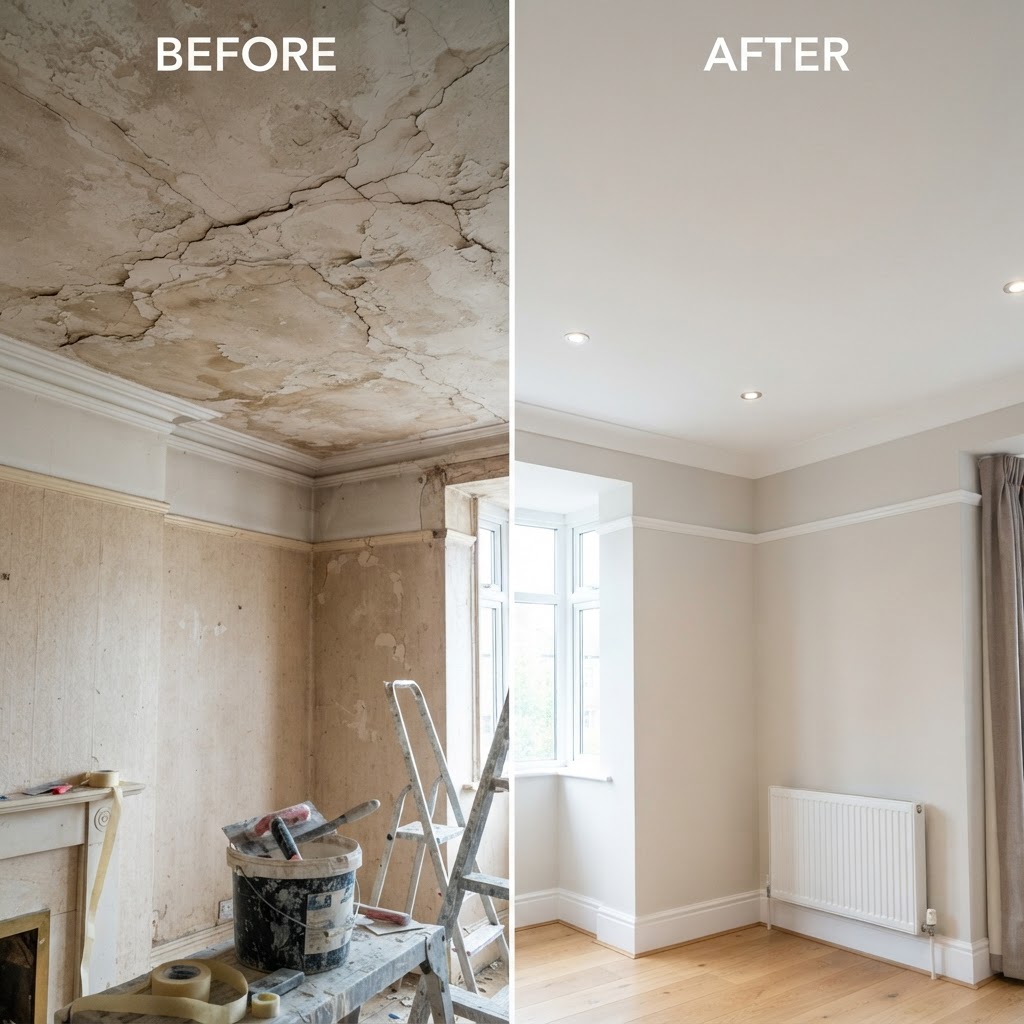
Older properties with deteriorating plaster, or homes undergoing full renovation, often need a complete re-skim of every wall and ceiling, or in some cases full replastering down to the brick or plasterboard.
Artex Covering
Many London properties built or renovated between the 1960s and 1980s still have artex ceilings. Rather than removing it (which can be disruptive), most plasterers can skim directly over artex to create a smooth, modern finish.
Dry Lining and Plasterboarding
This covers fitting plasterboard to stud walls or directly onto masonry, often used in loft conversions, extensions, or when upgrading insulation with insulated plasterboard.
Rendering
External wall finishes, including sand and cement render or modern through-coloured renders, protect brickwork and improve kerb appeal — common on Victorian and Edwardian properties with ageing external finishes.
Lime Plastering
Period properties, particularly those with solid brick or timber-frame construction, often need lime plaster rather than modern gypsum products, as lime allows walls to breathe and reduces the risk of damp problems.
Decorative Plastering and Cornicing
Restoring or replacing ornate cornicing, ceiling roses, and decorative mouldings is a specialist skill often needed in period conversions and listed buildings.
Questions to Ask Before Hiring
Before committing to any plasterer, it's worth asking a handful of direct questions:
- Do you cover my area? Confirm they regularly work in your borough, not just the general London area.
- Can you give me a quote based on photos or a site visit? Most straightforward jobs can be quoted remotely; larger jobs usually need an in-person assessment.
- What preparation is included? Clarify whether removing old plaster, artex, or damaged plasterboard is part of the price.
- How long will drying take before I can decorate? Fresh plaster needs time to dry fully before painting — rushing this often leads to poor results.
- What happens if there's unexpected damage underneath? Ask how they handle situations where, for example, removing old plaster reveals damp or structural issues.
- When can you start? Availability varies, so ask directly rather than assuming.
Common Plastering Jobs in London Properties
London's housing stock is a real mix, and the type of plastering job needed often depends on the property's age and construction.
Victorian terraces frequently have original lath and plaster walls and ceilings that are now over a century old. These can develop cracks, sagging, or bulging as the laths loosen, often requiring patch repairs or, in more severe cases, replacing sections with plasterboard before re-skimming.
Edwardian semis often retain decorative cornicing and ceiling roses that need careful restoration rather than simply being skimmed over, particularly in reception rooms and hallways.
Modern flats and new-build conversions are usually built with plasterboard stud walls, so issues tend to be smaller — hairline cracks at joints, nail pops, or damage from fixing shelving and TV brackets. These jobs typically involve repairing cracks in plasterboard and small patch repairs rather than full re-skims.
Loft conversions and extensions almost always require plasterboarding and skimming as part of the build, often alongside insulated plasterboard to meet building regulations for thermal performance.
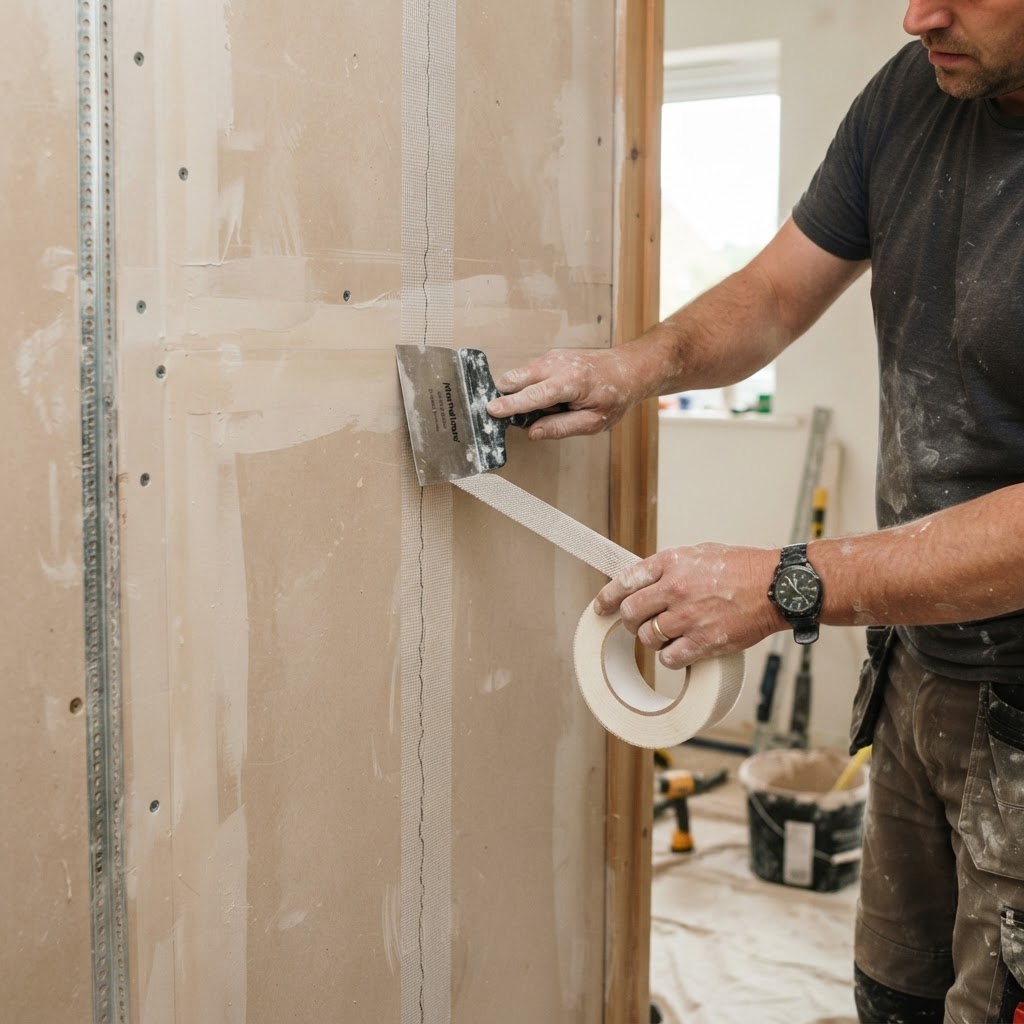
A recurring theme across all property types is fixing cracks in plasterboard — whether that's hairline cracking along ceiling joints caused by seasonal movement, or more noticeable cracks around door frames from thermal expansion. These are usually straightforward for an experienced plasterer to resolve, but the repair method matters: simply filling a crack with standard filler often leads to it reappearing within months, whereas properly scrimming and skimming the area gives a longer-lasting result.
When You Need a Professional Plasterer
Some small jobs — like filling a tiny nail hole — are manageable as a DIY task. But plastering is a skilled trade, and most jobs benefit from professional experience, particularly:
- Any crack wider than a hairline, or cracks that keep reappearing after filling
- Ceiling repairs, where achieving a flat, even finish overhead is far harder than on a wall
- Full room or house replastering, which requires correct mixing ratios, timing between coats, and trowel technique to avoid an uneven finish
- Period properties requiring lime plaster, where using the wrong material can trap moisture and cause long-term damage
- Any job involving plasterboard fitting, since poorly fixed boards lead to visible joints and cracking later on
- Artex removal or covering, particularly in older properties where artex may contain asbestos and should be assessed carefully rather than sanded or disturbed casually
If you're unsure whether a job is DIY-friendly or needs a professional, it's generally worth getting an opinion from an experienced plasterer before starting — a quick assessment can save you from a costly redo.
How to Get a Quote Quickly
Getting a quote shouldn't be complicated. Most reputable local plasterers will:
- Ask you to describe the job or send photos of the area needing work
- Give you an initial estimate based on that information
- Arrange a site visit for larger or more complex jobs to confirm the final price
- Provide a clear breakdown of labour and materials before work starts
London Plastering Service offers free quotes typically within 60 minutes, covering everything from a single crack repair to a full house replastering project. We work across all 32 London boroughs, including areas like Barnet, Bexley, and Brent, so wherever you're based in London, there's a good chance we're already working nearby.
To get started, call us on +44 7460 892826 or email office@londonplasteringservice.com. We're available Monday to Friday, 7am–7pm, and Saturday, 8am–5pm, and we'll talk through your job, give you an honest assessment, and get you a quote without delay.
FAQ About Hiring a Plasterer
What is plastering work and when is it needed? Plastering covers everything from small crack repairs to full wall and ceiling re-skims, plasterboarding, rendering, and decorative work. It's typically needed after renovation work, when damage or cracking appears, or when preparing a room for redecoration to achieve a smooth finish.
How much does hiring a local plasterer cost in London? Costs vary significantly depending on the size and type of job — a small patch repair costs far less than a full room re-skim or house replastering project. The best way to get an accurate figure is to request a free quote based on photos or a site visit, as pricing depends on the specific property and scope of work.
How long does a typical plastering job take? Small patch repairs can often be completed within a day, while full room re-skims typically take a few days once drying time between coats is factored in. Larger projects, such as full house replastering, can take longer depending on the number of rooms and the condition of the existing plaster.
Can I repair plasterboard cracks myself, or should I hire a professional? Small hairline cracks can sometimes be filled as a DIY job, but cracks that keep reappearing usually need proper scrimming and skimming to fix permanently. For a lasting result, particularly on ceilings or larger cracks, it's generally worth hiring a professional plasterer.
How quickly can a plasterer start work on my property? Availability depends on the plasterer and the size of the job, but many local plastering services, including London Plastering Service, can often arrange quotes within 60 minutes and schedule work promptly once the scope is agreed.
Do you cover my area of London? Yes — London Plastering Service covers all 32 London boroughs, from central areas to outer boroughs like Barnet, Bexley, and Brent, so wherever you're located in London, we can help.
If you've been searching for plasterers in my area and need a reliable, experienced team who know London properties inside out, get in touch today. Call +44 7460 892826 or email office@londonplasteringservice.com for a free quote, typically delivered within 60 minutes.
Related Plastering Guides & Services
Need Professional Plastering?
Get expert plastering services in London. Free quotes within 60 minutes.