
Gyprocker Near Me: Finding a Trusted Plasterboard Expert
If you've typed "gyprocker near me" into Google, you're probably dealing with one of a few things: a stud wall that needs boarding out, a damp patch of old lath and plaster that's finally given up, a loft conversion that needs dry lining, or a ceiling that's come down and needs replacing. "Gyprocker" is a term some homeowners use (often borrowed from Australian or South African English) for a plasterboard fitter — someone who hangs, tapes, and finishes plasterboard, sometimes also skimming it to a smooth, paint-ready surface. In the UK trade, the work is usually called dry lining, plasterboarding, or boarding and skimming.
Whatever you call it, the underlying need is the same: you want plasterboard installed or repaired properly, by someone who knows how to handle London's housing stock — from Victorian terraces with timber stud partitions to modern flats with steel-framed internal walls. This guide explains what to look for, what the job typically involves, and how to get moving quickly with a quote.
What Is Gyprocker Work and When Do You Need It?
Plasterboard (the UK equivalent of drywall) is used to build internal walls, line ceilings, and create a smooth surface over masonry or timber framing. A "gyprocker" in the sense most homeowners mean is a tradesperson who:
- Measures and cuts plasterboard sheets to fit walls, ceilings, or stud partitions
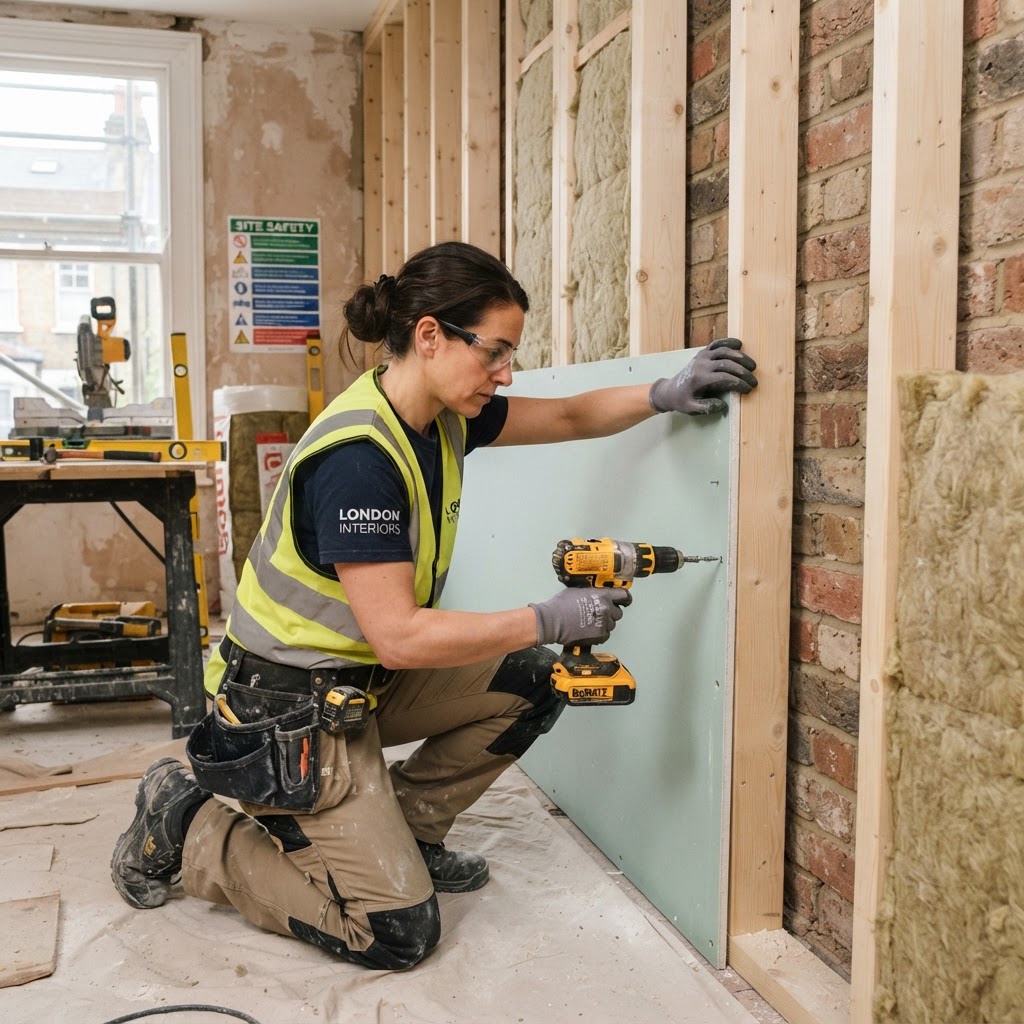
- Fixes boards to timber studs, metal frames, or existing masonry using screws or dabs of adhesive (dot and dab)
- Tapes and fills joints, or applies a full skim coat of plaster over the top for a seamless finish
- Repairs damaged sections of board, including water-damaged ceilings or walls knocked about during other building work
You'll typically need this type of work after a loft conversion, when building a new stud wall to divide a room, after removing a chimney breast, during a full renovation, or when an existing ceiling has sagged, cracked, or come down due to a leak. It's also common when replacing old artex ceilings with a smooth modern finish, or when converting a garage or extension and the walls need finishing before decorating.
![Tradesperson fixing a plasterboard sheet to timber studwork in a London(/blog/lime-plasterers-near-me-a-london-homeowner-s-guide) home during a renovation]
What to Look For in a Plasterer
Not every plasterer does the same work to the same standard, and "gyprocker" work spans several skills — carpentry-adjacent boarding, taping and jointing, and skim plastering. When comparing local plasterers, look for:
Experience with your property type
Victorian and Edwardian properties often have uneven walls, old lath and plaster, and non-standard stud spacing, which means boards need careful scribing and fixing. Modern flats tend to have more regular stud or metal-frame partitions but may have fire-rated or acoustic plasterboard requirements between units. A plasterer who's worked across different London property types will know how to adapt.
A proper finish, not just a quick fix
Anyone can screw a sheet of plasterboard to a wall. The skill is in getting joints flush, corners square, and — if you want a smooth painted finish rather than visible tape lines — a properly skimmed surface that doesn't show joints once painted.
Clear, itemised quotes
A trustworthy plasterer should be willing to visit (or assess via photos/video for simpler jobs) and give you a written quote that specifies materials, labour, and expected timescale, rather than a vague verbal figure.
References and portfolio
Ask to see photos of recent similar jobs, ideally in London properties similar to yours. A plasterer who's happy to show previous work and discuss it in detail is generally a safer bet than one who's cagey about it.
Punctuality and communication
Simple things matter: do they turn up when they say they will, do they answer calls, and do they explain the job in plain English rather than jargon.
Types of Plastering Work Covered
A good local plastering team should be able to handle the full range of related work, not just isolated plasterboard fitting. This typically includes:
- Dry lining and plasterboarding — boarding out new stud walls, ceilings, and masonry walls that need a plasterboard lining before skimming
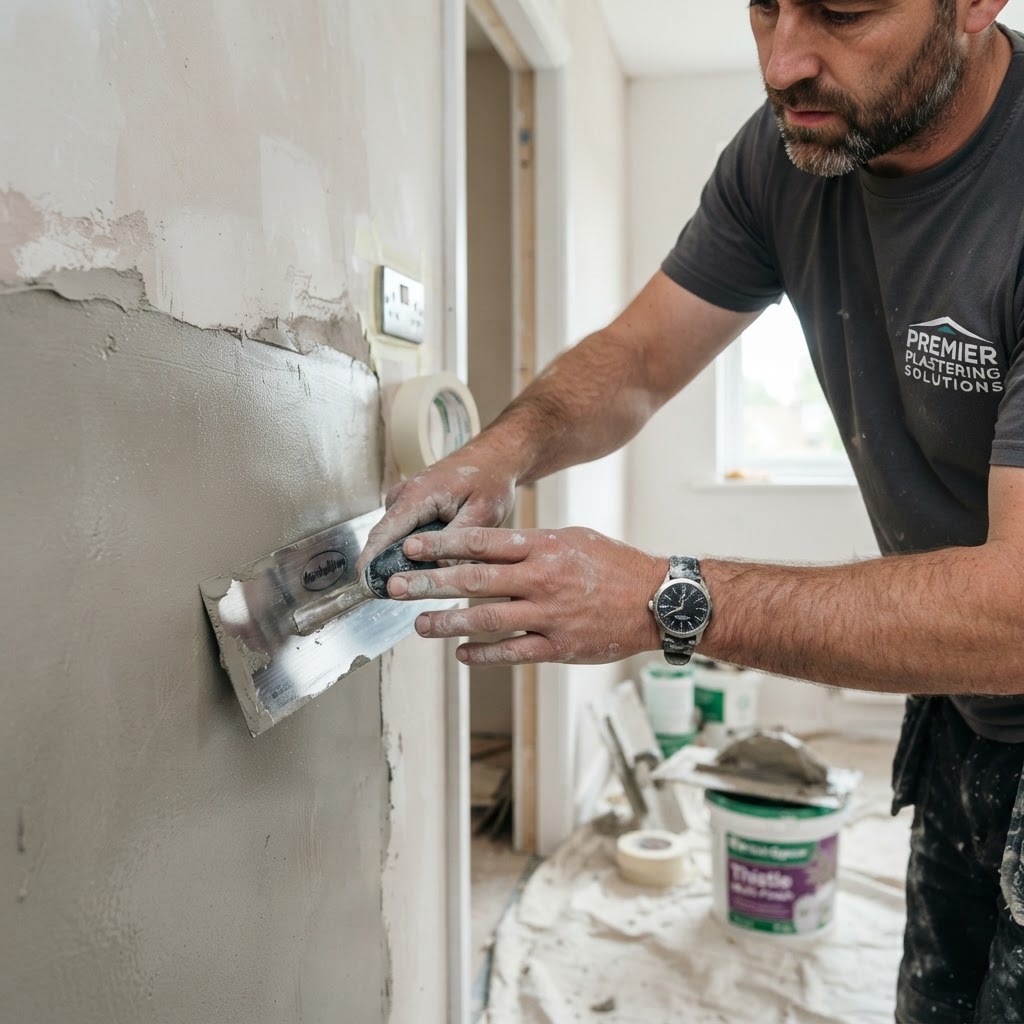
- Wall skimming — applying a thin top coat of finishing plaster over plasterboard or existing plaster to create a smooth surface
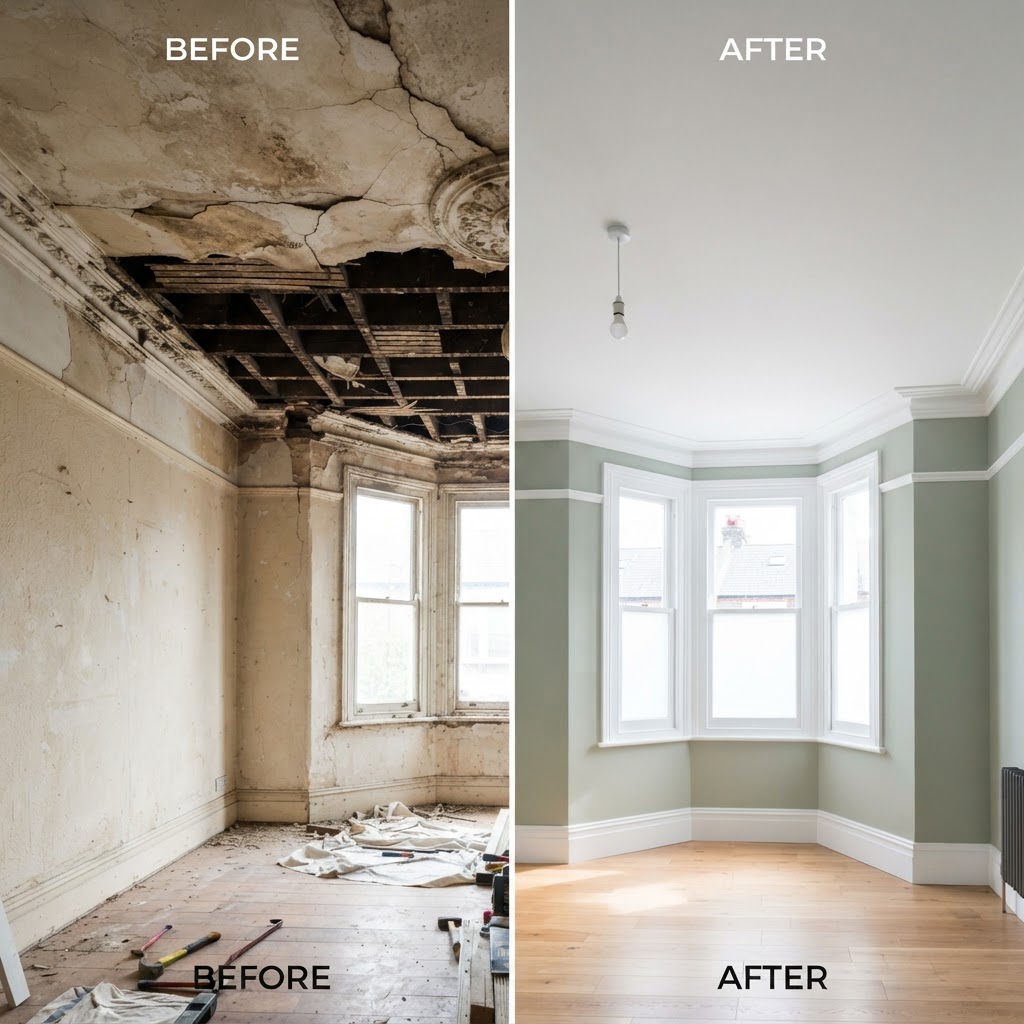
- Ceiling plastering and ceiling plaster repair — replacing sagging or water-damaged ceilings, patching cracks, and re-skimming
- Patch repairs — fixing small areas of damaged plaster or plasterboard without needing to redo an entire wall
- Full room re-skims — stripping back and re-skimming an entire room where the existing plaster is cracked, blown, or outdated
- Full house replastering — a complete internal replaster, often done during larger renovations or after structural work
- Artex covering — skimming over old textured artex ceilings to modernise the finish
- Rendering — external plastering, usually for render repairs or new render on masonry walls
- Lime plastering — for period properties where traditional lime plaster is more appropriate than modern gypsum products, particularly in listed buildings or older solid-wall houses
- Decorative plastering and cornicing — restoring or installing coving, cornicing, and other period detailing
- Insulated plasterboard — fitting thermal-backed boards to improve insulation on external walls
If your property is a period building with traditional lime render or lime plaster, it's worth specifically searching for lime plasterers near me rather than a general gyprocker, as lime work requires different materials and techniques (breathable finishes, longer drying times, and compatibility with solid masonry walls) compared to modern gypsum plasterboard and skim.
![Close-up of a plasterer applying a smooth skim coat finish over(/LocalPlastererNearMeLondon) plasterboard joints in a London flat]
Questions to Ask Before Hiring
Before you commit to a plasterer, it's worth asking a few direct questions:
- Have you worked on properties like mine before? Period terrace, Edwardian semi, purpose-built flat — each has quirks.
- What type of board will you use, and why? Standard, moisture-resistant, fire-rated, or acoustic plasterboard each suit different rooms (bathrooms, kitchens, party walls).
- Will the finish be taped and jointed, or fully skimmed? This affects both the cost and the final appearance.
- How long will the job take, including drying time? Freshly skimmed plaster needs time to dry before painting, and this can vary depending on the weather and room ventilation.
- **What's included in the quote?** Materials, labour, skip or waste removal, and making good around the work area should all be clear upfront.
- Can you provide a written quote and rough start date? This protects both sides and avoids confusion later.
Common Plastering Jobs in London Properties
London's housing mix throws up some recurring jobs:
Victorian and Edwardian terraces often have original lath and plaster ceilings that have aged badly, especially where there's been historic water damage or where previous owners have added downlights and disturbed the plaster. These ceilings frequently need full plasterboard replacement rather than patching, since lath and plaster becomes brittle and unreliable over time.
Loft conversions almost always need extensive new dry lining — boarding out rafters, stud walls, and dormer cheeks, followed by a skim finish ready for decoration.
Chimney breast removals leave a section of wall that needs boarding and blending into the surrounding plaster, which takes a careful hand to avoid a visible seam or step.
Modern flats and new-build extensions typically have plasterboard partitions from the outset, so work here is more often about patch repairs after plumbing or electrical alterations, or finishing new stud walls when a layout is reconfigured.
Artex removal and ceiling updates are common in properties bought from the 1970s–90s, where homeowners want to replace textured ceilings with a flat, modern skim.
When You Need a Professional Plasterer
Small cosmetic touch-ups — a tiny nail hole or hairline crack — can often be handled with a tub of filler. But plasterboard and skimming work generally needs a professional when:
- The area involves a ceiling, since overhead work is harder to get flat and safer with the right equipment
- You're boarding a whole wall or room and want joints invisible once painted
- There's water damage, and you need to assess whether the board itself (not just the surface) needs replacing
- You're working to a deadline, such as before new flooring or kitchen fitting
- The property has period features — cornicing, ceiling roses, or lime plaster — that need matching or preserving
- You simply don't have the tools (such as a proper mixing paddle, hawk and trowel, or board lifter) or experience to get a smooth, durable finish
DIY plasterboard fitting is possible for a confident DIYer doing a single small stud wall, but skimming to a genuinely smooth finish takes practice — it's one of those trades that looks simple to watch and is much harder to execute well. A patchy or uneven skim will show through paint, especially under direct or raking light.
How to Get a Quote Quickly
Getting a quote shouldn't be a drawn-out process. London Plastering Service offers free quotes, often within 60 minutes of getting in touch, across all 32 London boroughs. Our family-run team has over 20 years of experience covering everything from small patch repairs to full house replastering, dry lining, lime plastering, and decorative work.
To get a fast, accurate quote:
- Describe the job clearly — how many rooms, what type of work (boarding, skimming, repair), and whether it's a wall or ceiling
- Send photos if possible — this helps us assess scale and condition before even visiting
- Mention your property type and area — Victorian terrace, Edwardian semi, or modern flat, and which London borough you're in
- Ask about timescales — we'll give you a realistic idea of when we can start and how long the job will take
We work Monday to Friday, 7am–7pm, and Saturdays 8am–5pm, so you can reach us at a time that suits you.
Ready to Get Your Plasterboard Sorted?
If you've been searching for a gyprocker near me and want a reliable, experienced team who understand London properties inside and out, London Plastering Service is here to help. We're a 4.9-star rated, family-run company with over 20 years of experience and coverage across all 32 London boroughs — from dry lining and ceiling repairs to full house replastering and lime plaster restoration.
Call us on +44 7460 892826 or email office@londonplasteringservice.com for a free quote, often provided within 60 minutes.
FAQ
What is gyprocker near me and when is it needed? It generally refers to a local plasterboard fitter who boards out walls and ceilings and often finishes them with a smooth skim coat. You typically need this after loft conversions, chimney breast removals, ceiling damage, or when building new stud walls as part of a renovation.
How much does gyprocker near me cost in London? Costs vary significantly depending on the size of the area, whether it's a wall or ceiling, the type of board required, and whether a full skim finish is needed. The most accurate way to get a figure is to request a free, no-obligation quote based on your specific job.
How long does gyprocker near me take? A small patch repair might be completed in a single visit, while boarding and skimming a full room can take a few days once you include drying time between coats. Larger jobs like full house replastering take longer and depend on the number of rooms involved.
Can I do gyprocker near me myself or should I hire a professional? Simple, small stud walls can sometimes be tackled by a confident DIYer, but achieving a genuinely smooth, professional skim finish — especially on ceilings or larger walls — takes practice and the right tools. For anything beyond minor patching, hiring a professional plasterer generally gives a more durable, better-looking result.
What should I look for when choosing a plasterer? Look for relevant experience with your property type, a clear written quote, examples of previous work, and good communication. If your property is period or listed, check they have experience with lime plastering or lime render rather than only modern gypsum products.
Do you cover my area of London? Yes, London Plastering Service covers all 32 London boroughs, so wherever you're based, we can usually arrange a visit and provide a free quote quickly.
Related Plastering Guides & Services
Need Professional Plastering?
Get expert plastering services in London. Free quotes within 60 minutes.