
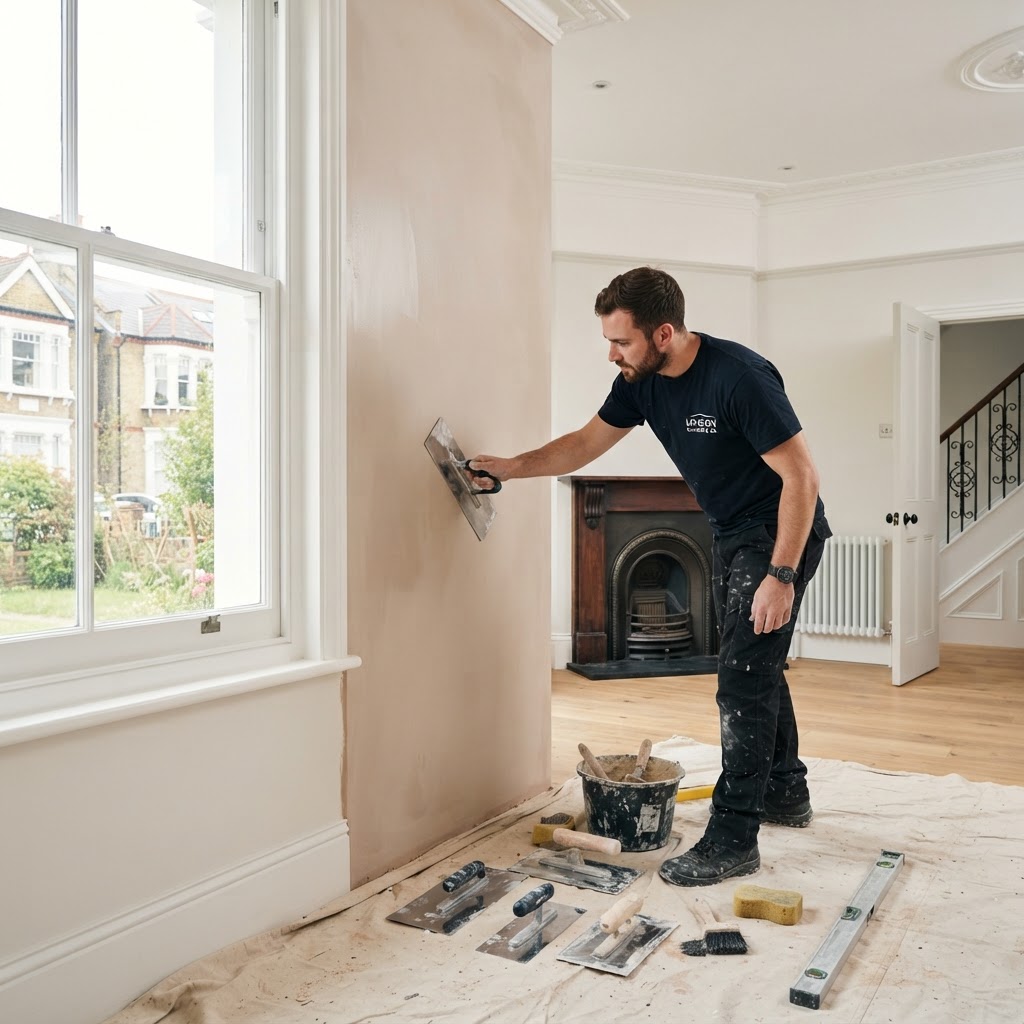
Questions to Ask a Plasterer Before Hiring in London
Essential Questions for Your London Plasterer
Finding a reliable plasterer London is the single most critical decision you will make when embarking on a home renovation project. Whether you are painstakingly restoring a historic Victorian terrace in the conservation areas of Islington or renovating a minimalist, high-specification apartment in the towering glass structures of Canary Wharf, the quality of your plasterwork acts as the foundation for every subsequent aesthetic decision. Before you commit to a quote, you must rigorously vet your tradesperson to ensure they are not just a laborer, but a true craftsman.
1. Are You Fully Insured and Qualified?
Never operate on an assumption that a tradesperson carries adequate public liability insurance. In London, where property values often exceed £1,000 per square foot in boroughs like Kensington and Chelsea or Westminster, any damage caused by negligent work—such as a burst pipe behind a wall or a floor damaged by heavy equipment—can lead to catastrophic financial liability. Always ask to physically inspect an up-to-date insurance certificate. Furthermore, confirm their trade qualifications. While time-served experience is invaluable, professionals holding NVQ Level 2 or 3 in Plastering or City & Guilds accreditation demonstrate a commitment to industry standards. For complex tasks like Wall Skimming London, which requires a delicate touch to achieve a glass-like finish, verify their portfolio of similar projects.
2. Can You Provide a Detailed Breakdown of Costs?
Transparency is the cornerstone of a healthy contractor-client relationship. Avoid professionals who provide a vague, one-line quote via text message. In 2026, the average cost for skimming a medium-sized bedroom (approx. 12-15 sqm) in Central London often commands a premium, typically ranging between £450 and £650, while outer boroughs like Croydon or Enfield may see prices closer to £350 to £500. If you are planning a Full House Replaster London, expect quotes to fluctuate wildly based on ceiling heights—especially if your property features high-ceilinged period cornicing—and room complexity. Always cross-reference your quote with current Plastering Prices London to ensure the price is competitive yet realistic for the high cost of living and materials in the capital.
3. How Do You Handle Surface Preparation?
A flawless finish is 90% preparation and 10% application. Ask specifically about their protocol for substrate assessment. Are they using high-quality bonding agents like PVA or ThistleBond-It? How do they handle crumbling lime plaster or existing moisture-damaged drywall? If you are dealing with Artex Covering London, confirm they will perform an asbestos check first, as removing or covering old Artex can pose significant health risks if the material is pre-1990. Skipping the prep work by cutting corners on base coats leads to shrinkage, hairline cracking, and debonding within mere months.
4. What Is Your Experience with Specific Repairs?
London homes are notorious for specific structural issues. If you live in an older property in areas like Hackney or Camden, you may be battling sagging lath-and-plaster ceilings. Ask your contractor about their specific experience with Ceiling Plaster Repair London. If you have suffered water damage from a flat roof leak in a Southwark apartment, ask if they provide Emergency Plaster Repair London services to stabilize the ceiling and prevent partial collapse while the source of the leak is addressed.
5. Do You Offer Dry Lining or Traditional Plastering?
Depending on your home’s thermal efficiency goals, you may prefer Dry Lining London over traditional wet plastering. Dry lining (plasterboard) is significantly faster and often preferred for modern new-builds, whereas traditional wet plaster offers better acoustic dampening and a more robust feel for period homes. A true expert will analyze your specific walls—whether they are brick, breeze block, or timber frame—and recommend the most cost-effective and durable solution for your specific postcode requirements.
2026 Price Guide for London Plastering
- Wall Skimming (Small Bedroom - 3m x 3m): £350 - £500
- Ceiling Repair & Skim (Standard living room): £250 - £400
- Full Room Skim (Walls & Ceiling): £500 - £900
- Full Property (3-bed semi-detached): £3,500 - £6,000+
- Plasterboarding/Dry Lining (per board): £25 - £40 (including fixings)
These figures assume a standard site in London. Properties located in Congestion Charge zones or with restricted parking may incur additional logistics fees, so always factor these into your Plastering Cost London estimations.
Frequently Asked Questions
How long should plaster take to dry before I can paint it?
In the London climate, humidity levels fluctuate significantly. Generally, it takes 3 to 7 days for plaster to dry to a 'pink' state, which indicates it is ready for mist coating. However, during winter months or in basement conversions in areas like Chelsea or Knightsbridge where damp is a concern, this can take up to two weeks. Always use a dehumidifier to assist the process, but never force dry it with high-heat blowers, as this causes the plaster to shrink and crack.
What measures should be taken to protect my property?
A professional plasterer acts as if they are working in their own home. They will protect floors with high-impact protective boards rather than thin plastic sheets. In high-end properties, expect them to use carpet protection film and dust-proof floor covering. If they do not explicitly discuss their dust-containment strategy, such as using industrial HEPA-filtered vacuums, it is a significant red flag.
How do I identify a poor-quality plastering finish?
Inspect the work under angled lighting, such as a construction lamp. If you see ridges, trowel marks, or 'cat faces' (small pinhole imperfections), the job has been rushed. A high-quality finish should look like a monolithic, smooth surface. Furthermore, if you notice immediate cracks appearing at the joints of new boards, it often indicates they failed to use jointing tape or scrim, which is a sign of unprofessional corner-cutting.
Should I buy my own materials for the plasterer?
Generally, no. Experienced London plasterers have established accounts with major local suppliers and receive trade discounts that you cannot access as a consumer. They also know exactly which brands (e.g., Thistle or British Gypsum) work best for specific London substrates. You are paying for their expertise in materials procurement; let them handle the logistics.
How do I handle potential noise complaints with neighbors?
If you live in a dense borough like Westminster or Wandsworth, you must manage expectations. Plastering isn't particularly loud compared to demolition, but moving equipment in and out can disrupt neighbors. Provide your neighbors with at least 48 hours' notice, and ensure your plasterer sticks to standard working hours (usually 8:00 AM to 5:00 PM) to avoid breaching local council noise ordinances.
Ready to Start Your Project?
Don't leave your home’s finish to chance. At London Plastering Service, we bring years of specialist expertise to every borough, from the historic streets of Greenwich to the modern developments of Stratford. Contact us today for a transparent, no-obligation quote and get the quality finish your home deserves.
Related Plastering Guides & Services
Need Professional Plastering?
Get expert plastering services in London. Free quotes within 60 minutes.