
How to Vet a Stucco Contractor Near You: A London Homeowner's Checklist
When you type "stucco contractor near me" into Google, you'll get a long list of names, star ratings and phone numbers — but a list doesn't tell you who's actually competent, insured, or right for your property. This guide isn't about where to search; it's about how to tell a genuinely good stucco contractor from one you'll regret hiring. We'll walk through the vetting process step by step, the questions that actually matter, and the warning signs experienced London homeowners have learned to watch for.
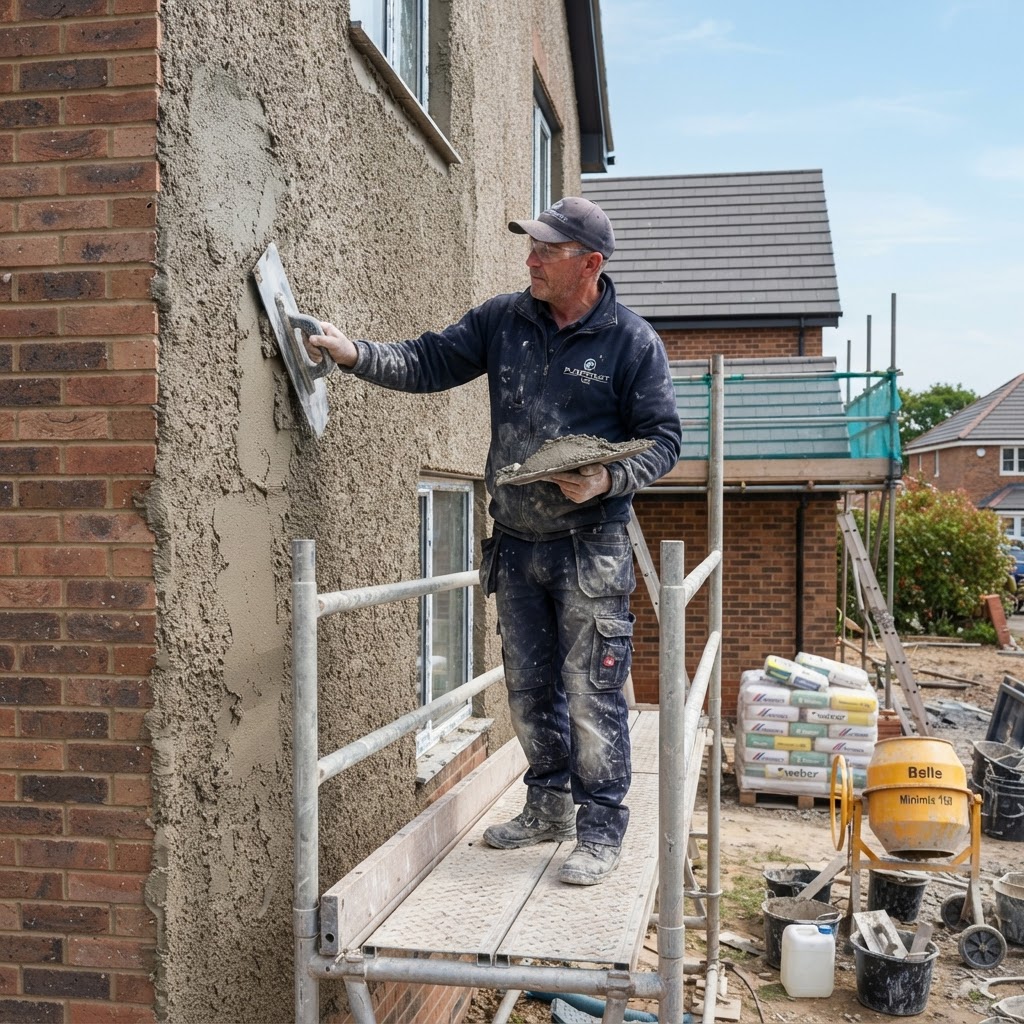
![A professional plasterer applying external render to(/blog/plaster-contractor-near-me) render]
What "Stucco" Actually Means on a London Property
In the UK, what Americans call stucco is usually referred to as render — a cement, lime, or acrylic-based coating applied to external walls for weatherproofing and appearance. Many homeowners use the terms interchangeably when searching online, which is exactly why a simple "near me" search throws up such a mixed bag of results: general builders, render specialists, roofers who dabble in exterior finishes, and dedicated plastering companies.
Before you contact anyone, it helps to know which type of finish your property actually needs:
- Sand and cement render — traditional, durable, needs a skilled hand to avoid cracking
- Lime render — breathable, suited to older or period properties, requires specific expertise
- Pebbledash/roughcast — textured finish common on 1930s–1960s London homes
- Acrylic or silicone render — modern, flexible, low-maintenance, good crack resistance
- K-Rend or similar through-coloured systems — factory-coloured, popular for new builds and refurbishments
Knowing which category your project falls into means you can ask contractors directly whether they specialise in it, rather than hoping a generic "near me" result happens to match.
Why a Proximity Search Isn't Enough
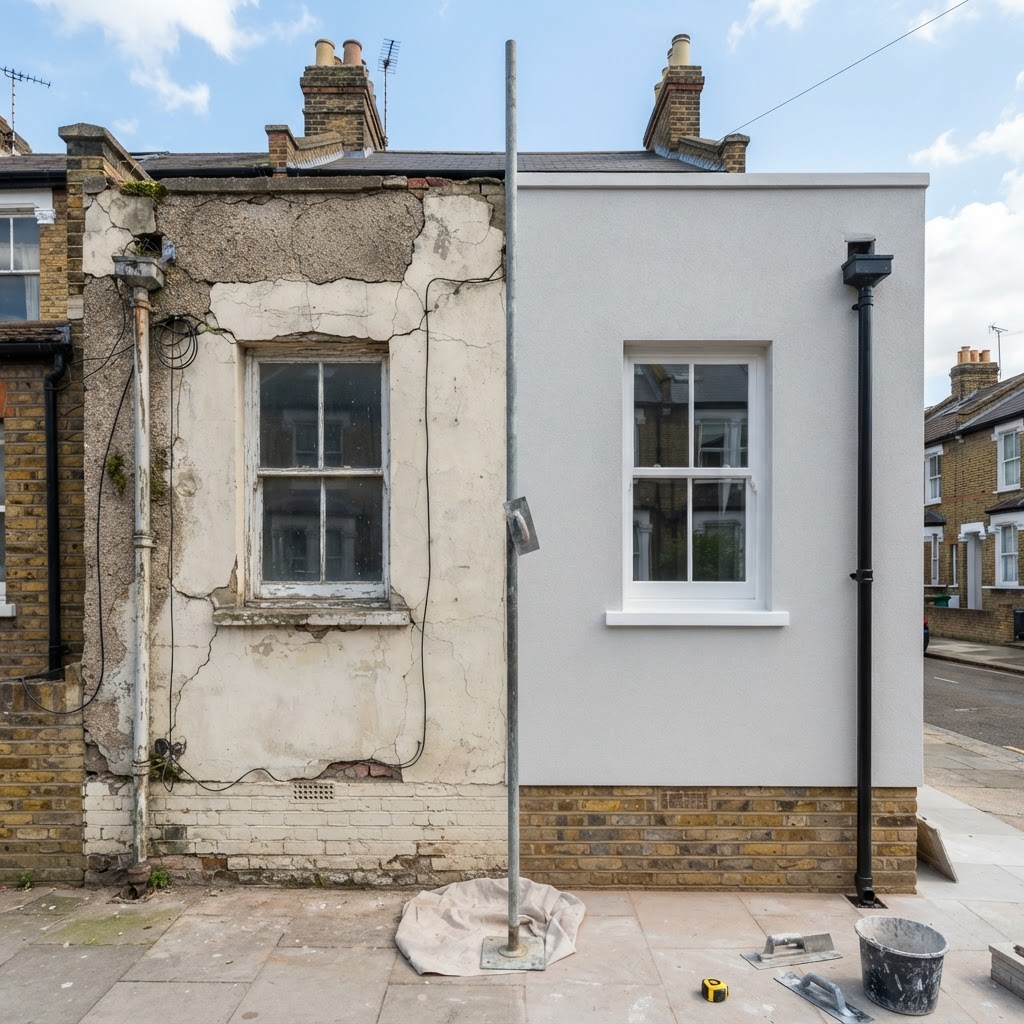
A contractor being five minutes from your postcode tells you nothing about the quality of their work. Render and stucco failures — cracking, blowing (hollow sounding patches), staining, or poor key to the substrate — are almost always down to either bad preparation or inexperienced application, not distance travelled. Local knowledge still matters (London's mix of Victorian solid-wall houses, 1930s semis, and modern new builds each behave differently), but it should be one factor among several, not the deciding one.
Treat "near me" as your starting shortlist, then apply the vetting steps below before you let anyone near your walls.
[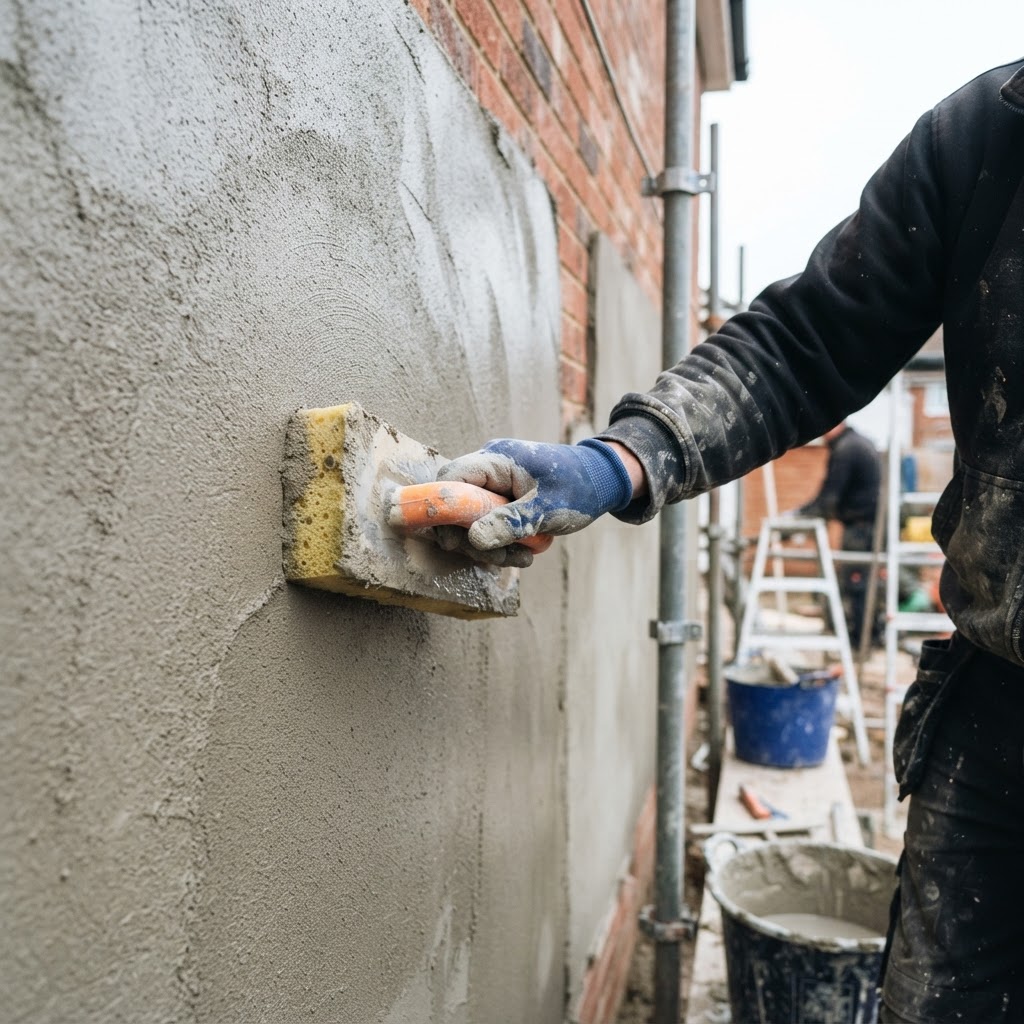 (/LocalPlasterer) with a trowel]
Step-by-Step: How to Vet a Stucco Contractor
1. Check they specialise in external rendering, not just internal plastering. Internal skimming and external rendering are different skills. Ask directly: "What percentage of your work is external render versus interior plastering?" A contractor who mostly does interior skim work may still take on render jobs, but you want someone with genuine, regular external experience.
2. Ask to see recent local work. Photos are useful, but an address of a finished job in your area (even just the street) that you can walk past is far more convincing. Render that still looks good after 2–3 years tells you more than a glossy photo taken the week it was finished.
3. Confirm they assess the substrate before quoting. A competent contractor should ask about the wall type (brick, blockwork, existing render, timber frame) and ideally inspect in person before pricing. Render applied to a poorly prepared or incompatible substrate is one of the most common causes of early failure.
4. Ask about preparation work, not just the finish coat. Good render jobs are won or lost in the preparation: removing unstable old render, treating damp issues, applying the correct primer or bonding coat, and using beading or mesh where needed. If a quote jumps straight to "render application" with no mention of prep, question it.
5. Verify insurance. Public liability insurance is non-negotiable for exterior work involving scaffolding or ladders at height. Ask to see a current certificate — a legitimate contractor will have no issue providing one.
6. Ask how they handle weather delays. Render can't be applied in frost, heavy rain, or direct hot sun without risk to the finish. A contractor who talks confidently about weather windows and curing times is demonstrating real experience, not just sales patter.
Questions to Ask Before You Hire
It's worth having a short list ready when you speak to each contractor, so you're comparing like for like:
- What type of render/stucco system do you recommend for my property, and why?
- How will you prepare the existing surface?
- What's included in the price — scaffolding, waste removal, making good around windows and doors?
- How long will the job take from start to finish, including drying/curing time?
- Will the same team be on site throughout, or will work be subcontracted?
- What happens if cracking appears after the work is finished?
- Can I see your public liability insurance?
Write down the answers. It's easy to forget the details once you've spoken to three or four contractors in the same week.
Red Flags That Should Make You Walk Away
- Pressure to decide on the spot, especially with a "discount only if you sign today" line
- No fixed address or verifiable business details — just a mobile number and a van
- Vague written quotes that don't break down materials, labour, and scaffolding separately
- Unwillingness to discuss preparation work or substrate condition
- Cash-only insistence with no paperwork offered
- No mention of scaffolding or access equipment for work above ground floor level — this is often a sign corners will be cut on safety and finish quality
- Dismissing your questions rather than answering them properly
If you notice two or more of these, it's reasonable to move on to the next name on your list.
Understanding a Render Quote
Quotes for exterior rendering vary enormously depending on property size, wall condition, access, and the render system chosen. Rather than focusing on getting the cheapest number, use quotes as a comparison tool for scope of work. A fair quote should clearly separate:
- Preparation and repair work (removing old render, repairing cracks, treating damp)
- Materials and render system specified
- Labour
- Scaffolding or access equipment hire
- Waste removal and site clean-up
- Any decorative finishing (painting, texturing)
If one quote is significantly lower than the others, ask what's been left out rather than assuming it's simply better value. Often the difference is in preparation work or the quality/thickness of the render system specified.
What to Expect Once Work Begins
A typical external render job, once scheduled, generally follows this pattern:
- Site setup — scaffolding or tower erected, surrounding areas protected
- Preparation — removal of failing render, repairs to brickwork or blockwork, cleaning the surface, fitting beads and mesh where required
- Scratch/base coat — the first layer, often left textured to key the next coat
- Top coat/finish — the final decorative layer, applied to the agreed texture and colour
- Curing period — render needs time to cure properly before any painting or heavy weather exposure; rushing this stage is a common cause of later cracking
- Final inspection and clean-up — scaffolding removed, site cleared, any snagging addressed
Ask your contractor roughly how many days each stage should take for your specific property, so you have a realistic benchmark to check progress against.
Common Mistakes Homeowners Make When Hiring
- Choosing on price alone, without comparing scope of work
- Not asking about the substrate or assuming any render system will suit any wall
- Skipping the insurance check because the contractor seems friendly and reliable
- Not getting anything in writing — verbal agreements lead to disputes over what was actually included
- Ignoring weather conditions and pressuring contractors to work in unsuitable conditions, which can compromise the finish
- Overlooking matching requirements — if you're only rendering part of a property, ask how the contractor will match texture and colour to existing areas
Avoiding these mistakes is often more valuable than finding the single cheapest quote.
FAQ
How do I know if I need render repair or a full re-render? Small areas of cracking or isolated patches of blown render can often be repaired locally. Widespread cracking, large hollow-sounding areas, or render that's failing across most of the property usually points to a full re-render being more cost-effective long term than repeated patch repairs.
How long does external render take to dry before it can be painted? This depends on the render system, weather, and thickness applied, but most systems need at least several days to a few weeks of curing before painting. A reliable contractor will give you a specific timeframe for your job rather than a generic answer.
Can render be applied in winter? It can, but it's more weather-dependent — frost and prolonged damp conditions can seriously affect curing and finish quality. Experienced contractors will plan around forecasts and may build in contingency time for winter jobs.
Do I need planning permission to re-render my house? Most render work is considered permitted development, but if your property is listed, in a conservation area, or you're changing the external appearance significantly (such as colour on a previously unpainted brick house), it's worth checking with your local council before work starts.
What's the difference between a plasterer and a render specialist? Many plastering companies offer both interior and exterior services, but exterior rendering involves different materials, weatherproofing considerations, and application techniques. When vetting a contractor, ask specifically about their external render experience rather than assuming general plastering skill transfers directly.
Should I get more than one quote? Yes — three quotes is generally a sensible minimum. This gives you a realistic range for the scope of work and makes it easier to spot a quote that's unusually low or missing key elements like preparation work or scaffolding.
Final Thoughts
Finding a stucco or render contractor nearby is the easy part — the real work is in vetting who you actually let near your property. Take the time to check specialism, ask about preparation and substrate assessment, confirm insurance, and get a detailed written quote. A little extra diligence upfront is far cheaper than paying twice for a render job done badly the first time.
Related Plastering Guides & Services
Need Professional Plastering?
Get expert plastering services in London. Free quotes within 60 minutes.