
Lime Plasterers Near Me: Finding Specialists in London
If you're typing "lime plasterers near me" into a search bar, chances are you own or manage a period property — a Victorian terrace, Georgian townhouse, or Edwardian semi — and you've been told, or discovered the hard way, that standard gypsum plaster isn't right for your walls. Lime plastering is a specialist trade. Not every plasterer who skims a stud wall in a modern flat has the experience or patience to work with lime, and getting it wrong can cause damp problems, cracking, and expensive callbacks. This guide explains exactly what lime plastering involves, what a competent lime plasterer should offer, and how to find reliable help anywhere across London's 32 boroughs.
What Is Lime Plastering and When Do You Need It?
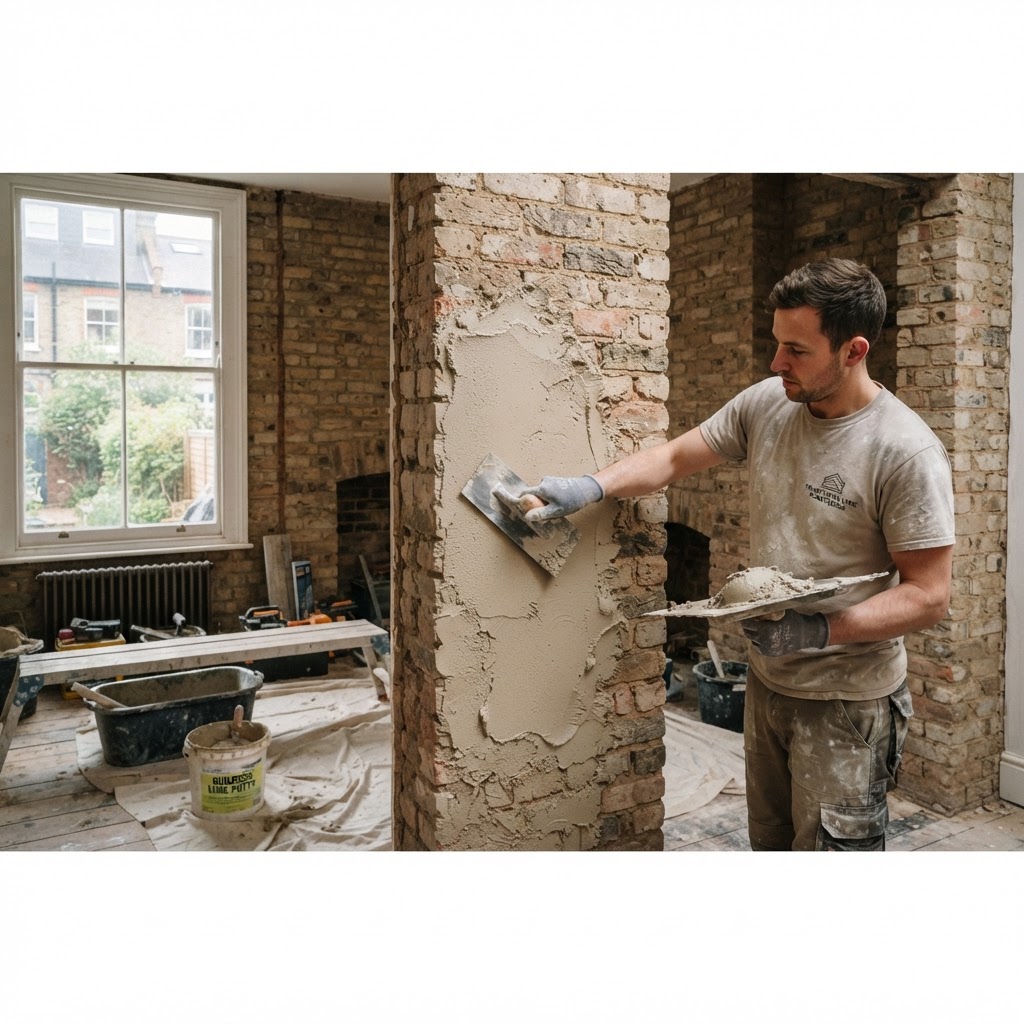
Lime plaster is a traditional building material made from lime putty or hydraulic lime mixed with sand, sometimes with added fibres such as horsehair for strength. It was the standard plastering material in the UK before gypsum plaster became widespread in the mid-20th century, which means most pre-1919 properties in London were originally built and finished with lime.
The key reason lime matters is breathability. Solid brick or stone walls in older properties need to allow moisture to pass through and evaporate naturally. Gypsum plaster and modern cement renders are largely impermeable, so applying them to solid walls can trap moisture within the brickwork, leading to damp, salt staining, and eventual plaster failure. Lime plaster, by contrast, is vapour-permeable — it lets the wall breathe while still providing a durable, attractive finish.
You're likely to need a lime plasterer if you have:
- A Victorian or Georgian terrace with solid (non-cavity) brick walls
- A listed building or property in a conservation area
- Existing lime plaster that needs patching or matching
- Persistent damp issues linked to previous gypsum or cement repairs
- A renovation project aiming to restore original period character
If your home was built after around 1920 and has cavity walls, you'll almost certainly be fine with standard gypsum skim. Lime is specifically for solid-wall, older, and heritage properties.
![Traditional lime plaster being applied by hand to an exposed brick wall in a period London property(/blog/plastering-companies-near-me)]
What to Look for in a Lime Plasterer
Because lime plastering is a niche skill, it's worth being more selective than you might be for a standard re-skim. Look for:
- Demonstrable experience with lime specifically. Ask to see photos of completed lime jobs, not just general plastering work.
- Understanding of breathability principles. A good lime plasterer should be able to explain why lime is right for your wall type and talk you through the build-up (render coat, floating coat, finish coat).
- Correct materials knowledge. Hydraulic lime (NHL 2, 3.5, or 5) is used for different exposure conditions; lime putty is used for internal finish coats. A competent plasterer should know which to use where.
- Patience with drying times. Lime cures slowly and needs controlled drying — rushing it is one of the most common causes of cracking and failure.
- Reviews and reputation. Look for consistent positive feedback, ideally from customers with similar period properties.
- **Clear, itemised quotes.** A proper quote should break down preparation, materials, and labour rather than giving a vague lump sum.
London Plastering Service has over 20 years of experience across all 32 London boroughs, with a 4.9-star reputation built on exactly this kind of attention to detail, so these are questions we're always happy to answer before you commit.
Types of Plastering Work Covered
Most lime plasterers who cover London also offer the full range of general plastering services, which is useful if your project involves more than one type of work. Typical services include:
- Lime plastering — full lime render and finish coats to solid walls, lath and plaster ceiling repairs, and lime pointing
- Wall skimming — fresh skim coats over plasterboard or existing plaster
- Ceiling plastering — including replacing sagging lath and plaster ceilings
- Plaster repairs and patch repairs — fixing cracks, holes, and damaged sections
- Full room re-skims — stripping back and re-finishing an entire room
- Full house replastering — for major renovations or properties in poor condition
- Artex covering — skimming over dated artex ceilings for a smooth modern finish
- Dry lining and plasterboarding — for stud walls and new partitions
- Rendering — external finishes for walls and facades
- Decorative plastering and cornicing — restoring or installing period mouldings
- Insulated plasterboard — improving thermal performance on external walls
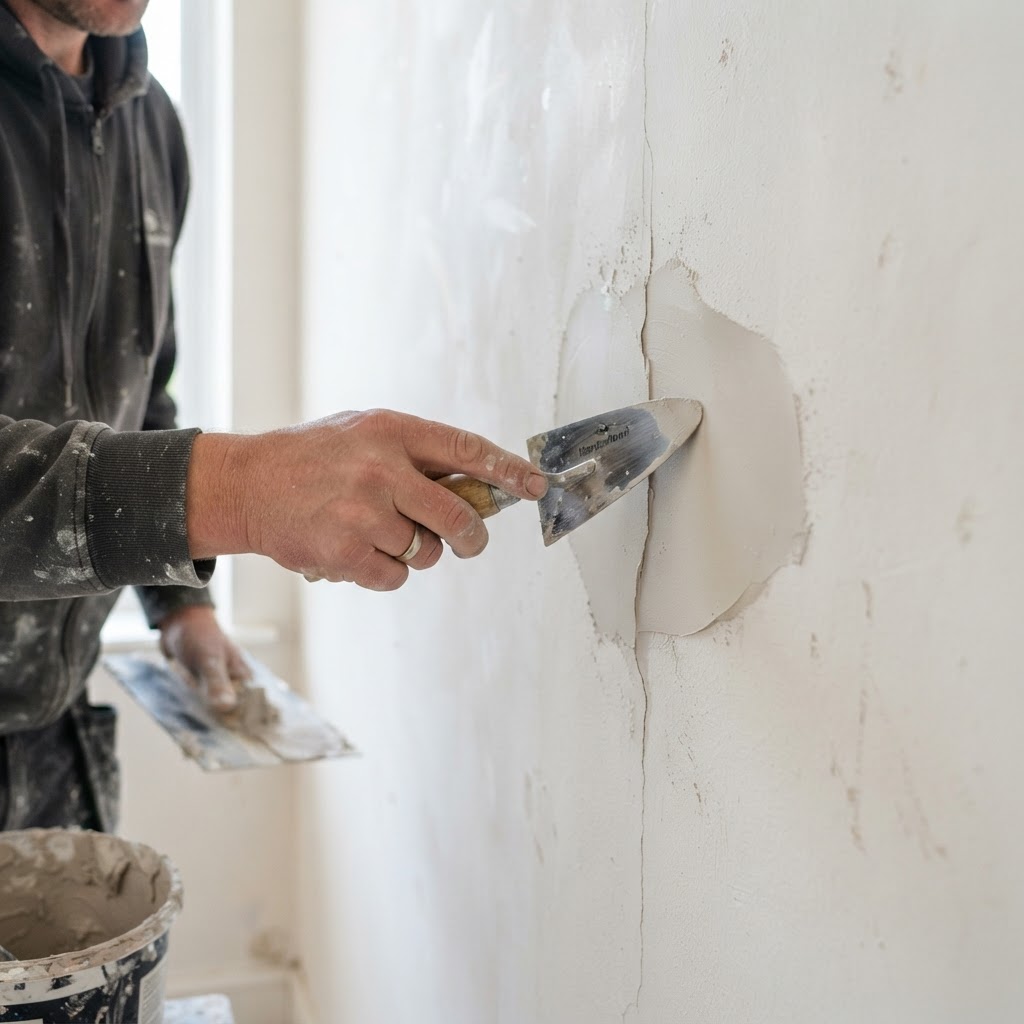
If you're dealing with a smaller job — a cracked ceiling or a patch of damaged plaster — this is often described as patching plaster, or patching in plaster, and it's one of the most common call-outs we receive. Patching plaster walls correctly means matching the existing material (lime or gypsum), feathering the edges so the repair is invisible, and allowing proper drying time before decorating. For small gypsum repairs, some people reach for a dap patching plaster product from a DIY shop, but on lime walls this is rarely appropriate — mixing modern filler with traditional lime plaster can trap moisture and cause the patch to fail.
Questions to Ask Before Hiring
Before booking any plasterer, especially for lime work, it's worth asking:
- Have you worked on properties like mine before? Ask specifically about similar age and wall construction.
- What lime mix will you use, and why? A confident answer suggests real experience.
- How long will the job take, including drying time? Lime needs longer than gypsum — rushing causes problems.
- Will you need to remove existing plaster first? Especially relevant if there's damp or failed previous repairs.
- What preparation is included in the price? Hacking off old plaster, dubbing out uneven walls, and dust sheeting should be covered.
- Can you provide a written, itemised quote? This protects both parties and avoids surprise costs.
- How quickly can you start? Especially useful if you're mid-renovation and other trades are waiting.
Asking these questions upfront weeds out plasterers who are comfortable with gypsum but inexperienced with lime, which is the single biggest risk when hiring for this type of work.
Common Plastering Jobs in London Properties
London's housing stock is varied, and the plastering needs differ accordingly:
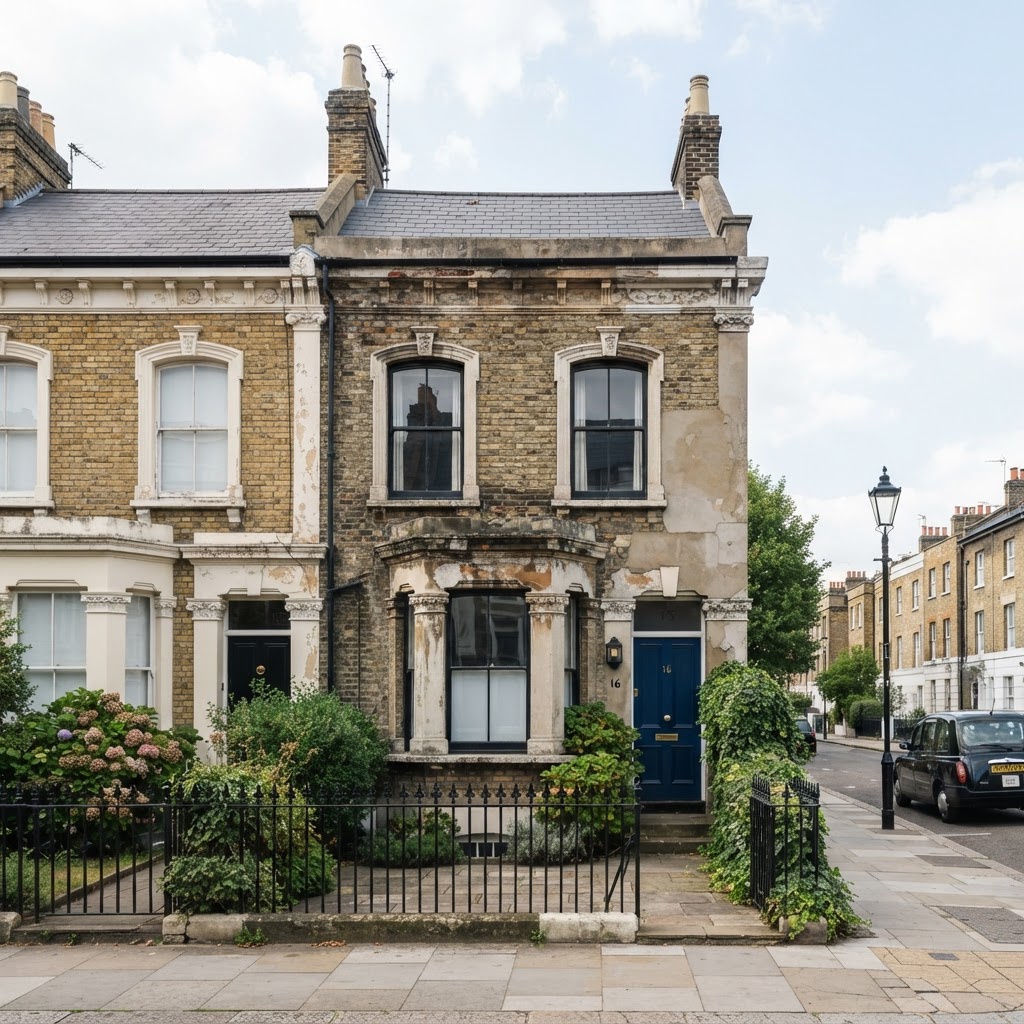
- Victorian and Georgian terraces (common across boroughs like Islington, Hackney, Lambeth, and Camden) often have solid brick walls finished in lime, with original lath and plaster ceilings that may need careful repair or replacement rather than wholesale removal.
- Edwardian semis (found widely in outer boroughs such as Bromley, Sutton, and Harrow) sometimes have a mix of original lime plaster and later gypsum repairs, which can create inconsistent surfaces needing a skilled eye to blend.
- Modern flats and new-build conversions generally use plasterboard and gypsum skim throughout, so lime isn't typically relevant unless the building incorporates original solid-wall sections.
- Basement and semi-basement conversions, common in inner London boroughs, often need lime plaster specifically because of higher moisture levels against below-ground walls.
- Listed buildings and conservation area properties, found across boroughs like Westminster, Kensington and Chelsea, and Richmond, frequently require lime plaster to comply with heritage considerations and to avoid damaging original fabric.
Whatever your property type, a plasterer who regularly works across different London boroughs will have seen the full range of these scenarios and can advise quickly on what your walls actually need, rather than defaulting to a one-size-fits-all approach.
When You Need a Professional Plasterer
Some small jobs — a hairline crack, a tiny nail hole — can reasonably be filled with a tub of ready-mixed filler. But you should call in a professional when:
- The property has solid walls and you suspect lime plaster is present or required
- There's visible damp, bulging, or crumbling plaster
- A ceiling is sagging or you can see cracks following the line of lath joints
- You're renovating a listed building or one in a conservation area
- The damaged area is larger than a small patch, or there are multiple cracks across a wall or ceiling
- You want a seamless, decorator-ready finish rather than a visible repair
DIY lime plastering is genuinely difficult to get right. The material behaves differently from modern gypsum products — it needs specific humidity and temperature conditions to cure, multiple coats applied at the correct thickness, and experience to avoid cracking as it dries. For anything beyond the smallest cosmetic patch, hiring an experienced lime plasterer will save time, materials, and the cost of redoing a failed DIY attempt.
How Long Does Lime Plastering Take, and What Does It Cost?
Timescales depend heavily on the scope of work. A small patch repair might be completed in a single visit, while a full room re-skim with lime plaster typically takes several days once you account for multiple coats and drying time between each one. A full house replastering project involving lime throughout will naturally take longer, particularly where old plaster needs to be hacked off first and walls need time to dry out before the new lime goes on.
Costs vary depending on the size of the job, the condition of the existing walls, how much preparation is needed, and whether access is straightforward. Lime plastering generally costs more than standard gypsum skimming because the material and labour are more specialist, and the work takes longer due to drying requirements between coats. The best way to understand what your specific job will cost is to get a detailed, no-obligation quote based on your actual walls and ceilings rather than relying on generic online estimates.
How to Get a Quote Quickly
Getting an accurate quote doesn't need to be a slow process. London Plastering Service offers free quotes within 60 minutes, covering wall skimming, ceiling plastering, plaster repairs, patch repairs, full room re-skims, full house replastering, artex covering, dry lining, plasterboarding, rendering, lime plastering, decorative plastering, cornicing, and insulated plasterboard — across all 32 London boroughs.
To get a fast, accurate quote, it helps to have ready:
- Photos of the affected walls or ceilings
- Rough measurements of the room or area
- Details of the property's age and wall construction, if known
- Any specific concerns — damp, previous repairs, period features to preserve
You can call +44 7460 892826 or email office@londonplasteringservice.com, and the team is available Monday to Friday, 7am to 7pm, and Saturday, 8am to 5pm. With 20+ years of experience and a 4.9-star reputation, London Plastering Service has the lime plastering expertise your period property needs, alongside the full range of general plastering services for everything else on your project list.
FAQ About Hiring a Lime Plasterer
What is lime plastering and when is it needed? Lime plastering uses lime putty or hydraulic lime mixed with sand to create a breathable finish, traditionally used on solid brick or stone walls before gypsum plaster became common. It's generally needed for pre-1919 properties, listed buildings, and anywhere damp or breathability issues mean a vapour-permeable finish is important.
How much does lime plastering cost in London? Costs depend on the size of the area, the condition of existing walls, how much preparation and stripping out is required, and site access. Lime work typically costs more than standard gypsum skimming due to the specialist materials and longer application process, so it's best to get a specific quote for your property rather than relying on generic figures.
How long does lime plastering take? Small patch repairs can often be done in a single visit, while full room or whole-house lime plastering projects take longer due to the multiple coats required and the drying time needed between each one. Weather, humidity, and the condition of the existing wall also affect the overall timeline.
Can I do lime plastering myself, or should I hire a professional? Small cosmetic repairs on non-structural areas might be manageable for a confident DIYer, but lime plastering generally requires specific technique, correct mix ratios, and controlled drying conditions that are difficult to get right without experience. For anything beyond minor patching, hiring an experienced lime plasterer avoids costly failures and cracking.
Do you cover my area of London? Yes — London Plastering Service covers all 32 London boroughs, from inner London areas with dense Victorian terraces to outer boroughs with Edwardian semis and modern developments. Wherever you're based, you can get a free quote within 60 minutes.
How quickly can a plasterer start work? Availability depends on the scope of the job and current scheduling, but straightforward patch repairs can often be arranged quickly, while larger lime plastering projects may need a short lead time to plan material quantities and drying schedules properly. Getting in touch early with photos and details helps speed up the whole process.
If you're searching for lime plasterers near me because your period London property needs expert, breathable plastering done properly, get in touch with London Plastering Service on +44 7460 892826 or office@londonplasteringservice.com for a free quote within 60 minutes, with coverage across all 32 London boroughs.
Related Plastering Guides & Services
Need Professional Plastering?
Get expert plastering services in London. Free quotes within 60 minutes.