
Gyprocker Near Me: Finding a Reliable London Plasterer
If you've typed "gyprocker near me" into a search engine, chances are you're staring at a damaged ceiling, a stud wall that needs boarding, or a renovation project that's stalled because you don't know who to call. In UK trade terms, a "gyprocker" is simply someone who fixes and finishes plasterboard (Gyproc is a well-known plasterboard brand, and the name has stuck as shorthand for the trade). Whether you need a single sheet replaced after a leak or an entire loft conversion boarded and skimmed, finding the right person for the job matters just as much as finding someone nearby.
At London Plastering Service, we've spent over 20 years working on properties across all 32 London boroughs, from Victorian terraces in Walthamstow to new-build flats in Stratford. This guide explains exactly what a gyprocker does, what to look for when hiring one, and how to get moving on your project quickly.
What Does a Gyprocker Actually Do?
A gyprocker typically handles the full journey from bare timber or metal studwork through to a smooth, paint-ready wall or ceiling. That usually includes:
- Measuring and cutting plasterboard sheets to fit
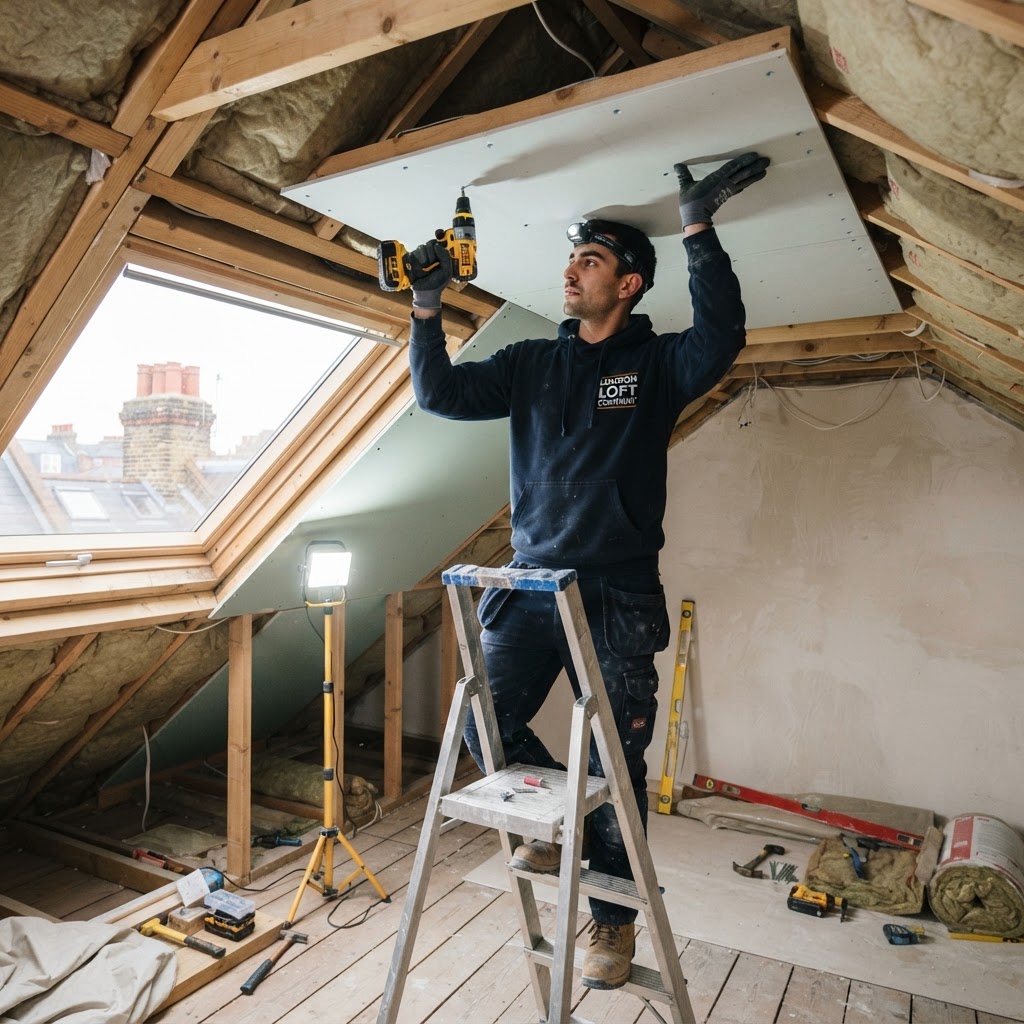
- Fixing boards to studs, joists, or existing walls using screws or adhesive (dot and dab)
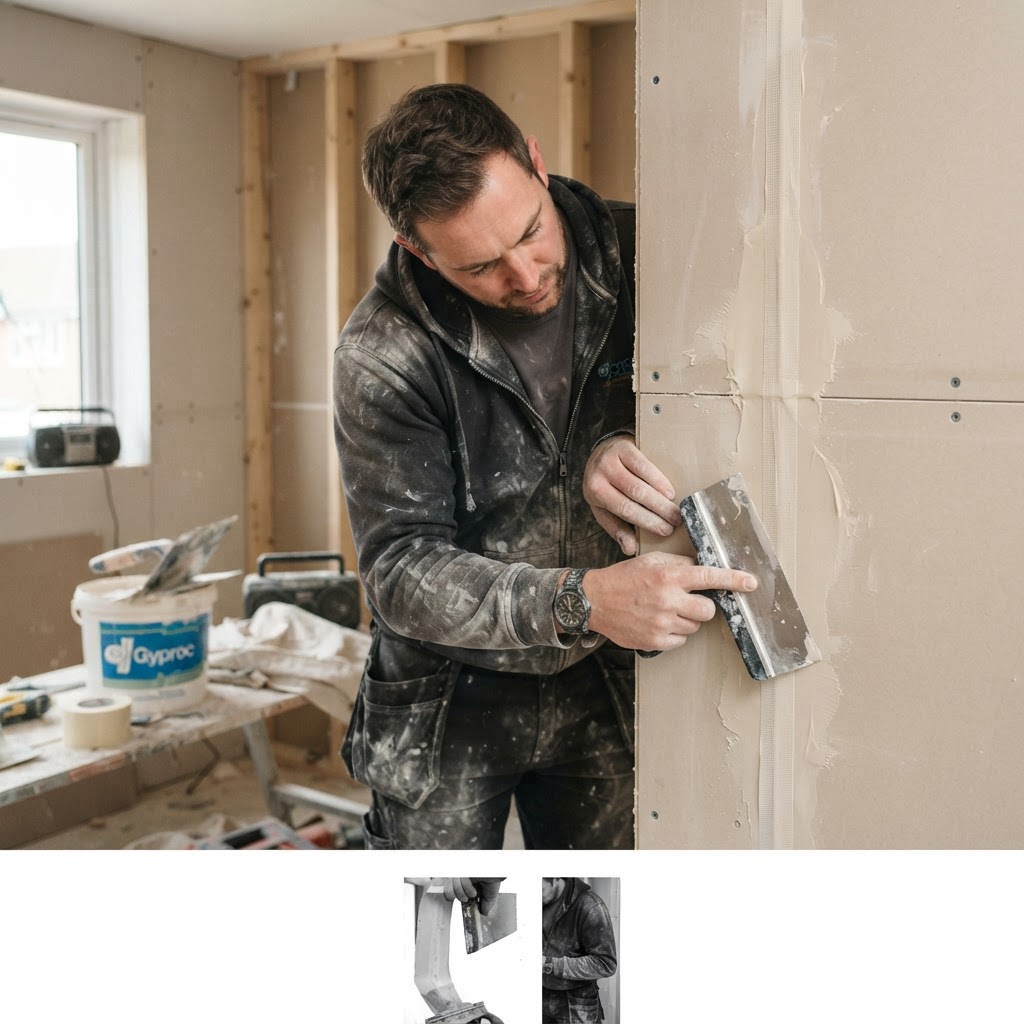
- Taping and jointing the seams between boards
- Skimming over the boards with a thin layer of finishing plaster
- Patching plaster walls where boards meet damaged existing plaster
- Fixing plaster walls that have cracked, bowed, or come away from the board beneath
In many London homes, especially Victorian and Edwardian properties, the work isn't just about putting up new board — it's about matching new plasterboard sections into old lath-and-plaster walls, which requires a different approach to a straightforward new-build stud wall. A good gyprocker will recognise the difference immediately and adjust their method accordingly.
Gyprocking vs General Plastering
It's worth knowing that "gyprocking" and "plastering" overlap but aren't identical. Gyprocking refers specifically to the boarding stage — fixing the plasterboard sheets in place. Plastering (or skimming) is the finishing stage that follows, where a thin coat of finish plaster is applied over the boards to create a smooth surface. Most professional plasterers, including our team, handle both stages as one continuous job, since separating them often leads to a worse finish and more cost.
![Tradesperson fixing a sheet of plasterboard to ceiling joists in a London loft(/blog/stucco-contractor-near-me-a-london-homeowner-s-guide) conversion]
What to Look for in a Plasterer
Not every plasterer offers the same standard of work, and plasterboard jobs in particular can go wrong quickly if boards aren't fixed properly or joints aren't taped correctly before skimming. Before you hire anyone, check for the following:
- Experience with both boarding and finishing — ask whether they handle the full job or just one stage
- Photos of recent, similar work — ideally in properties similar to yours (period conversions, new extensions, flats)
- Clear, itemised quotes — covering materials, labour, and any making-good of surrounding surfaces
- Availability that matches your timeline — some jobs (like a leaking ceiling) can't wait weeks
- Local knowledge — a plasterer familiar with London housing stock will spot issues like damp, old lath-and-plaster, or uneven Victorian wall lines that a less experienced tradesperson might miss
- Reviews and reputation — genuine customer feedback tells you far more than a sales pitch
London Plastering Service has built a 4.9-star reputation over two decades precisely because we focus on these fundamentals — proper preparation, careful boarding, and a smooth, durable finish every time.
Types of Plastering Work Covered
A reliable gyprocker or plastering company should be able to cover a broad range of jobs, not just one narrow task. Typical services include:
- Dry lining and plasterboarding — new walls, stud partitions, loft conversions, extensions
- Wall skimming — a fresh skim coat over existing plasterboard or old plaster for a smooth, paint-ready finish
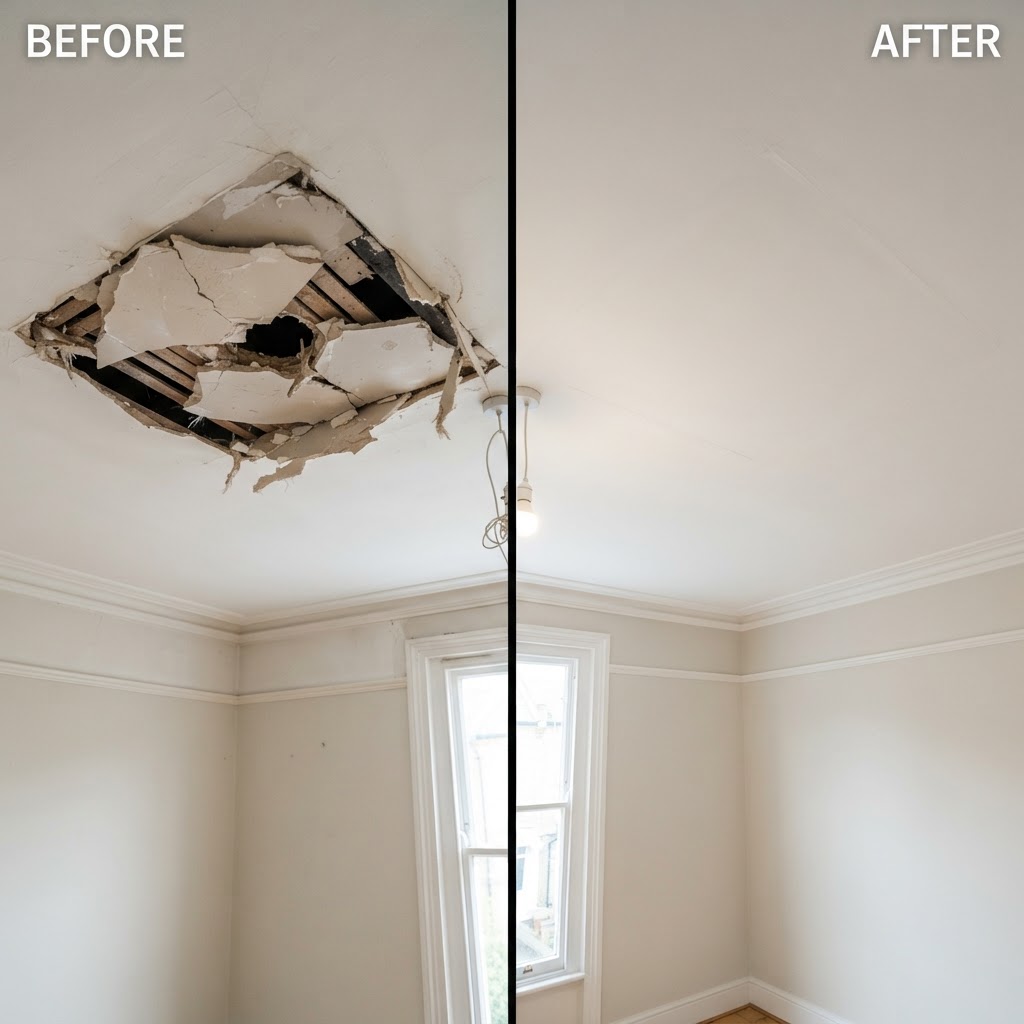
- Ceiling plastering and repairs — including sagging ceilings, water-damaged boards, and full ceiling replacements
- Patch repairs — small areas of damage from shelving removal, electrical work, or minor impact damage
- Full room re-skims — where an entire wall or ceiling needs a complete new finish
- Full house replastering — for major renovations or properties that haven't been replastered in decades
- Artex covering — boarding or skimming over old textured ceilings to modernise the look
- Rendering and lime plastering — for period properties and external finishes
- Decorative plastering and cornicing — restoring or installing period detailing
- Insulated plasterboard fitting — improving thermal performance in older solid-wall properties
If your project involves more than one of these — say, boarding a new stud wall and then skimming the whole room — it's usually more efficient and cost-effective to use one company for the entire job rather than coordinating multiple tradespeople.
Questions to Ask Before Hiring
Before committing to a gyprocker, it's worth asking a handful of direct questions:
- Do you handle boarding and skimming, or just one stage? This avoids confusion about what's included.
- How long will the job take, start to finish? Drying times between coats affect the schedule significantly.
- What preparation is needed from me? Clearing furniture, protecting flooring, or arranging access.
- Will you match existing plaster or finish type? Important in period properties with lime plaster or decorative mouldings.
- What happens if damp or structural issues are found once boards come down? A good plasterer will flag this honestly rather than board over a problem.
- Can you provide a written quote? Verbal estimates often lead to disputes later.
Asking these questions upfront weeds out anyone unwilling to be clear about scope, timescale, or cost.
Common Plastering Jobs in London Properties
London's housing stock is a mix of eras, and each type tends to throw up its own recurring issues:
Victorian terraces — Often have original lath-and-plaster walls and ceilings. When sections fail or crack, patching plaster walls with modern plasterboard and skim is usually more practical than trying to repair lath-and-plaster in isolation, though matching cornicing and period detail takes extra care.
Edwardian semis — Similar considerations to Victorian properties, with slightly higher ceilings and often wider rooms, meaning more board and more joints to tape and finish neatly.
Post-war and modern flats — Typically built with plasterboard stud walls from the outset, so jobs here are more often about fixing plaster walls after plumbing or electrical work, boarding new partitions, or re-skimming after minor damage.
Loft conversions and extensions — Almost always require full boarding of new stud walls and ceilings, plus insulated plasterboard where thermal performance matters.
Rental properties — Landlords across boroughs like Croydon, Hackney, and Ealing often need quick turnaround patch repairs between tenancies, where speed and neatness matter more than decorative detail.
Whatever the property type, the underlying principle is the same: proper preparation, correctly fixed boards, well-taped joints, and a smooth skim finish that's ready for decoration.
When You Need a Professional Plasterer
Small, cosmetic marks — a scuff, a pinhole from a picture hook — can often be touched up with ready-mixed filler by a confident DIYer. But anything involving plasterboard itself, or larger areas of damage, is a different matter. You should call in a professional when:
- A ceiling or wall section has come away from its fixings or is sagging
- Water damage has softened or stained plasterboard
- You're boarding a new stud wall, loft conversion, or extension
- Cracks keep reappearing after DIY filler repairs (often a sign of movement or incorrectly fixed boards beneath)
- You want a seamless finish across a large wall or ceiling, where uneven DIY patches would show under paint or light
- The property has period features (cornicing, ceiling roses) that need to be preserved or matched
Getting plasterboard fixing and skimming wrong is costly to undo — poorly taped joints and uneven skimming show up clearly once paint goes on, and correcting it usually means stripping back and starting again. For anything beyond a very small patch, hiring a professional gyprocker is almost always the more economical choice in the long run.
How to Get a Quote Quickly
Getting a quote shouldn't be complicated. At London Plastering Service, the process is straightforward:
- Get in touch — call +44 7460 892826 or email office@londonplasteringservice.com with a brief description of the job and, ideally, a few photos.
- Receive a prompt response — we aim to come back to you quickly with an idea of cost and timescale.
- Arrange a site visit if needed — for larger jobs like full room re-skims or full house replastering, we'll assess the property in person.
- Agree a clear, written quote — covering materials, labour, and timeframe before any work begins.
- Book a start date — we work Monday to Friday, 7am–7pm, and Saturday 8am–5pm, so we can often fit around your schedule.
We cover all 32 London boroughs, so whether you're in Bromley, Barnet, Hounslow, or Havering, there's a local team ready to take on the job. Costs vary depending on the size of the area, the type of board or finish needed, and whether there's additional preparation such as removing old artex or dealing with damp — so it's always best to get a specific quote for your property rather than relying on a generic figure.
FAQ About Hiring a Plasterer
What is gyprocker near me and when is it needed? A "gyprocker" is a tradesperson who fixes and finishes plasterboard, used for new walls, ceilings, loft conversions, and repairs. You'd search for one when you need plasterboard installed, replaced, or skimmed smooth, whether that's a single damaged section or an entire room.
How much does gyprocker near me cost in London? Costs depend heavily on the size of the area, the type of board and finish required, and the condition of the existing surface. Small patch repairs cost less than full room re-skims or boarding a new loft conversion, so it's best to get a tailored quote rather than rely on a flat rate.
How long does gyprocker near me take? A small patch repair might be completed in a day, while boarding and skimming a full room typically takes a few days once drying time between coats is factored in. Full house replastering projects take longer and depend on the number of rooms involved.
Can I do gyprocker near me myself or should I hire a professional? Small cosmetic touch-ups can sometimes be handled with ready-mixed filler, but fixing plasterboard, taping joints, and skimming to a smooth, even finish is a skilled trade. Poorly fixed boards or uneven skimming tend to show once painted, so most homeowners get better long-term results from hiring a professional.
What should I look for when choosing a plasterer? Look for clear written quotes, photos of previous work, experience with properties similar to yours, and good customer reviews. A plasterer familiar with London's mix of period and modern housing stock will be better equipped to handle issues like old lath-and-plaster or uneven period walls.
Do you cover my area of London? Yes — London Plastering Service covers all 32 London boroughs, from outer areas like Bexley and Harrow to central boroughs like Westminster and Camden.
Ready to Book Your Gyprocker?
If you've got a plasterboard job on your hands — whether it's a small patch repair, a full ceiling replacement, or boarding out a new extension — London Plastering Service is ready to help. With over 20 years of experience, a 4.9-star reputation, and coverage across every London borough, we handle everything from quick fixes to full house replastering.
Call us on +44 7460 892826 or email office@londonplasteringservice.com for a fast, clear quote. We're available Monday to Friday, 7am–7pm, and Saturday 8am–5pm — so getting your job booked in is as straightforward as the finish we aim to leave behind.
Related Plastering Guides & Services
Need Professional Plastering?
Get expert plastering services in London. Free quotes within 60 minutes.