
Gyprocker Near Me: Finding a Reliable Local Plasterer
When you search for a gyprocker near me, you're usually facing one of two situations: a wall or ceiling has been damaged and needs new plasterboard, or you're renovating a room and need stud walls, ceilings, or a loft conversion boarded and finished properly. "Gyprocker" is a term borrowed from the trade name Gyproc, one of the most widely used plasterboard brands in the UK, and it's commonly used to describe a tradesperson who hangs and finishes plasterboard. Whatever the reason, getting this work done properly matters—poorly fitted plasterboard leads to visible joints, cracking, and uneven walls that show up the moment you paint.
This guide explains exactly what a gyprocker does, what to look for when hiring one, how much the work typically costs, and how quickly you can get a professional plasterer started on your London property.
What Is a Gyprocker and When Do You Need One?
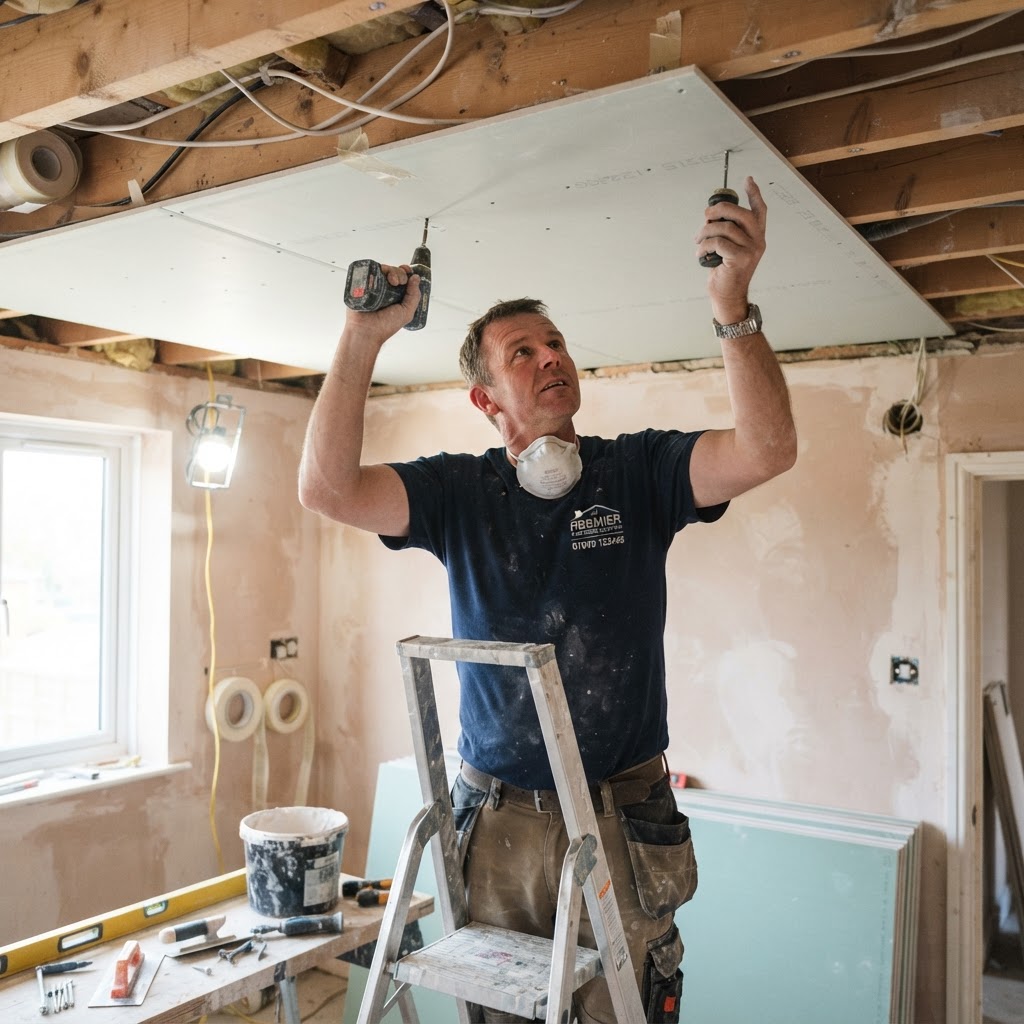
A gyprocker is a tradesperson who installs plasterboard (also known as drywall boarding in some contexts, though in the UK the term plasterboard is standard) and then skims or tapes and joints it to create a smooth, paintable surface. This covers everything from boarding a single damaged ceiling to dry lining an entire extension or loft conversion.
You'll typically need a gyprocker when:
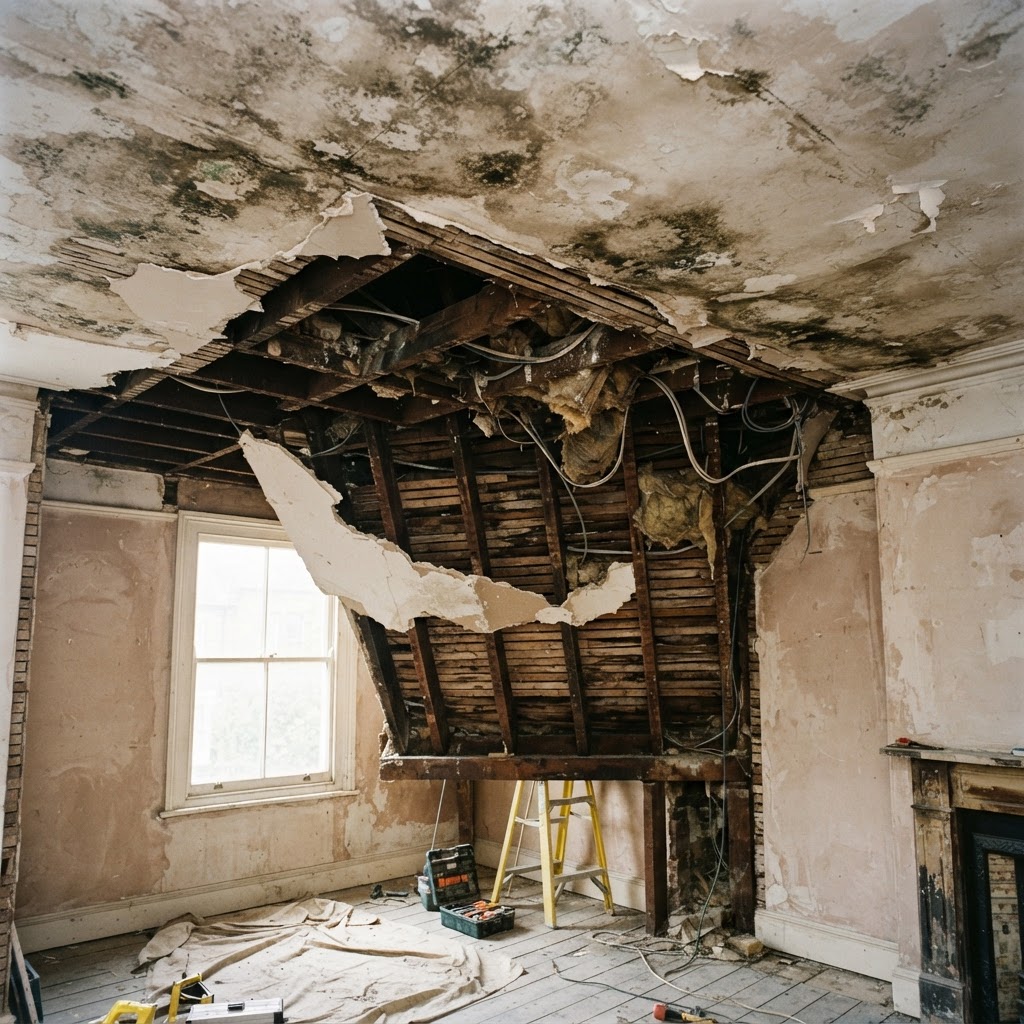
- A ceiling has collapsed or sagged due to water damage, age, or a failed lath and plaster system
- You're converting a loft and need new stud walls and ceilings boarded
- You're building a partition wall and need it boarded and finished
- An extension or new-build room needs first-fix plasterboarding before skimming
- Old artex ceilings are being boarded over rather than removed
- You're insulating a solid wall and need insulated plasterboard fitted
In many London properties—particularly Victorian terraces and Edwardian semis—original ceilings were constructed using lath and plaster, a timber lath base covered in lime plaster. When these ceilings fail, replacing them with plasterboard is usually the practical solution, since matching traditional lath and plaster is far more specialist and costly. That said, if you're working on a period property and want to retain original lime plaster features, you may need a lime plasterer rather than a standard gyprocker—these are two different skill sets, and it's worth being clear on which one your project needs before you start calling around.
[(/blog/lime-plasterers-near-me-a-london-homeowner-s-guide) to a stud ceiling frame in a London loft conversion]
What to Look For in a Plasterer
Not every plasterer who boards walls is equally skilled at the finishing work, and not every "plasterer" does plasterboarding at all—some specialise purely in skimming existing surfaces. When you're vetting someone for gyprocker work, look for the following:
Experience with the specific job type
Boarding a flat ceiling is different from boarding around a stud partition, and both are different from fitting insulated plasterboard to a solid external wall. Ask whether they've done similar jobs recently and, ideally, ask to see photos.
A tidy, methodical approach
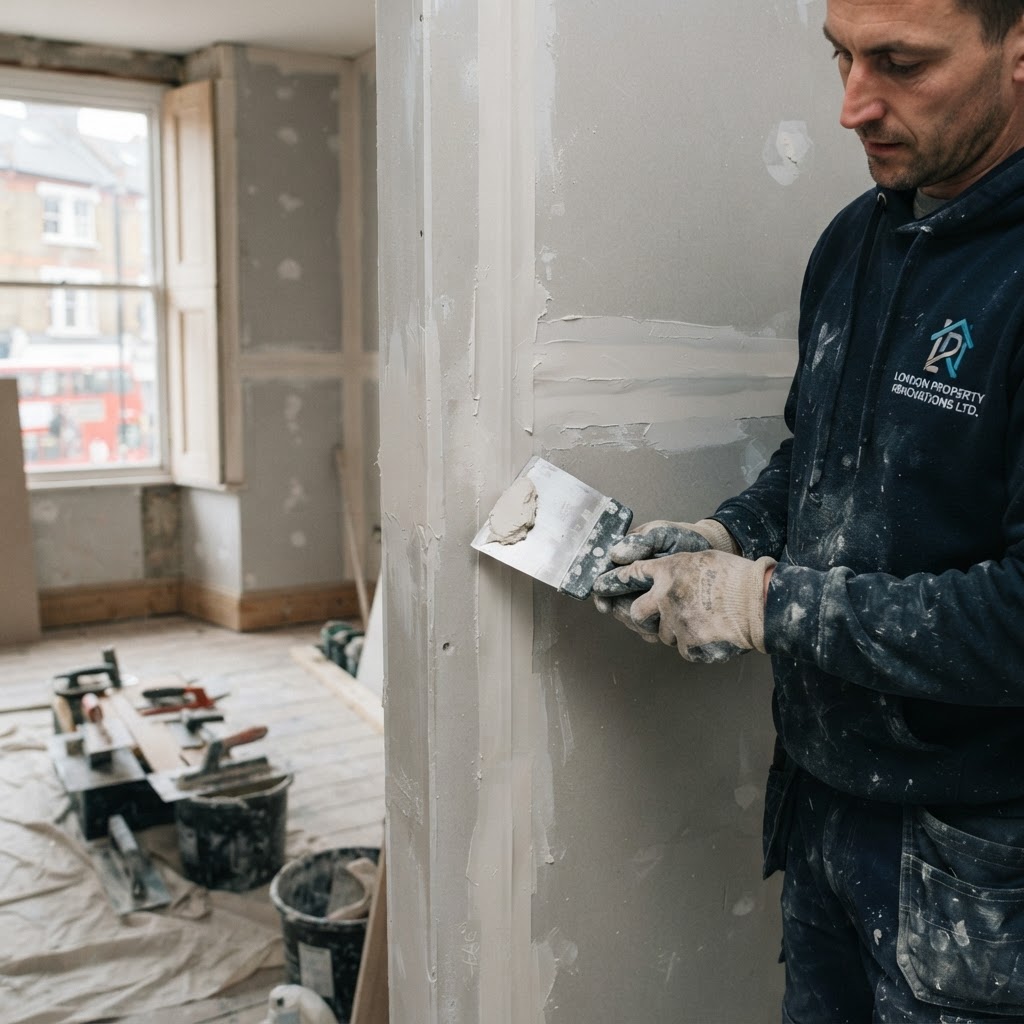
Good plasterboarding work is about more than hanging sheets—it's about correct joint staggering, proper fixing centres, taping, and jointing before any skim goes on. Rushed boarding shows up later as cracking along joint lines.
Clear communication and written quotes
A reputable plasterer should be able to explain the process, give you a realistic timeline, and provide a written quote rather than a vague verbal estimate.
Local knowledge of London properties
Someone who regularly works across London boroughs will understand the quirks of period properties—uneven joists, non-standard ceiling heights, old wiring running through ceiling voids—far better than someone who mostly works on new-builds elsewhere.
Reviews and reputation
Check recent reviews, not just overall star ratings. Look for comments specifically about plasterboarding and finishing quality, not just punctuality.
Types of Plastering Work Covered
A full-service plastering company should be able to handle the entire scope of work your project needs, not just the boarding itself. Typical services include:
- Dry lining and plasterboarding – first-fix boarding of walls and ceilings, including insulated plasterboard for thermal upgrades
- Wall skimming – the final smooth finish applied over new plasterboard or existing walls
- Ceiling plastering and ceiling plaster repair – patching, re-boarding, or full re-skims of damaged ceilings
- Patch repairs – fixing small areas of cracked or blown plaster without redoing the whole surface
- Full room re-skims – stripping back and re-finishing an entire room
- Full house replastering – useful after a major renovation or when a property has multiple ceilings and walls in poor condition
- Artex covering – boarding or skimming directly over old textured artex ceilings
- Rendering – external wall finishes
- Lime plastering – traditional lime-based plaster for period and listed properties
- Decorative plastering and cornicing – restoring or replicating period coving and ceiling roses
If your project involves several of these—say, boarding a new loft conversion and then skimming it, plus patching a couple of ceilings elsewhere in the house—it's usually more efficient and cost-effective to use one company for the whole job rather than hiring separate tradespeople for each stage.
Questions to Ask Before Hiring
Before committing to any plasterer, it's worth asking a short list of practical questions:
- Have you worked on properties like mine before? Victorian terraces, Edwardian semis, and modern flats each present different challenges.
- What type of plasterboard will you use, and why? Standard, moisture-resistant, fire-rated, or insulated boards all have different applications.
- How long will the job take, including drying time? Plasterboarding itself might be quick, but skim coats need proper drying time before decorating.
- **What's included in the quote?** Materials, labour, waste removal, and making good around sockets or fittings should all be clear upfront.
- Can you provide a written quote and a start date? Verbal estimates can change; a written quote protects both parties.
- Do you cover my borough? If you're in an outer borough, confirm the plasterer actually works there regularly rather than occasionally.
Common Plastering Jobs in London Properties
London's housing stock is a mix of old and new, and the plastering work required reflects that variety:
Victorian and Edwardian terraces often have lath and plaster ceilings that eventually sag or crack with age. These are commonly replaced with plasterboard and skimmed rather than repaired in the original material, unless the property has features worth preserving, in which case lime plastering may be the better route.
Loft conversions across London boroughs almost always require full plasterboarding of new stud walls and sloped ceilings, followed by skimming, as part of the first-fix to final-finish process.
Modern flats and new-build extensions typically already have plasterboard walls, but partition changes, built-in storage, or damage from leaks often require patch boarding and re-skimming to blend seamlessly with the existing finish.
Period properties with decorative cornicing sometimes need gyprocker work combined with decorative plastering, particularly where a ceiling has been replaced and the original coving needs to be reinstated or matched.
Water-damaged ceilings, a frequent issue in London's older buildings, usually need the affected board removed, replaced, and re-skimmed—simply painting over a water stain won't address the underlying damage to the board itself.
When You Need a Professional Plasterer
It's reasonable to ask whether you can do gyprocker work yourself, particularly for small jobs. Fitting a single sheet of plasterboard over a small patch isn't beyond a competent DIYer. However, most projects benefit significantly from professional skill, for a few reasons:
- Joint finishing is harder than it looks. Getting plasterboard joints flush and invisible under paint takes practice. Amateur taping and jointing often shows as visible ridges or cracks once painted.
- Ceiling work is physically demanding and risky. Holding and fixing heavy boards overhead, often while working from height, is genuinely difficult without the right support equipment and a second pair of hands.
- Skimming requires a different skill set entirely. Even if you can hang boards reasonably well, achieving a smooth skim finish over the top usually requires an experienced plasterer.
- Mistakes are expensive to undo. Incorrectly fixed boards or poor jointing often need to be stripped back and redone, costing more in the long run than hiring a professional from the start.
For anything beyond a very minor patch repair—new ceilings, loft conversions, full rooms, or whole-house replastering—it's generally worth bringing in a professional plasterer rather than attempting it yourself.
How Much Does Gyprocker Work Cost and How Long Does It Take?
Costs for plasterboarding and finishing vary considerably depending on the size of the area, the condition of the existing surface, access, and whether insulated boards or specialist finishes are needed. Rather than quote a fixed figure that may not reflect your specific job, it's best to get a tailored quote based on an assessment of your property—this is the only way to get an accurate price rather than a rough guess that could be well off once the work actually starts.
Timelines also depend on scope. A single ceiling might be boarded and skimmed within a day or two, with additional drying time before decorating. A full loft conversion or whole-house replaster will naturally take longer, often spread across several days to allow for proper drying between coats. A reputable plasterer should be able to give you a realistic timeline once they've seen the job, including how long you'll need to wait before painting.
How to Get a Quote Quickly
If you're ready to move forward, getting a quote shouldn't be a slow or complicated process. London Plastering Service offers free quotes, typically within 60 minutes of getting in touch, covering all 32 London boroughs—whether you're in a Victorian terrace in Walthamstow, an Edwardian semi in Ealing, or a new-build flat in Stratford.
With over 20 years of experience and a 4.9-star reputation, the team handles everything from small patch repairs and ceiling plaster repair to full house replastering, dry lining, insulated plasterboarding, and lime plastering for period properties. As a family-run business, you'll be dealing with people who genuinely care about getting the finish right, not a call centre passing your job between subcontractors.
To get started, call +44 7460 892826 or email office@londonplasteringservice.com. The team is available Monday to Friday, 7am to 7pm, and Saturday, 8am to 5pm—so you can reach someone at a time that actually suits you.
FAQ About Hiring a Plasterer
What is gyprocker near me and when is it needed? A gyprocker is a tradesperson who hangs and finishes plasterboard, typically needed for damaged ceilings, loft conversions, new stud walls, or any project requiring new plasterboard surfaces before decorating. It's distinct from general skimming work, which applies to existing plaster or newly boarded surfaces.
How much does gyprocker work cost in London? Costs depend on the size of the area, the type of board used, access, and the condition of the existing structure, so it's best to get a free, tailored quote rather than rely on a generic figure. London Plastering Service provides quotes typically within 60 minutes after assessing your specific job.
How long does plasterboarding and finishing take? A small job like a single ceiling might take a day or two including skimming, while larger projects such as loft conversions or full house replastering take longer to allow for proper drying between stages. Your plasterer should give you a realistic timeframe once they've seen the scope of work.
Can I do gyprocker work myself or should I hire a professional? Small patch repairs may be manageable for a confident DIYer, but ceiling work, joint finishing, and skimming generally require professional skill to avoid visible joints, cracking, or uneven finishes. Mistakes often cost more to correct than hiring a professional from the outset.
What should I look for when choosing a plasterer? Look for relevant experience with your specific job type, clear communication, written quotes, genuine local knowledge of London properties, and solid recent reviews focused on finish quality. A plasterer who regularly works in your borough will understand common issues in local housing stock.
Do you cover my area of London? Yes, London Plastering Service covers all 32 London boroughs, from inner-city flats to outer-borough period terraces, with free quotes typically available within 60 minutes of getting in touch.
Related Plastering Guides & Services
Need Professional Plastering?
Get expert plastering services in London. Free quotes within 60 minutes.