
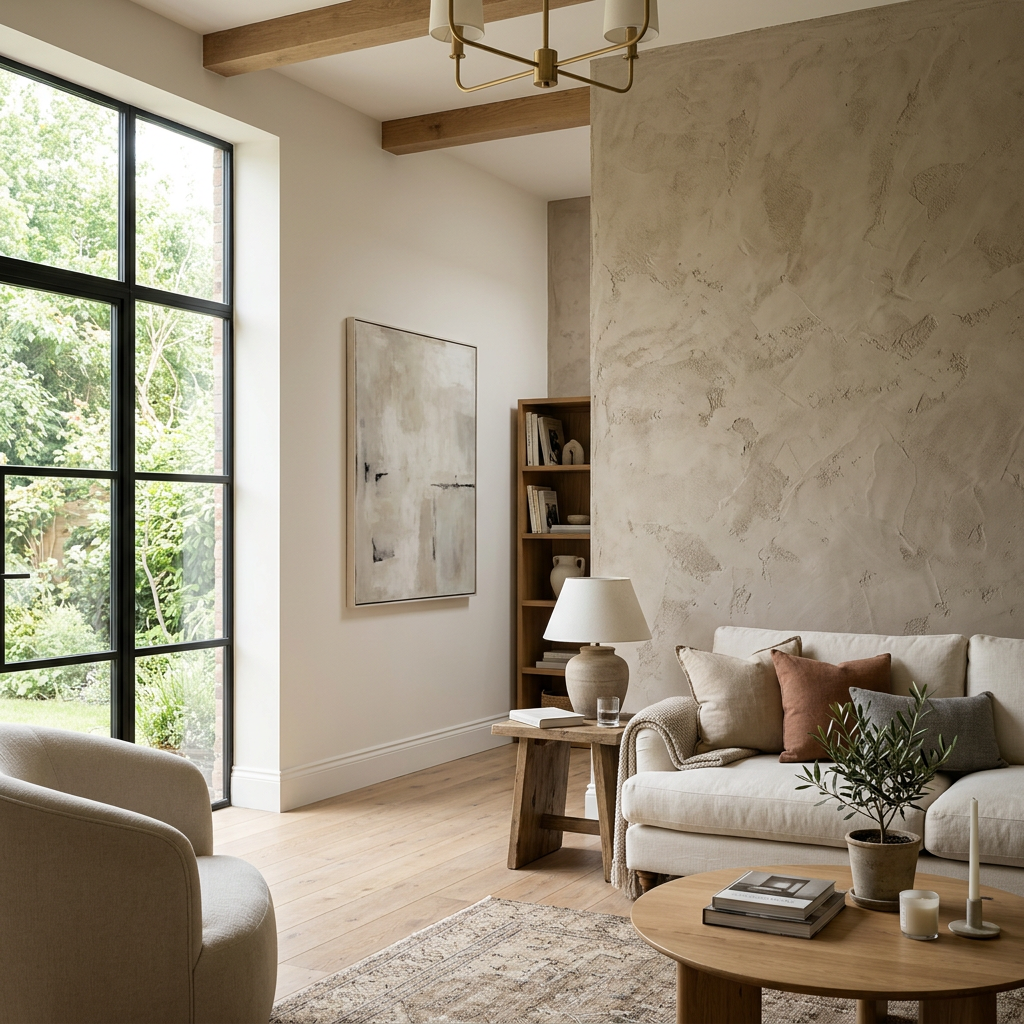
Smooth vs Textured Plaster Finish: Which Is Right?
Freshly plastered walls are a blank canvas — and the finish you choose will shape how a room looks, feels, and lives for years to come. It's not a trivial decision. Smooth and textured finishes each have genuine strengths, and the right choice depends on your home, your rooms, and what you actually need from your walls.
This guide covers everything London homeowners need to know before making that call — from the practical differences between finish types, to how they perform in real London properties, to what skilled plasterers actually recommend.
What Does 'Wall Finish' Actually Mean?
When plasterers talk about finish, they mean the final surface layer applied to your walls or ceilings — the coat you ultimately see and touch. This is distinct from the base or browning coats underneath, which are structural. The finish coat is where aesthetics, durability, and maintenance all converge.
Get it right and your walls will look sharp for a decade. Get it wrong and you'll be redecorating far sooner than you planned.
Smooth Finish: What It Is and When It Works
A smooth skim finish is the standard for most modern plastering work in London. Applied in thin coats and trowelled to a flat, seamless surface, it's what most homeowners picture when they think of freshly plastered walls.
Advantages of a Smooth Finish
Versatile aesthetic. Smooth walls work across virtually every interior style — from period conversions in Islington to new builds in Canary Wharf and minimalist flats in Shoreditch. They don't impose a style; they support whatever you put in the room.
Light reflection. Flat walls bounce light more evenly, which genuinely brightens rooms — particularly useful in north-facing rooms or smaller London flats where natural light is already at a premium.
Easy to clean. Smooth surfaces wipe down cleanly. For kitchens, hallways, and homes with children or pets, that matters more than it might seem.
Excellent base for decoration. Whether you're painting, wallpapering, or applying a specialist finish, a smooth skim gives you the best possible starting surface.
Where Smooth Falls Short
The main limitation of a smooth finish is that it's unforgiving. Any underlying wall imperfections — dips, ridges, or uneven substrate — can telegraph through the final surface, especially under raking light. This is why smooth plastering demands a skilled hand. A mediocre smooth finish will look worse than a mediocre textured one.
If your walls have significant movement history or you're working with older, irregular substrates, smooth may require more preparation work to achieve a truly flat result.

A good example of smooth finish work done properly: our full house re-skim in Tower Hamlets, E1 involved stripping back damaged lower wall sections, re-bonding and re-skimming through to a continuous flat finish across the whole room. The client noted you couldn't see the join between old and new work — that's the standard smooth plastering should hit.
Textured Finish: What It Is and When It Works
Textured finishes introduce deliberate surface variation — from subtle hand-trowelled marks to more pronounced patterns like skip trowel or knockdown. They fell out of fashion in many London homes during the 2000s but have seen a genuine revival, particularly in period properties where some surface character feels appropriate.
Advantages of a Textured Finish
Hides imperfections. This is the practical headline. On older walls with slight undulation, minor cracking history, or uneven backgrounds, texture provides visual cover that smooth simply can't. For Victorian and Edwardian terraces — which make up a huge proportion of London's housing stock — this is genuinely useful.
Adds warmth and depth. Flat smooth walls can feel clinical in certain settings. A subtle texture adds tactile and visual interest, particularly in living rooms, dining rooms, or bedrooms where atmosphere matters.
Acoustic benefit. In larger rooms with hard floors, textured surfaces can help absorb sound and reduce echo — a minor but real advantage.
Creative flexibility. Skip trowel, knockdown, sand finish, Venetian plaster — textured finishes offer a range of looks that smooth plastering simply can't replicate.
Popular Textured Styles in London
- Skip trowel: Irregular, casual surface created by applying plaster in overlapping strokes and leaving some areas untouched. Works well in relaxed, informal spaces.
- Knockdown: More uniform than skip trowel, with flattened peaks that create a consistent but still textured appearance. Bridges the gap between smooth and heavily textured.
- Sand finish: Fine aggregate mixed into the top coat creates a subtle, matt texture. Durable and practical, particularly for hallways.
Where Textured Falls Short
Texture traps dust and grime in a way smooth walls don't. In kitchens especially, cooking residue and grease can accumulate in surface crevices, making cleaning more involved. Heavily textured walls can also feel dated in contemporary interiors, so it's worth being honest about your home's overall style before committing.

Our lath and plaster ceiling replacement and wall re-skim in Richmond upon Thames, TW9 is a good illustration of working with period properties: older substrates, irregular backgrounds, and the need to achieve a finish that sits sympathetically with the building's character.
Choosing the Right Finish Room by Room
There's no universal answer — but there are sensible defaults for each room type.
Living Rooms
Both finishes work well here. Smooth maximises light and gives a clean backdrop for artwork and furniture. A subtle texture adds warmth and hides the minor surface movement that's common in period reception rooms. If your living room has a fireplace, cornicing, or other period details, a smooth finish typically complements them better.
Bedrooms
Bedrooms are often where texture feels most at home. The room's primary function is rest and comfort, not practicality — so the warmth and depth texture adds can work in your favour. That said, smooth remains the most common choice and works equally well.
Kitchens
Smooth is the pragmatic choice for kitchens. Easy to wipe down, compatible with splashbacks and fitted cabinetry, and suited to the typically functional aesthetic of a kitchen environment. Textured kitchen walls are not impossible, but you'll be cleaning them more carefully.
Hallways and Staircases
Hallways take the most physical abuse of any surface in a home — bags, coats, furniture, scuffs. A harder smooth finish (or a sand finish with some aggregate for durability) tends to perform better here than a soft decorative texture.
Older London Properties
If you're in a Victorian terrace, Edwardian conversion, or Thirties semi, your walls are likely to have some movement history, old repairs, and imperfect backgrounds. Skilled smooth plastering can absolutely handle these — but texture is a legitimate tool for achieving a clean result without heroic preparation work.

Our full house re-skim in Barnet, EN5 covered walls and ceilings across multiple rooms, including a main bedroom ceiling that had been stripped entirely back to the battens. Achieving a perfectly flat smooth finish from that kind of substrate requires preparation and experience — but the results speak for themselves.
Practical Tips Before You Decide
Test in real lighting. If you're considering a textured finish, ask your plasterer to apply a small sample to a patch of wall and view it at different times of day and under artificial light. Texture reads very differently under LED downlights versus daylight, and what looks appealing in a showroom can feel heavy in your actual room.
Consider what you're applying afterwards. Matt emulsion paint works with both finishes. Gloss or satin paint on a textured surface will catch light in the recesses and exaggerate the texture — which may or may not be what you want. Wallpaper needs a smooth, flat surface to adhere and hang properly.
Think about the long term. Smooth walls are easier to touch up and repaint. Textured finishes are harder to match if a section needs repair later — the texture pattern has to be recreated rather than simply feathered in.
Talk to your plasterer honestly. A good plasterer will tell you what your existing walls can realistically support. If the substrate is in poor condition, the path to a flawless smooth finish may involve more prep cost than texture would require. That's a legitimate practical consideration, not a sales pitch.
For a sense of what different plastering finishes cost, our skimming cost guide and wall plastering cost page break down typical London pricing by room and finish type.

Cost: Does Finish Type Change the Price?
For standard smooth versus lightly textured finishes, the labour cost difference is often minimal — both require similar time and skill. Where cost differences emerge is at the decorative end: Venetian plaster, polished plaster, and specialist textured finishes can cost significantly more than a standard skim, both in materials and application time.
If you're working to a budget, a well-executed smooth skim is almost always the most cost-effective route to a high-quality result. Our plastering prices guide covers the full range of what to expect across London.
What London Plastering Service Recommends
For the majority of London homes — particularly the period properties that dominate the city's housing stock — a smooth two-coat skim finish remains the most versatile, durable, and rewarding choice. It performs well across all room types, supports all decorating options, and holds its value visually over time.
Textured finishes have a genuine place, particularly in older properties with challenging backgrounds, in rooms where atmosphere takes priority over practicality, and where homeowners want something beyond the standard smooth wall. Used well, texture is a legitimate design tool — not a shortcut.
The honest answer is that the best finish is the one applied correctly by a skilled plasterer, on properly prepared walls, suited to how you actually use the room. Everything else is detail.
If you'd like to discuss the right finish for your property, get in touch with London Plastering Service for a free assessment. We work across all 32 London boroughs and can advise on finish options before any work begins.
Frequently Asked Questions
Can I change a textured finish to smooth later? Yes, but it requires re-skimming over the textured surface or, in some cases, removing it entirely and starting again. Skimming directly over texture is possible if the surface is sound, but achieving a truly flat result may require an extra coat. See our Artex and textured ceiling re-skim work for a real example of this approach.
Does smooth plaster take longer to dry than textured? Drying time depends more on coat thickness and room conditions than finish type. Both smooth and textured finishes typically need a minimum of 24–48 hours before painting. For a full guide, see our plaster drying time page.
Which finish is better for damp or older walls? Neither finish alone addresses damp — the underlying cause needs treating first. On older walls with minor surface irregularity, texture can be more forgiving. On properly prepared walls, smooth is achievable regardless of age. Always address any moisture issues before plastering. Our replastering cost guide covers preparation costs for older properties.
Is textured plaster harder to paint? Yes, slightly. Textured surfaces absorb more paint and can require an additional coat to achieve even coverage. Factor this into your decorating budget if you choose a textured finish.
Do I need a specialist plasterer for textured finishes? Decorative textured finishes — particularly Venetian plaster or polished plaster — require specific skills and materials. Standard skip trowel or knockdown textures are within the range of an experienced general plasterer. For anything specialist, ask to see examples of previous work before committing.
Related Plastering Guides & Services
Need Professional Plastering?
Get expert plastering services in London. Free quotes within 60 minutes.