
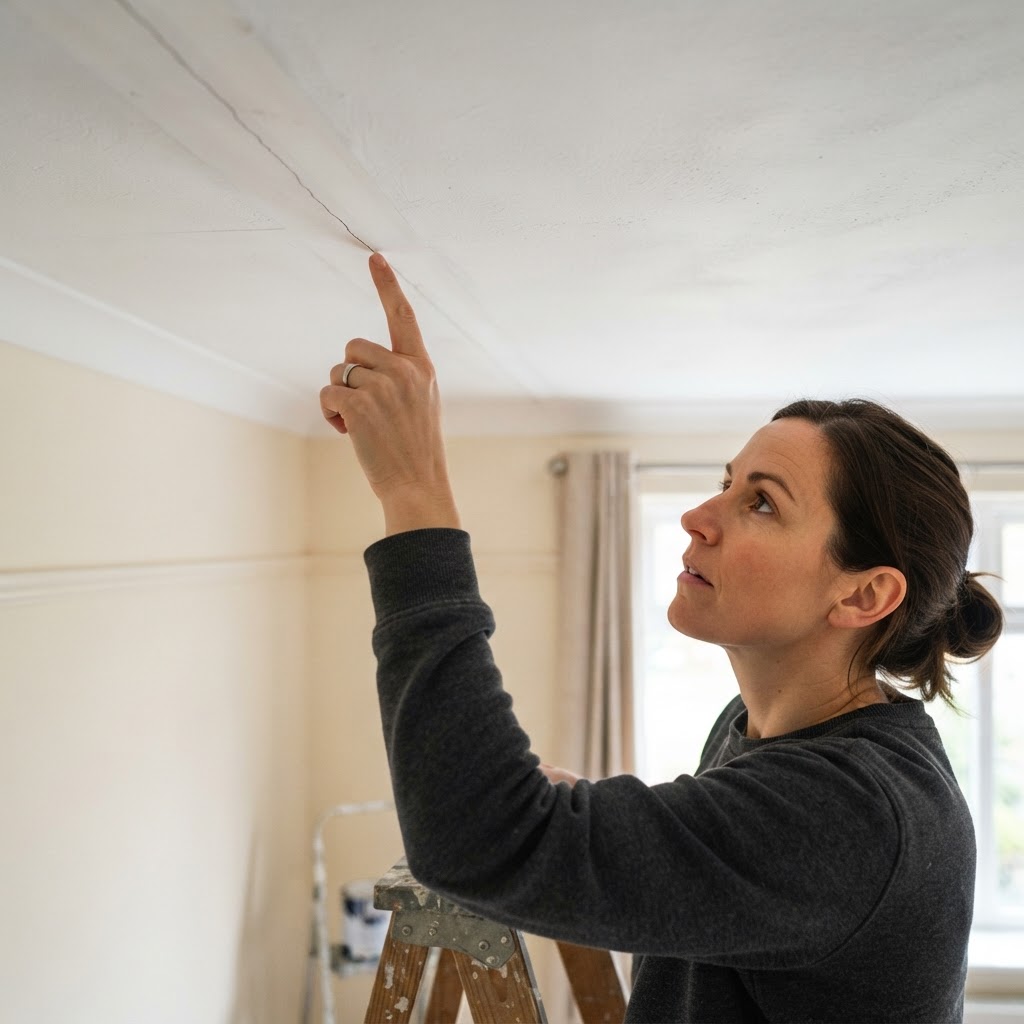
Fixing Cracks in Plasterboard: A Complete UK Guide
If you've noticed a hairline crack creeping across a ceiling or a jagged split running along a wall in your London flat or Victorian terrace, you're probably wondering whether it's a five-minute filler job or something more serious. Fixing cracks in plasterboard means diagnosing why the crack has appeared, then repairing it properly so it doesn't reopen within a few months — which is exactly what happens when people reach for a tub of filler without addressing the underlying cause.
This guide walks through everything a London homeowner or landlord needs to know: what causes cracks, how professionals actually repair them, materials involved, realistic costs, and when it's worth calling in a plasterer rather than tackling it yourself.
What Is Fixing Cracks in Plasterboard, and When Is It Needed?
Plasterboard (known as drywall in the US) is the standard building material for internal walls and ceilings in the vast majority of UK homes built or renovated in the last 60-70 years. It's fixed either directly to timber or metal studwork, or bonded to masonry using the dot and dab method common in London conversions and extensions.
Cracks in plasterboard generally fall into a few categories:
- Joint cracks — appearing along the seams where two boards meet, usually because the joint tape has failed or the jointing compound wasn't applied correctly during installation.
- Corner cracks — found where walls meet ceilings, or at internal corners, often linked to minor structural movement or shrinkage.
- Settlement or movement cracks — diagonal cracks radiating from doorframes, window reveals, or spreading across a ceiling, which can indicate the building is moving slightly (common in older London properties with clay soil foundations).
- Impact damage — a crack (sometimes with a dent or bulge) caused by something knocking the wall, furniture being moved, or a door handle striking the board repeatedly.
Fixing the crack is needed whenever you notice one, because plasterboard cracks rarely heal themselves — they tend to widen slightly with seasonal movement, temperature changes, and normal building settlement. Left alone, a hairline crack can become a wider, more visible fault line, and in ceilings, cracking can sometimes be an early sign of a more significant issue worth investigating, such as loose fixings or water damage above.
Why Fixing Cracks in Plasterboard Matters for London Properties
London's housing stock is a real mix — Victorian terraces with lath-and-plaster ceilings later boarded over, Edwardian semis with solid brick party walls, post-war conversions, and modern flats built with lightweight steel-framed partitions. Each type of property has its own tendency to crack.
In converted Victorian and Edwardian houses, timber floor joists flex more than concrete, so ceiling boards fixed to them are prone to joint cracking, especially where boards weren't staggered correctly during the original installation. In newer flats and extensions, plasterboard is often fixed to timber or metal stud partitions that can shrink slightly as they dry out, opening up hairline cracks at corners and joints within the first year or two.
There's also a cosmetic and value dimension. Cracked ceilings and walls are one of the first things a prospective tenant or buyer notices, and unresolved cracking can raise questions during a survey about structural movement — even when the cause is entirely superficial. Fixing cracks properly, rather than papering over them, protects both the appearance and the perceived condition of the property.
For landlords managing HMOs or multiple rental units across boroughs, keeping ceilings and walls crack-free is also part of routine maintenance obligations, and repeated cracking in the same spot is often a signal that a proper repair — rather than a quick fill — is overdue.
Types and Options for Repairing Cracks in Plasterboard
Not every crack needs the same treatment. The right approach depends on the crack's width, location, and cause.
Hairline and Fine Cracks
These are usually less than 1mm wide and can often be treated with a flexible filler or a skim coat reinforced with scrim tape, particularly along joints and corners.
Wider Structural-Looking Cracks
Cracks over 2-3mm wide, especially those that appear suddenly or run diagonally from openings, deserve a closer look before repair. In some cases these need reinforcing with plasterboard scrim tape and a proper skim, but if movement is ongoing, filling alone won't hold — the crack will simply reappear.
Recurring Cracks in the Same Spot
If a crack keeps coming back after being filled, the usual culprits are inadequate joint taping during the original board installation, boards fixed too close together without proper jointing, or genuine background movement in the structure. This typically calls for cutting back the joint, re-taping with proper scrim, and re-skimming rather than another layer of filler.
Cracks Combined With Other Damage
Where a crack is accompanied by a hole, a soft or crumbling section of board, or water staining, this isn't a simple crack repair anymore — it usually means a section of plasterboard needs cutting out and replacing before any finishing work can start.
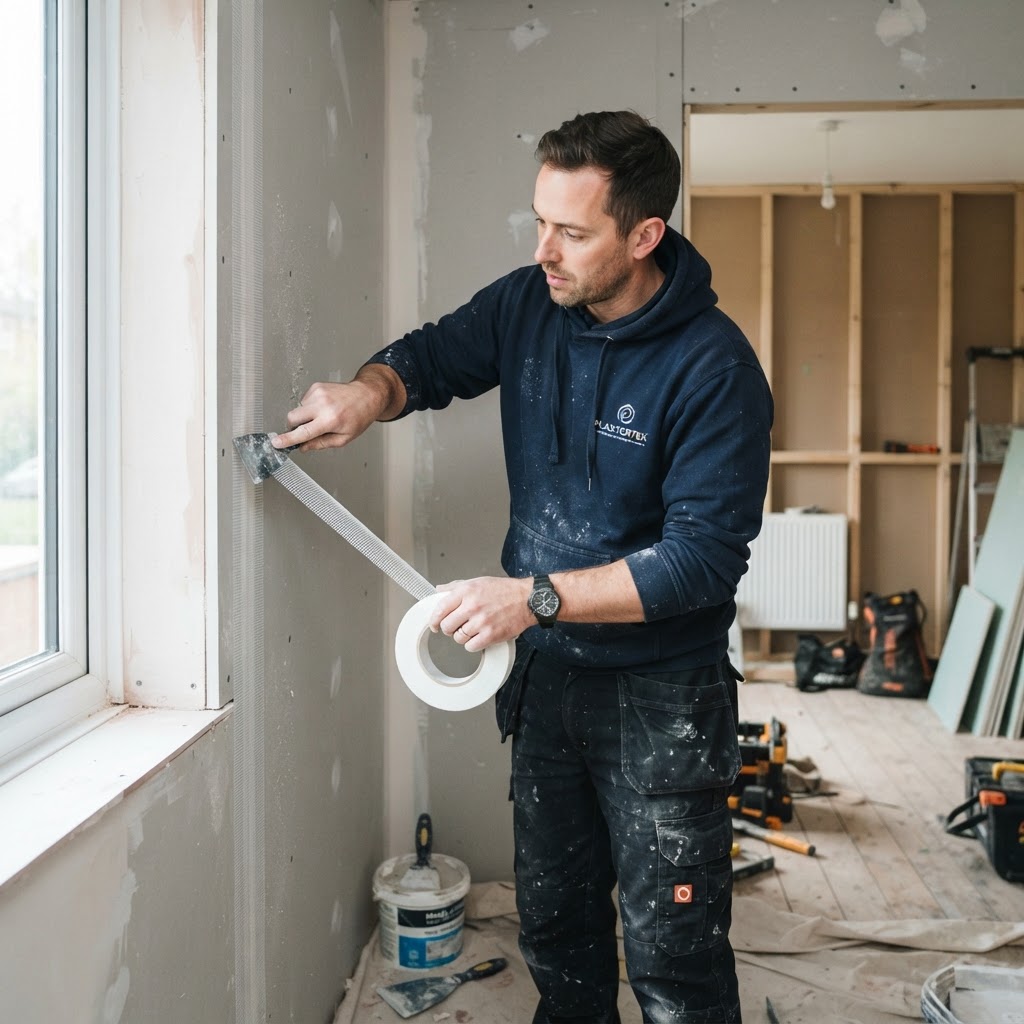
![A plasterer applying scrim tape over a plasterboard(/PlasterboardCostLondon) joint crack before skimming]
How Fixing Cracks in Plasterboard Works — Process and Methods
A proper repair follows a fairly consistent sequence, whether it's a small DIY job or a professional plasterer's visit.
1. Assess and open up the crack. Rather than filling straight over a crack, the edges are usually opened up slightly with a scraper or utility knife to remove any loose, flaking material and create a clean surface for the repair to key into.
2. Address the cause where possible. For joint cracks, this might mean checking whether the board is adequately fixed nearby. For movement cracks, it's worth noting whether the crack has stabilised or is actively growing before finishing the repair.
3. Apply reinforcement. For anything beyond the finest hairline crack, self-adhesive plasterboard scrim tape (or paper tape) is applied along the crack line. This bridges the gap and spreads any future minor movement across a wider area, rather than letting it concentrate back into a single line.
4. Fill and skim. A jointing compound or finishing plaster is applied over the taped area in thin coats, feathered out at the edges so it blends into the surrounding surface without leaving a visible ridge.
5. Sand and finish. Once fully dry, the area is sanded smooth, checked under raking light (a torch held at an angle) to catch any remaining imperfections, and given a final skim if needed.
6. Match the surrounding texture and decoration. On a painted wall this might just mean a mist coat and topcoat over the repaired area (or the whole wall for the best colour match). On an artexed ceiling, matching the existing texture takes more skill, and often the whole ceiling is skimmed over rather than trying to blend a small patch.
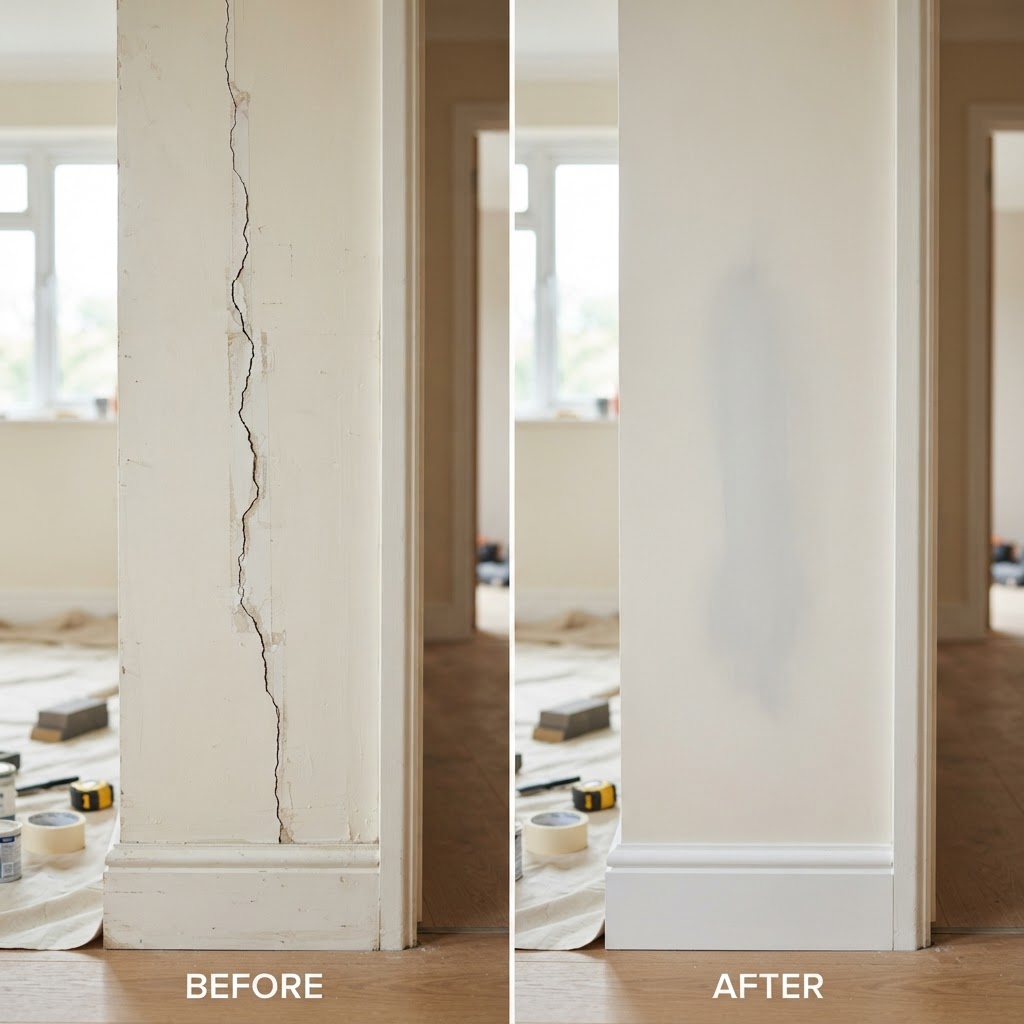
Materials and Considerations
Getting the materials right makes a real difference to how long the repair lasts.
- Scrim tape — essential for anything wider than a hairline crack; skipping this is the single most common reason DIY crack repairs fail within months.
- Jointing compound vs finishing plaster — jointing compound is designed for taped joints and shrinks less as it dries; multi-finish plaster is better suited to larger areas or full skims.
- Flexible fillers — useful for genuine hairline cracks where movement is minor and ongoing, particularly at the wall-ceiling junction.
- PVA or plasterboard primer — helps the new material bond properly to the old surface and control suction, especially important on old, dry patches of plaster or plasterboard.
- Matching decoration — paint sheen and colour can highlight even a well-executed repair if not matched carefully; a full wall or ceiling repaint often gives a better result than a small touch-up.
It's also worth considering the wider context of the wall or ceiling. If cracking is widespread across an old artexed ceiling, or the plasterboard itself is soft, damp, or sagging, patch repairs may only be a short-term fix, and skimming the whole surface or replacing sections of board is often the more sensible long-term option.
Choosing the Right Approach
For a single, small hairline crack in a room that isn't due to be redecorated, a careful DIY filler-and-sand job can be perfectly adequate. But there are situations where it's worth thinking bigger:
- If cracks are appearing in multiple rooms or repeatedly in the same spot, it points to a systemic issue (poor original board fixing, or genuine movement) that a patch repair won't solve.
- If you're preparing a property to sell or let, matching the finish invisibly matters more, and a professional skim across the whole wall or ceiling usually gives a far better result than visible patches.
- If the crack is on a ceiling and you're at all unsure whether it reflects loose boards or a deeper problem, it's worth getting it looked at properly rather than simply filling over it.
- Where soundproofing, insulation, or a full re-board is already planned (for instance replacing old lath-and-plaster ceilings), it often makes sense to deal with cracking as part of that wider work rather than patching a surface that's about to be redone anyway.
When to Use Professional Services
DIY crack filling is a reasonable skill for small, isolated hairline cracks. However, professional plastering is generally the better route when:
- The crack is wide, recurring, or appears alongside sagging, bulging, or a hollow sound when tapped.
- You need the repaired area to be genuinely invisible once decorated — matching texture and sheen across a repair takes practice.
- Cracking affects a ceiling, where access, dust control, and correct reinforcement matter more for safety and long-term results.
- You're dealing with a period property where the plasterboard was fixed over old lath-and-plaster and the board itself may be poorly supported.
- You'd rather have an experienced eye confirm the crack is cosmetic rather than a sign of something structural before committing to a repair.
London Plastering Service has been repairing cracked ceilings, walls, and plasterboard joints across all 32 London boroughs for over 20 years, from Victorian terraces in Islington to modern flats in Canary Wharf. Our team assesses each crack on-site, addresses the underlying cause where one exists, and finishes the repair so it blends seamlessly with the surrounding surface — whether that's a small patch or a full ceiling re-skim.
FAQ About Fixing Cracks in Plasterboard
What is fixing cracks in plasterboard and when is it needed? It's the process of identifying why a crack has appeared in a plasterboard wall or ceiling, then reinforcing and refinishing the area so the crack doesn't simply reopen. It's needed as soon as a crack appears, since most cracks widen gradually over time rather than closing up on their own.
How much does fixing cracks in plasterboard cost in London? Costs vary depending on the size and number of cracks, the property type, and whether it's a small patch repair or a full wall or ceiling re-skim. Simple, isolated cracks are generally at the lower end, while recurring cracks needing re-taping, or ceilings requiring a full skim, cost more due to the additional preparation and finishing time involved. For an accurate figure, it's best to get a quote based on your specific property.
How long does fixing cracks in plasterboard take? A small, isolated crack repair can often be completed within a single visit, including drying and sanding time, though the compound needs time to cure fully before painting. Larger repairs, full re-skims, or ceilings with multiple cracks typically take longer and may require more than one visit to allow proper drying between coats.
Can I fix cracks in plasterboard myself, or should I hire a professional? Small, genuine hairline cracks can often be handled competently with filler, scrim tape, and careful sanding. For recurring cracks, ceiling cracks, wider structural-looking cracks, or anywhere a seamless finish matters, hiring an experienced plasterer generally gives a more durable and invisible result.
What are the alternatives to fixing cracks in plasterboard? Instead of a targeted patch repair, some situations call for a full skim over the whole wall or ceiling, particularly where cracking is widespread or the existing surface (such as old artex) is due for updating anyway. In cases of soft, sagging, or water-damaged boards, replacing the affected section of plasterboard entirely is the more appropriate option rather than repeated patching.
How do I maintain the results after a crack repair? Keep an eye on the repaired area over the following months, especially through seasonal temperature and humidity changes, as this is when any recurring movement tends to show. Avoid hanging heavy items near a recent repair until it's fully cured, and address any new hairline cracking early before it has a chance to widen.
Where can I get help with fixing cracks in plasterboard in London? London Plastering Service covers all 32 London boroughs and can assess, repair, and finish plasterboard cracks in properties ranging from period terraces to modern flats, with the work matched to blend into the existing wall or ceiling finish.
Conclusion and Next Steps
Fixing cracks in plasterboard properly is less about the filler you use and more about understanding why the crack appeared in the first place — a joint that wasn't taped correctly, minor building movement, or simple impact damage all call for slightly different approaches. A careful, reinforced repair will hold up far longer than a quick fill, and for cracks on ceilings, in period properties, or ones that keep coming back, professional assessment is worth the peace of mind.
If you've got cracks appearing in your London home or rental property and want them fixed properly the first time, London Plastering Service is available Monday to Friday, 7am-7pm, and Saturday 8am-5pm. Call +44 7460 892826 or email office@londonplasteringservice.com to arrange an assessment across any of the 32 London boroughs.
Related Plastering Guides & Services
Need Professional Plastering?
Get expert plastering services in London. Free quotes within 60 minutes.