
Back to Blog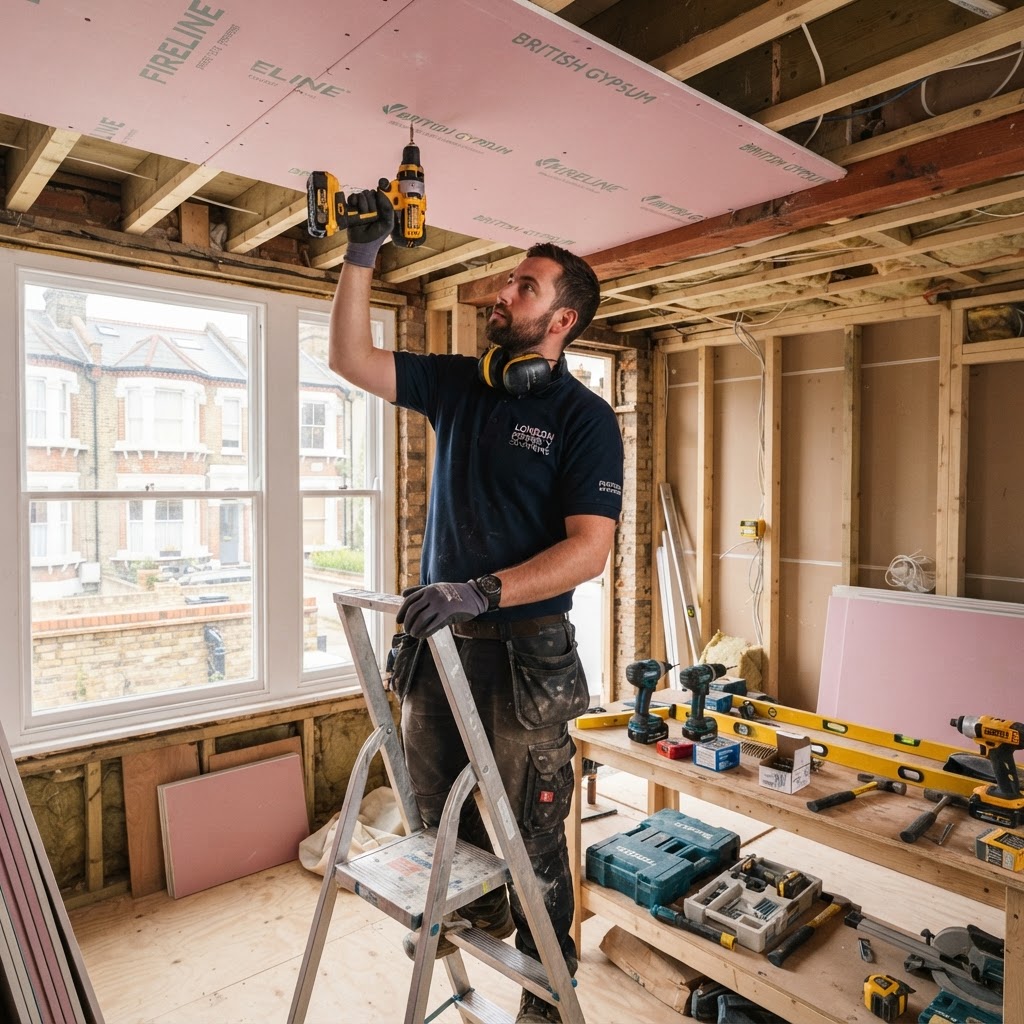
HMO Plastering Requirements: Fire Safety & Regulations Guide
September 1, 2026
5 min read
HMO fire safetyplastering requirementsLondon landlordsfire rated plasterboardbuilding regulations
Understanding HMO Plastering Requirements in London. For property investors and landlords across the sprawling boroughs of London, from the historic streets of Camden to the growing residential hubs of Croydon, maintaining a House in Multiple Occupation (HMO) carries heavy legal responsibilities. Among the most critical, yet often overlooked, is fire safety. As a specialist plasterer London team, we frequently encounter landlords caught out by local authority fire safety inspectors because their internal partitions or ceilings fail to meet the mandatory fire-resistance ratings. In an HMO, your plastering is not merely for aesthetics; it is a foundational component of the building's fire containment strategy, acting as the primary barrier against the spread of smoke and heat. ### The Importance of Fire-Rated Systems. Unlike standard residential properties where fire safety is less stringent, HMOs are classified as higher-risk environments. They require specific materials designed to resist flame penetration and smoke spread for extended durations. If you are refurbishing a property in boroughs like Islington or Tower Hamlets, understanding the difference between standard gypsum board and Type F fire-rated plasterboard (usually identified by its pink paper face) is the first step toward compliance. For professional guidance on these critical structural changes, checking Dry Lining London services is vital to ensure your partition walls meet Building Regulations Part B requirements, which govern fire safety in buildings. In London, councils often demand that walls separating bedrooms from landings—the designated escape routes—are constructed to maintain integrity for at least 30 to 60 minutes. Failure to use the correct boards, such as 15mm high-density fire-board, renders the entire project non-compliant, regardless of how good the final paint job looks. ## Essential Fire Safety Standards for HMOs. Fire safety in an HMO revolves around the principle of 'compartmentation'—containing a fire within the room of origin long enough for all tenants to evacuate safely. This is achieved through specific fire-resisting construction techniques: * Fire-Resistant Plasterboard: Standard 12.5mm boards are insufficient for fire-rated zones. We mandate the use of 15mm fire-rated board, which provides a significantly higher thermal barrier. * Ceiling Protection: Most London councils, such as those in Westminster or Hackney, require ceilings in hallways and stairwells to have at least 30 to 60 minutes of fire resistance. This often necessitates double-boarding or the use of specialized fire-rated ceiling tiles. * Wall Integrity: All stud walls separating habitable rooms from escape routes must be fully fire-stopped. This includes sealing gaps at the floor-wall junction and the ceiling-wall junction using intumescent mastics and fire-rated expanding foams. * Penetration Sealing: Any electrical cables, plumbing pipes, or HVAC ducts passing through these walls must be sealed with fire-rated collars or sleeves. ## Why Skimming Alone Isn't Enough. While Wall Skimming London provides a beautiful, smooth finish, it does not add any fire resistance. We often see landlords attempt to hide crumbling old plaster with a quick skim, hoping it will pass a council inspection. However, if that wall is part of a protected escape route, the skim is irrelevant. You must assess the structural boarding beneath. If your ceiling is sagging, stained, or damaged, Ceiling Plaster Repair London is often necessary. During this process, you must strip back to the joists to inspect the fire-resistance level. If the existing lath and plaster or degraded board fails to meet modern standards, it must be removed and replaced with fire-rated systems. Simply skim-coating over fire-damaged plaster is a major breach of safety and will be flagged by any competent fire risk assessor. ## 2026 London Pricing Guide for HMO Fireproofing. Costs fluctuate based on the specific borough, access requirements, and the scale of the conversion. Below are estimated market rates for 2026 London plastering projects: 1. Installation of 15mm Fire-Rated Boarding: £25 - £40 per square metre (labour and materials). 2. Professional Skimming over Fire-Board: £15 - £22 per square metre. 3. Full Fire-Rated Partition Wall (Materials + Labour): £60 - £90 per linear metre. 4. Intumescent Mastic and Fire-Stopping Application: £150 - £300 per day for a specialist technician. For a more comprehensive budget, reference our Plastering Cost London guide. If you are undertaking a Full House Replaster London to meet HMO standards, anticipate a 30-40% price premium compared to standard renovation work. This is due to the weight of fire-rated boards, the necessity of double-layer installation, and the meticulous nature of fire-stopping gaps with intumescent sealants. ## Expert Insight: The Regulatory Landscape in London. Beyond basic plastering, HMO landlords must contend with the Regulatory Reform (Fire Safety) Order 2005. This legislation places the burden of proof on the 'responsible person'—usually the landlord. When an inspector from your local council visits an HMO in areas like Lambeth or Southwark, they look beyond the surface. They check for 'compartmentation integrity.' If you have installed lights or smoke alarms that pierce the ceiling, did you seal those holes with fire-retardant mastic? If not, you have compromised the fire-rating of the room. A common error is using standard plasterboard in a kitchen or a high-traffic hallway. In kitchens, not only is fire-rated board required, but the board must also be moisture-resistant to prevent degradation. Using a non-compliant material can lead to the revocation of your HMO licence, which in London, can cost upwards of £5,000-£10,000 in lost rental income during the remedial period. ## Frequently Asked Questions (FAQ). ### Q: Does my HMO ceiling need to be fire-rated? Yes. Under the Regulatory Reform (Fire Safety) Order 2005, HMO ceilings in escape routes typically require 30 to 60 minutes of fire resistance. This is usually achieved with two layers of 15mm fire-rated board or a single layer of specialized fire-rated board with intumescent-treated ceiling roses and light fittings. ### Q: Can I just patch up old plaster to meet safety codes? Generally, no. If the underlying structure isn't fire-rated, simple cosmetic repairs like Artex Covering London will not satisfy fire inspectors. You must ensure the integrity of the fire-resistant barrier. If the base coat is failing, patching is a temporary solution that will eventually crack and expose the timber framing to direct fire, which is a major safety violation. ### Q: What is the cost difference between standard and fire-rated plastering? Fire-rated materials cost approximately 20-30% more than standard materials, and installation is more labor-intensive due to the need for precision fire-stopping at every edge and junction. Check Plastering Prices London for specific current rates in your borough. ### Q: What happens if I ignore these requirements? Failure to comply with HMO licensing standards can lead to massive fines (up to £30,000 in some London boroughs), the revocation of your HMO licence, and in worst-case scenarios, criminal prosecution if a fire results in injury. Don't wait for an Emergency Plaster Repair London scenario—proactive investment is always cheaper than a post-incident legal battle. ### Q: Can I use standard plaster for kitchen walls in an HMO? No. Kitchens are high-risk areas. You should use a combination of fire-rated and moisture-resistant board. Standard gypsum board absorbs moisture, which can cause the board to soften and fail in a fire, potentially allowing flames to enter the ceiling void. Always specify 'Pink-Moisture' or equivalent hybrid boards for high-humidity, high-risk areas. ### Q: How often should I have my plastering inspected? You should have an annual fire risk assessment as part of your HMO licensing requirements. During this, a professional should check that no new holes have been drilled through fire-rated walls for utility pipes or cables, as these negate the fire barrier entirely. ## Conclusion: Secure Your Property Today. Protecting your tenants and your investment in London requires strict adherence to fire safety regulations. Whether you are converting a Victorian terrace in Greenwich or refurbishing a modern apartment block in Canary Wharf, ensure your plastering contractor is experienced in HMO fireproofing. Don't leave your property's safety to chance. Ready to get your HMO compliant? Contact London Plastering Service today for a professional site assessment and quote. Ensure your property is safe, compliant, and finished to the highest standard.
Related Plastering Guides & Services
Need Professional Plastering?
Get expert plastering services in London. Free quotes within 60 minutes.