
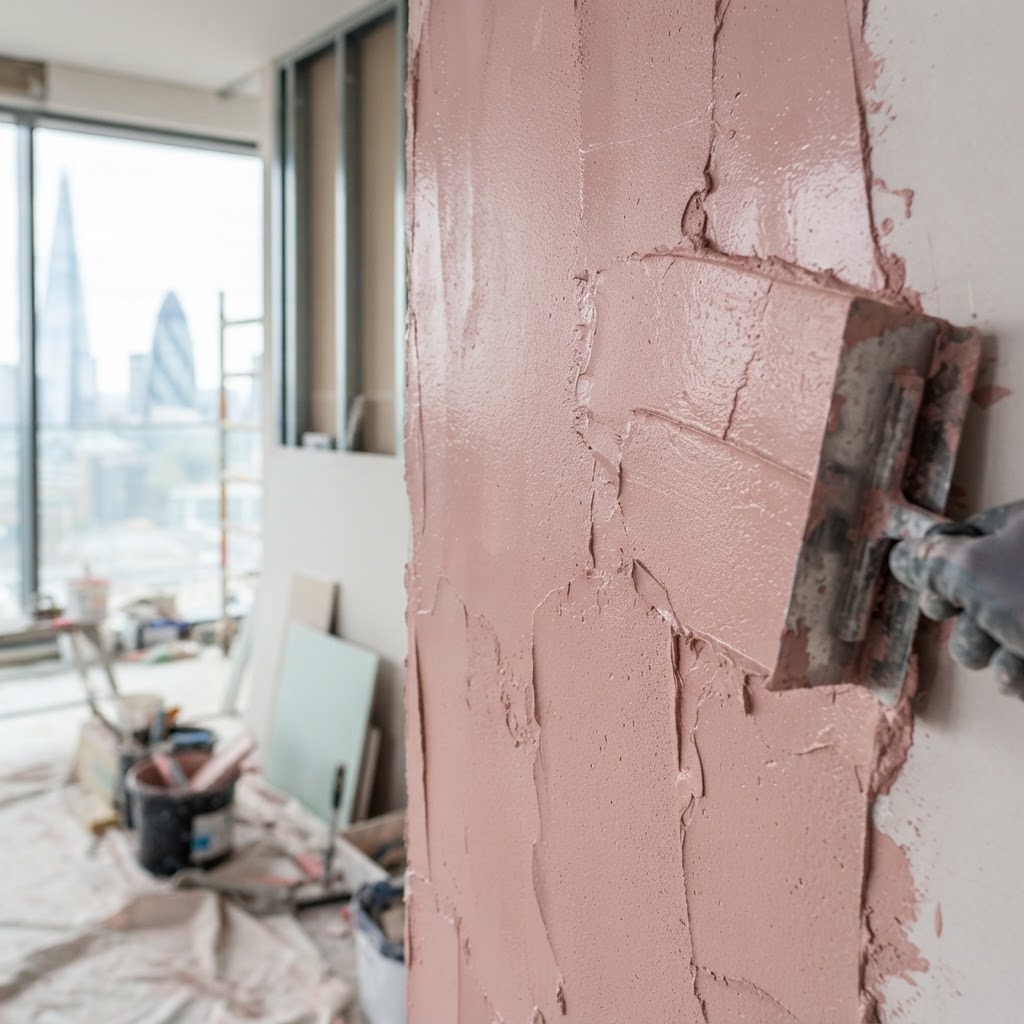
Why Does Plaster Turn Pink? A London Homeowner's Guide
Understanding the Pink Plaster Phenomenon
If you have recently had work done in your home, from a full house replastering in the Victorian terraces of Fulham to a modern apartment renovation in Hackney, you might have noticed a distinct pink hue covering your walls. At London Plastering Service, we frequently receive calls from concerned clients asking if their walls are damaged or if the tradesperson used the wrong material. The short answer is no—this is a standard, intentional part of the professional plastering process. For professional results, you can always rely on our expert plasterer London team to guide you through the process.
The Chemistry Behind the Pink: Why Gypsum Matters
Modern plaster, specifically gypsum-based multi-finish, contains specific mineral compositions that result in that recognizable pink color when wet. This is largely due to the inclusion of refined gypsum, which is mined and then heated to remove moisture. This process creates a hemihydrate. When water is added back on-site by your plasterer, the reaction—known as hydration—causes the plaster to set into a solid crystalline structure.
As the water evaporates, the surface transitions from a vibrant, saturated pink to a chalky, pale peach, or off-white. This color shift is your visual signal that the moisture is escaping the gypsum crystals and the wall is reaching a state of structural maturity. In London’s unique climate, where humidity levels often fluctuate, understanding this chemical transition is key to a long-lasting finish.
Why It Matters for Your Renovation
Understanding the drying cycle is essential when planning your plastering costs London. If you attempt to paint too early, you risk trapping moisture behind the new surface. This creates a seal that prevents the plaster from fully 'breathing.' The trapped water can lead to paint peeling, efflorescence (white, crusty salt deposits), and, in worse cases, significant mold growth.
We typically advise clients in boroughs like Kensington, Chelsea, or Islington to wait at least 7-14 days before applying any primer or paint. Older homes in areas like Camden or Westminster often have solid brick walls that take longer to dry than the stud walls found in new-builds in Canary Wharf. During this time, the room should be well-ventilated through natural airflow. Avoid using high-heat industrial blowers or dehumidifiers set to maximum power; these can cause the surface to dry too quickly, leading to shrinkage cracks that ruin the aesthetic of your skim coat.
Expert Insights into Plaster Quality and Substrates
When you invest in Wall Skimming London services, the finish should be smooth and consistent. However, the substrate—the surface onto which the plaster is applied—plays a massive role in the final look.
If you notice patchy pink areas that remain for weeks after the rest of the room has dried, it might indicate uneven suction. This happens when parts of the wall are more porous than others, soaking up the water from the plaster too quickly. Our team often performs Ceiling Plaster Repair London in period properties where we find varying levels of suction caused by mismatched patches of old lime plaster versus new plasterboard. Applying a high-quality PVA or bonding agent before skimming is crucial to leveling this suction and ensuring an even finish.
In affluent boroughs like Richmond or Hampstead, where homeowners often renovate historic properties, we prioritize 'bonding out' deep imperfections before applying the final skim. This creates a uniform thermal mass across the wall, ensuring the plaster dries at the same rate, preventing the 'patchwork' look.
Average Pricing for London Homeowners in 2026
Plastering costs in London are influenced by material logistics, parking permits, and the density of the property. Below is our refined 2026 market guide:
- Small room skimming (e.g., small bathroom in Lambeth): £550 - £850
- Standard bedroom replaster (stud walls): £950 - £1,400
- Large living room (period property with cornicing): £1,500 - £2,500
- Full house replastering (3-bedroom semi-detached): £4,500 - £8,500+
- Emergency plaster repair (patching up to 1 sqm): £280 - £350 per visit (depending on travel zone)
These prices include professional-grade gypsum multi-finish, mesh tape, and standard environmental waste disposal fees. For larger projects, we offer discounts for multi-room bookings. For a more accurate estimate, please refer to our full guide on Plastering Prices London.
Frequently Asked Questions (FAQs)
Does the pink color mean the plaster is bad?
No, the pink color is simply the natural state of the gypsum product used in modern trade materials. It is not an indicator of poor quality; in fact, it is the standard indicator of a fresh, properly mixed batch of multi-finish plaster.
Can I speed up the drying process?
We strongly advise against using industrial heaters or heat guns. Rapid drying leads to stress on the plaster, resulting in 'hairline' cracks. Professional ventilation, such as opening windows on opposite sides of the room for a cross-breeze, is the best method. If you must use a heater, keep it at a low, ambient temperature and far away from the wall surface.
When is the wall ready for painting?
When the entire wall has turned a consistent light, pale color with no dark patches. If you are doing Artex Covering London, ensure the finish is completely dry before moving to the decoration stage. Painting a wall that still has 'pink' moisture patches will almost certainly lead to the paint bubbling within a week.
What if I have damp issues?
If your walls remain dark or feel cool to the touch after three weeks, you may have an underlying moisture issue. This could be rising damp or condensation trapped behind the plaster. In such cases, we recommend dry lining London or damp-proofing before applying a new plaster coat, otherwise, the damp will migrate through your new paint finish.
Is the plastering finish affected by the London weather?
Yes. On very humid or rainy days in London, the drying time can extend by 3-5 days. Plaster takes longer to cure when the ambient humidity is high, as the moisture cannot escape into the air effectively. We monitor local weather forecasts for projects in zones 1-4 to manage client expectations regarding drying times.
Can I sand the plaster once it is pink?
Absolutely not. The plaster is far too soft when it is still pink. Sanding at this stage will tear the surface, create deep gouges, and clog your sanding sheets immediately. Always wait for the wall to transition to its pale, dry state before attempting any light sanding or surface preparation.
Professional Assistance for Your Home
Whether you are dealing with minor repairs or a full-scale renovation, London Plastering Service is here to ensure your surfaces are perfect. We understand that your home is your most valuable asset, and a smooth wall is the foundation of any interior design. If you have any concerns during the drying process, do not hesitate to contact us. Proper preparation prevents future problems. For urgent issues, we also offer Emergency Plaster Repair London, covering all major London boroughs including Wandsworth, Croydon, and Barnet.
Ready to get started? Contact our team today for a free consultation and bring your home to life with a flawless, professional finish. Our experts are ready to transform your walls.
Related Plastering Guides & Services
Need Professional Plastering?
Get expert plastering services in London. Free quotes within 60 minutes.