
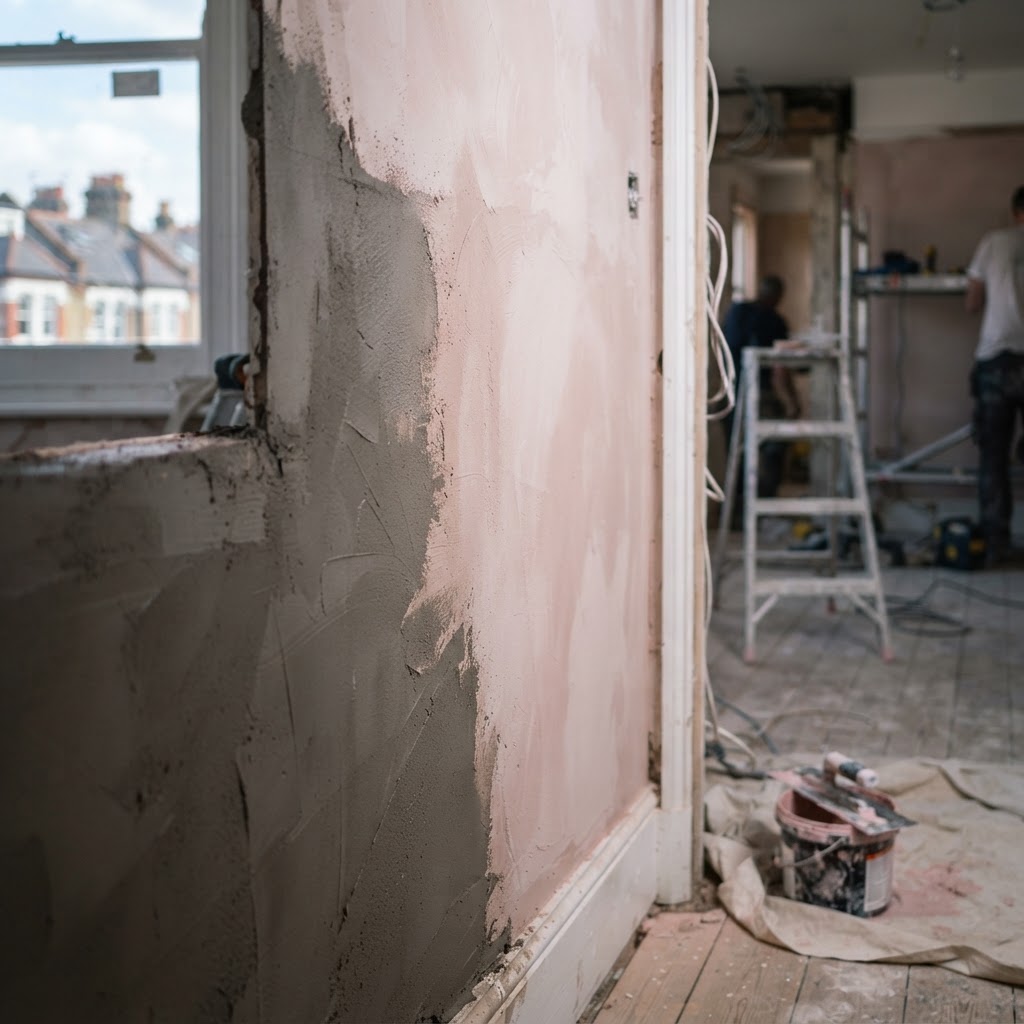
Why Does Plaster Go Pink When Drying? Expert London Guide
Understanding the Plaster Drying Process
If you have recently had work done by a professional plasterer London in affluent boroughs like Chelsea (SW3), Islington (N1), or Richmond (TW9), you have likely noticed a distinct transformation in the color of your walls. The transition from a dark, muddy grey to a light, uniform pink is a hallmark of high-quality gypsum plaster. Understanding why this happens is crucial for homeowners looking to protect their investment in high-end property finishes.
The Science Behind the Pink Hue
Modern multi-finish plasters, such as British Gypsum Thistle, are primarily composed of calcined gypsum rock. When water is added to the powder, a chemical reaction known as hydration occurs. Initially, the plaster is dark because it is saturated with liquid water. As the water evaporates through the surface, the chemistry of the setting process stabilizes. The 'pink' color is the natural pigmentation of the gypsum as it loses its excess moisture and sets into a hard, crystalline structure. The pink shade acts as a visual indicator of the saturation levels within the gypsum matrix.
Why Uniformity Matters
As your walls move through the drying phase, you might see patches of dark pink or grey remaining. This indicates areas where the plaster is thicker or where moisture is trapped due to poor ventilation or high-density substrates like thermalite blocks. For professional Wall Skimming London projects, we look for a consistent, light pink finish across the entire surface before we consider the job ready for priming or painting. Failure to wait for this uniformity leads to 'flashing,' where the moisture content varies across the wall, resulting in inconsistent paint absorption.
Factors Affecting Drying Times in London Properties
In the London climate, humidity levels and property age play a massive role. Whether you are dealing with a drafty Victorian terrace in Hackney (E8) or a high-rise, climate-controlled apartment in Canary Wharf (E14), drying times vary significantly based on environmental variables.
- Ventilation: Good airflow is critical in the humid London atmosphere. Open windows during the day, but avoid high-speed fans or localized heat guns. Using a heat gun can cause the surface to dry too quickly, causing the outer layer to harden and 'skin over' while trapping moisture inside, leading to structural cracking.
- Ambient Temperature: Aim for a steady room temperature of around 15°C to 20°C. In winter, maintain constant low-level heating rather than large, erratic swings in temperature, which can stress the curing plaster.
- Thickness of Application: A Full House Replastering project involving heavy base coats (hardwall or bonding) will take significantly longer to dry than a light 2-3mm skim coat over existing board.
- Substrate Porosity: Walls in older London properties often feature brickwork with a high moisture retention rate, which can extend drying times compared to modern drywall installations.
Detailed Plastering Costs for 2026
When budgeting for your 2026 home improvement, understanding the current market rates is essential. We recommend checking our Plastering Prices London guide for a detailed breakdown. Generally, expect the following estimates for 2026 based on average London trade rates:
- Small Wall Skim (up to 10sqm): £250 - £400 depending on the volume of surface preparation required.
- Ceiling Repair: Costs for Ceiling Plaster Repair London start from £300, accounting for scaffolding or high-access requirements common in London Victorian conversions.
- Artex Covering: Specialist Artex Covering London services, which involve high-prep bonding agents, typically range from £450 per room depending on the texture profile.
- Full Room Plaster (Standard 4x4m room): Generally between £600 and £1,200 depending on the level of preparation for existing damaged walls.
- Insurance Work: For flood or structural damage repairs, rates can rise by 20% due to the requirement for specific moisture barrier treatments.
Note: These figures reflect typical London labor and material costs including the London Living Wage adjustments. For a tailored quote, visit our Plastering Cost London page.
The Role of Priming After Drying
Once the plaster is uniformly light pink, you must not paint directly onto the surface. The lime/gypsum content is highly alkaline and porous. You must apply a 'mist coat'—a diluted mix of emulsion paint (usually 50/50 water to paint)—to act as a primer. This absorbs into the gypsum and provides a stable surface for your final topcoats. Failure to do this often results in the finish paint stripping off when masking tape is removed.
Frequently Asked Questions (FAQ)
Q: How long until my pink plaster is ready to paint?
A: On average, it takes 3 to 7 days for plaster to dry completely. However, in winter months, this can extend to 10-14 days. You must wait until the entire surface is a consistent, pale pink color. If the wall still feels cold to the touch or shows dark patches, it is not ready. Painting over 'damp' plaster traps moisture, which leads to mold growth and paint blistering.
Q: Is the pink color permanent?
A: No, the pink color is just a visual indicator of the chemical curing stage. Once fully cured, it will lighten to a chalky off-white or light grey. If it stays pink, it is likely still holding significant water.
Q: Why are there dark spots on my pink walls after a week?
A: This is likely trapped moisture known as 'slow-drying patches.' In areas like basements in South Kensington or humid bathrooms in Camden, the moisture struggles to evaporate. If you need Emergency Plaster Repair London services or suspect underlying damp or rising moisture from the foundation, consult a professional to ensure it isn't an underlying substrate issue before applying expensive finishes.
Q: Can I use Dry Lining London instead of traditional plastering to speed things up?
A: Dry lining (plasterboard) is significantly faster to install and finish because it does not require the same drying time as wet plaster. It is ideal for rapid renovations in commercial offices or quick house flips. However, traditional wet plaster provides better acoustic insulation and a more seamless, durable finish for period properties where walls may be uneven.
Q: Does the thickness of the plaster application change the cost?
A: Yes. If your wall is significantly out of plumb (not level), we may need to apply a deeper bonding layer. This increases material costs for gypsum-based bonding agents and labor costs for additional drying time, which is usually quoted at a premium for heavy-duty leveling.
Q: Are there specific regulations for plastering in listed London buildings?
A: Yes. In conservation areas or for Grade-II listed buildings (common in Westminster or Kensington), you may be required to use lime-based plasters rather than modern gypsum. These require a completely different curing process and specialized expertise to prevent cracking, which costs roughly 40-50% more than standard gypsum skim.
Professional Advice for a Perfect Finish
If you see your walls turning from dark to pink, you are witnessing the standard curing process. However, if you notice deep cracking or uneven texture, do not hesitate to contact our team. We provide expert assessments across all London boroughs. A professional finish is not just about the look; it is about the structural integrity of your wall surface for the next 20 years.
Ready to get your walls sorted? Contact London Plastering Service today for a free, no-obligation quote. Let our experts handle your renovation with the care and precision your London home deserves. Click here to book your consultation!
Related Plastering Guides & Services
Need Professional Plastering?
Get expert plastering services in London. Free quotes within 60 minutes.