
Why Does Plaster Go Pink When Drying? Expert Guide
Understanding the Pink Hue: Why Plaster Changes Color
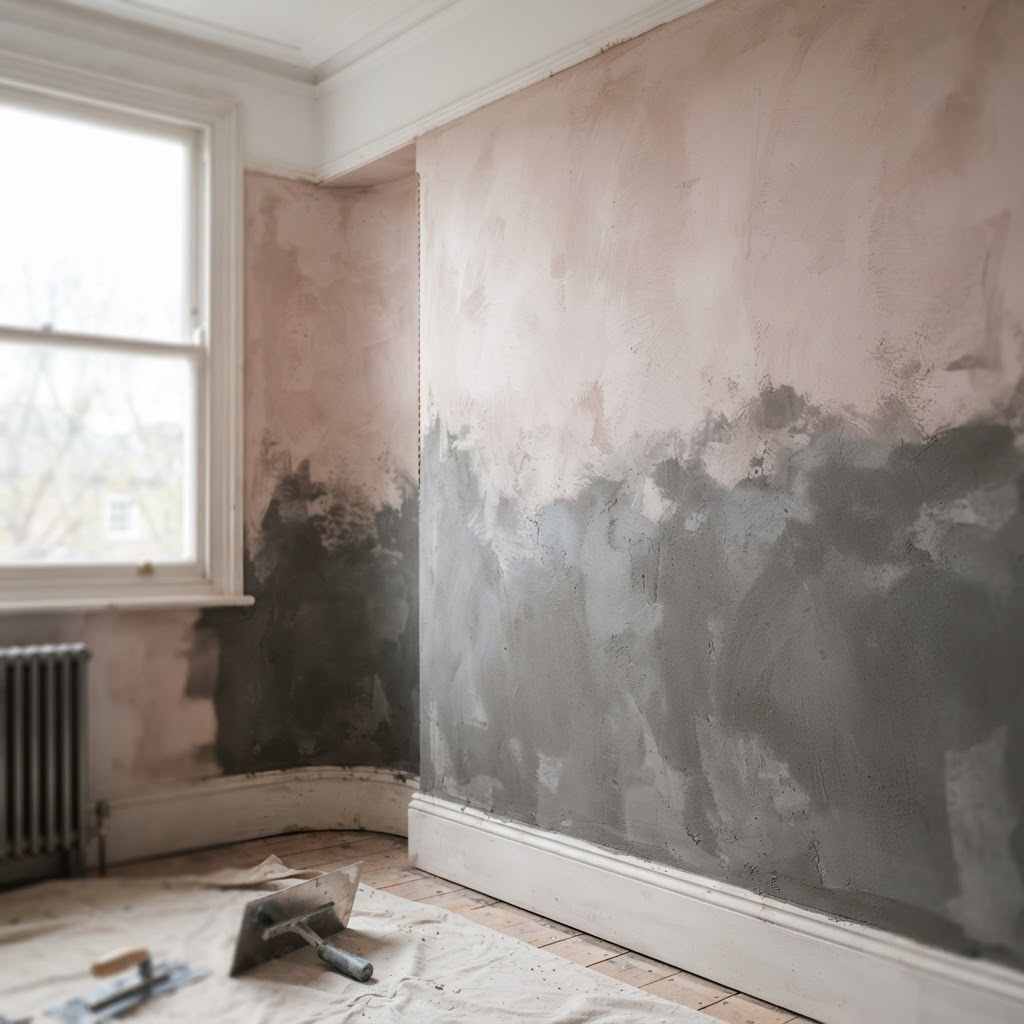
If you have recently commissioned a plasterer London to refresh your home, you might be alarmed when the wall starts turning a distinct shade of pink. Do not worry—this is completely normal. As professionals working across London, from the Victorian terraces of Wandsworth to the modern apartments in Canary Wharf, we see this daily. The pink color is simply the natural state of gypsum-based plaster as it begins to lose its moisture content.
The Chemistry Behind the Color
Modern finish plasters, such as British Gypsum Multi-Finish, are composed primarily of hemihydrate gypsum. When mixed with water, a chemical reaction occurs that creates a stable surface. The pink hue you see is the standard pigmentation of the raw gypsum materials used in the manufacturing process. As the plaster transitions from a wet, dark brown or grey state to a dry, light pink, it signals that the moisture is evaporating at the correct rate. Understanding this stage is critical, especially when considering Wall Skimming London services to ensure you do not paint or decorate too early. Chemically, the plaster is undergoing a rehydration process where the gypsum crystals interlock; as the excess water leaves the matrix, the crystalline structure turns from a dull slurry into a light-reflective surface that appears pink before turning a chalky white or light peach.
The Drying Process: What You Need to Know
In the London climate, drying times can vary significantly based on your property type. A drafty period property in Islington will dry faster than a well-insulated, modern build in Battersea. On average, you should expect your plaster to look uniformly pale pink within 48 to 72 hours, though it may take up to a week to fully dry out, especially in winter. Factors like the moisture content of the background material (be it thermal block, brick, or existing plasterboard) play a huge role. In high-humidity areas like Richmond or Greenwich near the river, the air moisture can delay the evaporation phase by several days.
Factors Influencing Drying
- Humidity levels: London’s damp winters can slow the process down. Always monitor indoor humidity levels to ensure they stay below 60%.
- Temperature: A room temperature of 18-20°C is ideal. Avoid extreme heat.
- Ventilation: Good airflow is key, but avoid using direct heat sources like hair dryers or high-powered heaters, which can cause cracking.
- Background material: Porous backgrounds will pull moisture from the plaster, whereas dense concrete or painted surfaces will slow the drying, potentially leading to 'sweating' if not primed correctly.
When calculating your Plastering Cost London budget, always allow for the necessary drying time before scheduling decorators. If you are dealing with water damage in a historic property, our team for Ceiling Plaster Repair London often reminds clients that trapped moisture can cause long-term mold issues if the building is sealed too quickly after a repair.
Expert Insights: Beyond the Pink
Plastering is an art form. In boroughs like Kensington and Chelsea, where listed building status is common, our team must use specialized lime-based plasters rather than standard gypsum. Lime plaster takes much longer to cure—often weeks rather than days—and changes color differently. It does not turn the 'classic' pink but rather fades from a dark grey to an off-white. Homeowners in these areas should consult a specialist to ensure they do not accidentally apply modern gypsum over historical lime, which leads to spalling and degradation.
2026 London Plastering Pricing Guide
Understanding costs is vital when planning renovations. Below are estimated market rates for 2026 within the M25 area. Prices can fluctuate based on parking access, material haulage (especially if your home is in a congestion charge zone or restricted-access street in Westminster or Camden), and waste removal:
- Small Wall Skimming: £250 - £400 (Covers a standard 3x3m room wall section)
- Standard Bedroom Ceiling: £300 - £500 (Reflects typical 3.5m x 3.5m dimensions)
- Full House Replastering (3-bed semi): £4,500 - £8,500 (Comprehensive project including boarding and skimming)
- Artex Covering: £400 - £650 per room (Price reflects the labor-intensive need for an additional bonding coat)
- Hardwall & Skim (Renovation): £50-70 per square meter.
For more detailed figures, check our Plastering Prices London page. Whether you require Dry Lining London or a total restoration, having a clear budget ensures project success.
Frequently Asked Questions (FAQ)
1. Is pink plaster a sign of dampness?
No, the pink color is a sign of the plaster drying. If the wall remains dark or develops grey patches after two weeks, you may have an underlying ventilation or rising damp issue, particularly in basement levels or ground floors in flood-prone areas like Hackney or Tower Hamlets.
2. Can I paint over the pink surface?
Never paint directly onto pink plaster. The plaster must be bone-dry. Applying a mist coat (a 50:50 mix of white emulsion and water) is essential to seal the surface. If you see pink, you have moisture. If you paint over pink, you trap the moisture, which can cause the paint to flake off in sheets within months.
3. What happens if the plaster cracks while drying?
Minor 'hairline' cracks are common due to the shrinkage of the gypsum matrix. These are easily filled with a fine-surface filler before the final mist coat. However, deep or structural cracks may require Emergency Plaster Repair London to stabilize the wall if the substrate underneath has failed.
4. How long does the drying process take?
In a typical London home, allow 5-7 days for full drying. However, during a humid London summer or in a non-ventilated room, this can extend to 10-14 days. Patience is the secret to a smooth finish.
5. Why is one patch drying faster than the rest?
This is often due to 'suction'. If you have plastered over a mix of different materials (e.g., brick and timber), the brick will pull water faster. We often apply a PVA bond to equalize suction, but some uneven drying is normal. It does not affect the structural integrity.
6. Can I speed up the process with a dehumidifier?
While helpful in damp-prone properties, do not place a dehumidifier directly next to the wall. It can cause localized, uneven drying, leading to cracking. Run it in the center of the room at a moderate setting.
Conclusion: Trust the Professionals
While the pink color is a natural phase, the quality of the finish depends on professional application. Whether you need Artex Covering London or Full House Replastering, our team at London Plastering Service is here to help. Expert plastering adds significant value to your London property, protecting the fabric of your home while providing a flawless aesthetic foundation for your interior design choices.
Ready to get started? Call us today on 020 XXXX XXXX or visit our website to request a free quote for your project.
Related Plastering Guides & Services
Need Professional Plastering?
Get expert plastering services in London. Free quotes within 60 minutes.