
Back to Blog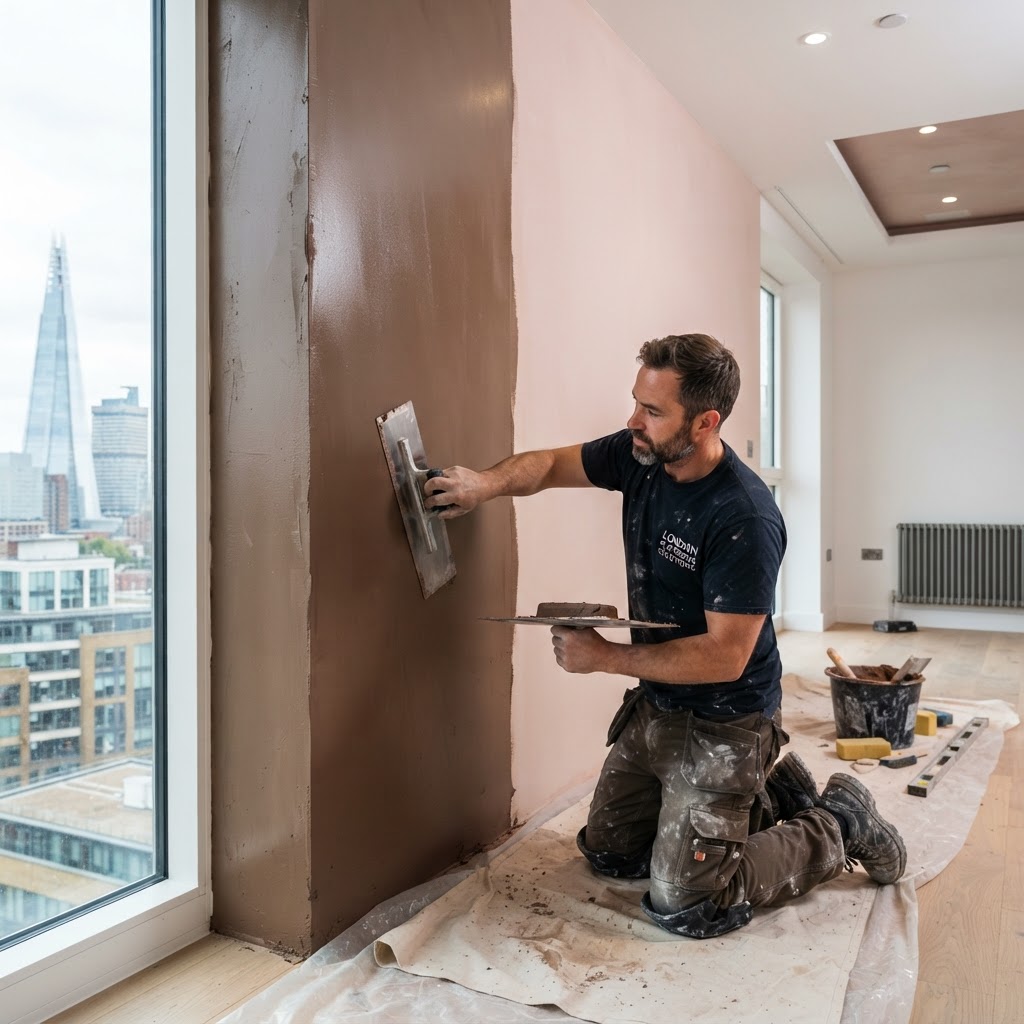
Why Does Plaster Go Pink When Drying? A Pro Guide
August 21, 2026
5 min read
plasteringhome renovationLondon tradesmanwall finishing
Understanding the Drying Process: Why Plaster Turns Pink When you hire a professional plasterer London to refresh your home, you will notice that the fresh, wet plaster is a dark brown or grey color. As the plaster begins to dry, it transitions into a distinct light pink shade. Many homeowners in boroughs like Wandsworth, Islington, or Richmond-upon-Thames often call us in a panic, fearing that something has gone wrong or that the plaster is failing. However, this color shift is a perfectly normal, predictable part of the gypsum-based plastering process. This phenomenon occurs due to the raw materials used in modern finish plasters, typically consisting of gypsum hemihydrate. When mixed with water, it hydrates to form gypsum dihydrate. The characteristic pink pigment is often an aesthetic indicator added by manufacturers, such as British Gypsum, to allow tradespeople to visually distinguish between freshly applied, semi-dry, and fully cured material. ### The Chemical Science Behind the Pink Hue Plaster is essentially a mineral compound. When mixed with water, it undergoes a hydration process to set. As the moisture leaves the surface through evaporation, the chemical structure stabilizes, and the light reflects differently off the drying material, resulting in the iconic "plaster pink" color. This transition indicates that the chemical setting phase is complete and the evaporation phase has begun. If you are planning a project, you can get a better idea of your budget by checking our Plastering Prices London guide. Beyond the aesthetics, this color transition is your best friend during construction, as it serves as a visual "traffic light" system indicating when the substrate is ready for sanding or decoration. ## Factors Affecting Drying Times in London Homes In our experience working on everything from Victorian terraces in Hackney to modern flats in Canary Wharf, drying times vary significantly based on the micro-climate of the property. For a standard Wall Skimming London job, the room should be dry within 24 to 48 hours depending on humidity, but atmospheric conditions in London can disrupt this. * Ventilation: Good airflow is vital. In areas with high traffic, like E14 or SW1, ensuring windows are opened at least an inch is crucial. Do not seal the windows tightly, as the moisture must escape somewhere. * Temperature: Aim for a stable room temperature of around 15-20°C. In the winter months, avoid plummeting temperatures below 5°C, as this can cause the water within the plaster to freeze and expand, destroying the finish. * Humidity: High moisture levels in older properties in boroughs like Camden or Southwark, which often suffer from rising damp or condensation, can delay drying by up to 72 hours. * Thickness: A Full House Replastering involves several millimetres of wet material, meaning it will naturally take longer to dry than a minor patch repair. ## When Is It Safe to Paint? Never rush to paint your walls. Painting over damp plaster traps moisture, which leads to peeling, bubbling, and eventually mould. You must wait for the pink to disappear entirely, leaving a uniform, chalky off-white color. Whether you had Ceiling Plaster Repair London or a fresh Artex Covering London service, the rule remains the same: ensure the wall is completely light and uniform in color. We recommend using a "mist coat"—a watered-down emulsion—as your first layer. Because fresh plaster is highly absorbent, putting thick, undiluted paint directly onto the wall will likely result in a patchy, uneven finish that will peel away within weeks. Applying a mist coat allows the wall to "breathe" during the final stages of moisture release. ### Estimated Costs for 2026 In the current London market, professional pricing reflects both labour expertise and material inflation. Expect to pay the following for professional services across zones 1-4: - Small wall skim (single feature wall): £250 - £350 - Full room plaster (medium bedroom): £600 - £900 - Large open-plan living room (Victorian style): £1,200 - £1,800 - Dry Lining London installation per room (board and skim): £500 - £800 For an accurate assessment of your Plastering Cost London, we recommend a site visit to ensure there are no underlying damp issues, which can occasionally require Emergency Plaster Repair London before decorative skimming can proceed. In boroughs with older housing stock, such as Greenwich or Lewisham, it is common for us to find crumbling lath and plaster that requires complete removal, which may add £300-£500 to the total job cost due to disposal fees. ## Frequently Asked Questions ### Q: Is the pink color a sign of dampness? A: Not necessarily. The pink color is simply the hydration state of the plaster. If the room remains pink for more than a week, it may indicate poor ventilation or high ambient moisture. If you notice dark grey "blotches" that persist after the rest of the wall has turned pink, this could indicate a deeper issue like a leaking pipe or severe penetrating damp from the exterior wall. ### Q: Can I use a heater to speed up drying? A: Avoid intense heat sources like direct blow heaters or industrial dehumidifiers placed too close to the wall. This causes the surface to dry too quickly, leading to "flash drying" and significant shrinkage cracks. Let it dry naturally. A low, constant heat from a central heating system is acceptable, but do not crank it to the maximum. ### Q: What should I do if the plaster is still dark after 3 days? A: Open windows to increase airflow. In London, particularly in ground-floor flats in W1 or EC postcodes, basements can be inherently damp. If the room remains dark, verify if there is an extraction fan running or if the room lacks a window. If the room is windowless, a dehumidifier set to a moderate setting in the middle of the room (not blowing directly at the wall) is a safe alternative. ### Q: How do I know it is ready to be painted? A: The wall must be a uniform, pale, chalky color with no visible dark patches. A simple test is to touch the wall; if it feels cool to the touch, it is still holding significant moisture. If in doubt, wait an extra 24 hours. ### Q: Will my plaster turn pink again if there is a leak later? A: No. Once plaster has fully cured and turned off-white, it will not revert to pink. If it darkens later, it is likely absorbing moisture, which is a warning sign of a water leak or rising damp. ### Q: Does the quality of the plaster affect the pink hue? A: High-quality multi-finish plasters will provide a consistent color change. Cheaper or poorly mixed products may show streaks. We always use premium materials to ensure the drying process is uniform. ## Contact Our Expert Team Today Still unsure if your walls are drying correctly? Don't risk your investment by painting too early. At London Plastering Service, we bring years of local expertise to every project. Whether you need a simple patch in a studio flat in Chelsea or a full property renovation in a grand home in Hampstead, we are here to help. Contact us today for a free consultation and quote!
Related Plastering Guides & Services
Need Professional Plastering?
Get expert plastering services in London. Free quotes within 60 minutes.