
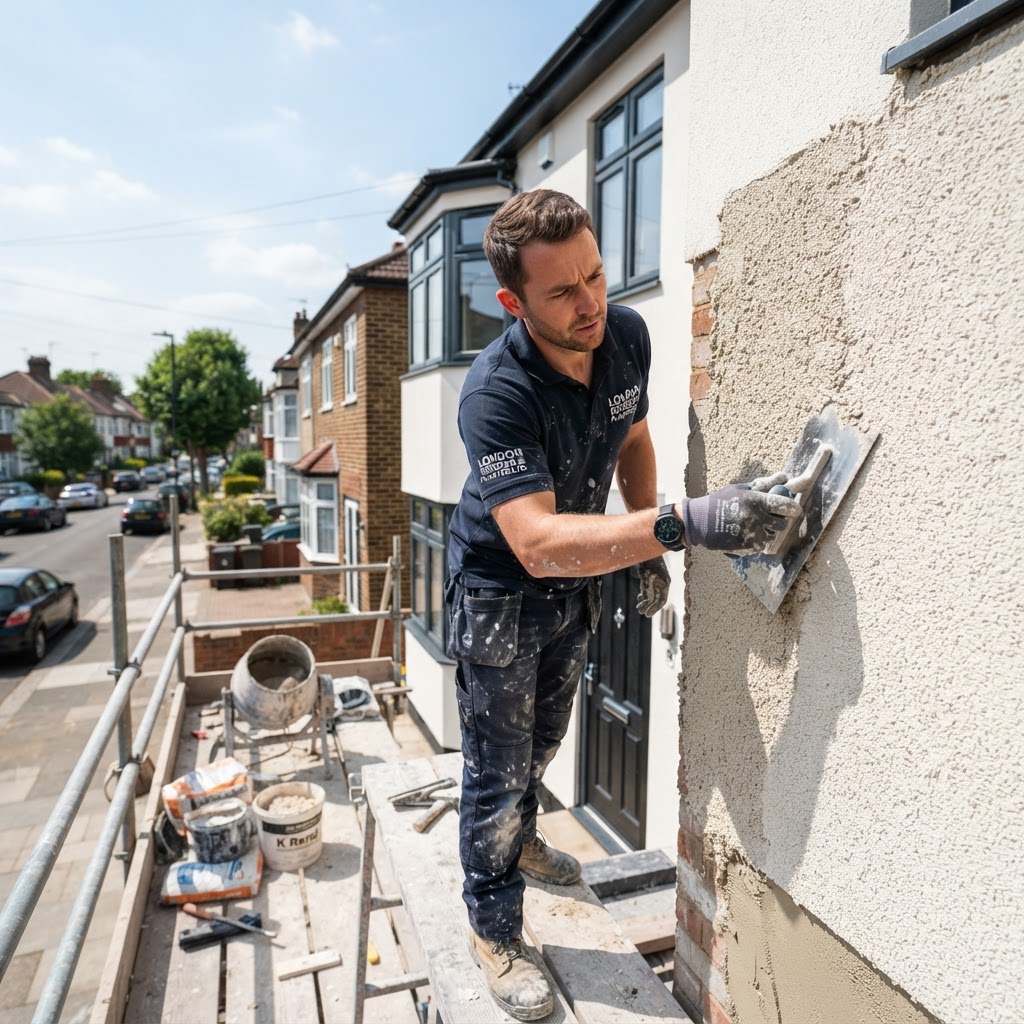
What's the Difference Between K Rend and Monocouche? Expert Guide
Introduction: Choosing the Right Exterior Finish
When renovating an exterior in London, choosing the right material is essential for longevity and aesthetic appeal. A question we frequently hear from clients in areas from Kensington to Croydon is, "what's the difference between k rend and monocouche?" It is a common point of confusion that often stems from a simple misunderstanding of industry terminology. Whether you are searching for a professional plasterer in London to refresh your home or starting a major renovation, knowing your materials is the first step.
In this guide, we will clear up the confusion, explain the technical specifications, and provide 2026 pricing for the London market.
Understanding the Basics: What's the Difference Between K Rend and Monocouche?
The core of the confusion is that people often treat these as two competing types of render. In reality, Monocouche is a product type (a French term meaning 'one coat'), while K Rend is the leading brand name that manufactures these products. Think of it like Hoover and vacuum cleaners. Monocouche is the method, and K Rend is the market leader for that method in the UK.
What is Monocouche Render?
Monocouche is a single-coat, through-coloured render. Unlike traditional sand and cement render, which requires painting, monocouche provides a weatherproof, decorative finish in a single application. It is breathable, durable, and highly popular in the London climate.
What is K Rend?
K Rend is a manufacturing company that produces high-quality silicone-based monocouche renders. They are known for their consistency and water-repellent properties, which are essential for weathering the unpredictable London rain.
Why Choose Monocouche over Traditional Methods?
If you are considering Full House Replastering or exterior refurbishment, you might be looking at traditional sand and cement. However, monocouche offers several advantages:
- Through-coloured: No need to paint, saving long-term maintenance costs.
- Breathability: Allows moisture to escape, preventing damp issues common in period properties.
- Speed of application: Reduces labour time on site.
For more information on the potential costs associated with these upgrades, see our Plastering Prices London guide.
Pricing Expectations in London 2026
Labour costs in London remain high due to demand and the premium on skilled trades. For 2026, you should expect the following:
- Materials: High-quality silicone monocouche systems cost between £35 and £55 per bag.
- Labour: A professional team will charge between £70 and £120 per square metre depending on the substrate preparation.
- Total Project: For a typical Victorian semi in South London, expect to pay between £6,000 and £12,000 including scaffolding and site preparation.
If you are worried about your budget, we always recommend getting a bespoke quote via our Plastering Cost London page.
Beyond Exterior Render: Our Full Services
While we specialise in exterior finishes, we are a full-service team. Whether you need Wall Skimming London for your interior walls or expert Ceiling Plaster Repair London to fix those unsightly cracks, we have the experience to handle it. If you have older property features that have lost their character, we also specialise in Artex Covering London and modern Dry Lining London to bring your space into the 21st century. Should the worst happen, we are also available for Emergency Plaster Repair London.
FAQ
Is K Rend better than other monocouche brands?
K Rend is widely considered the industry standard due to its superior silicone additives, which provide exceptional water repellency, a key factor in London's climate.
How long does monocouche render last?
When professionally applied, monocouche systems can easily last 20 to 30 years without the need for repainting.
Can I apply monocouche over old brickwork?
Yes, but the brickwork must be sound. If the mortar is crumbling, it must be repaired first to ensure the render has a stable substrate to bond to.
Does monocouche crack like sand and cement?
Monocouche is more flexible than traditional render, significantly reducing the likelihood of cracking, though minor hairline cracks can still occur with building movement.
Call to Action
Still unsure about your exterior renovation? Don't leave it to chance. Contact the team at London Plastering Service today for a professional consultation. We have the expertise to transform your property exterior with the perfect render system. Call us now or visit our contact page for your free, no-obligation quote.
Related Plastering Guides & Services
Need Professional Plastering?
Get expert plastering services in London. Free quotes within 60 minutes.