
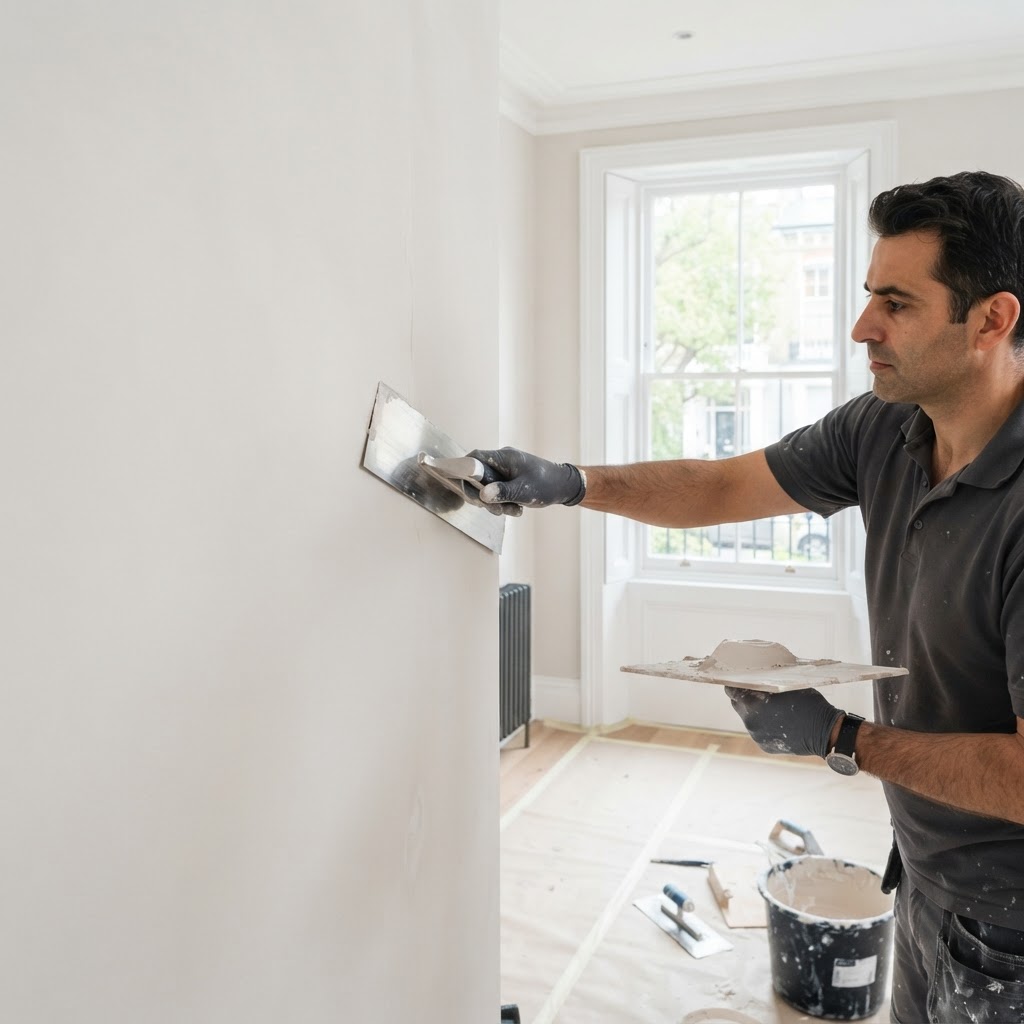
West London Plastering Specialists for High-Quality Finishes
West London plastering specialists you can rely on
Finding a plasterer who turns up on time, protects your home and leaves a genuinely smooth finish is not always easy. At London Plastering Service, we provide high-quality plastering for homeowners, landlords, developers and businesses throughout West London. Our work covers everything from repairing a damaged ceiling in Chiswick to replastering a Victorian terrace in Ealing or preparing a new extension in Hammersmith.
If you are unsure which service you need, start with our main guide to professional plasterers in London. It explains the different types of plastering, what affects a quotation and how to prepare for your project.
We work across Hounslow, Brentford, Isleworth, Richmond, Twickenham, Chiswick, Ealing, Acton, Hanwell, Brent, Harrow, Wembley, Northolt, Southall, Hammersmith, Fulham, Shepherd’s Bush, Kensington and nearby areas. Every project begins with an assessment of the existing surface, followed by clear recommendations and a written quotation.
High-quality plastering for West London properties
West London has a varied housing stock. Georgian and Victorian properties often have uneven masonry, multiple layers of paint and historic repairs, while post-war houses may have cracked plasterboard or failing textured coatings. Modern flats and extensions need accurate preparation around electrical points, windows, doors and recessed lighting.
A good finish depends on more than applying plaster. We carefully assess:
- Whether the existing plaster is sound enough to retain
- Cracks, hollow areas, damp staining and movement
- The condition of brickwork, plasterboard and old render
- Corners, reveals, coving junctions and ceiling lines
- The correct primer or bonding agent for the substrate
- Drying conditions, ventilation and the final decoration requirements
This preparation prevents common problems such as bubbling, debonding, visible joints, uneven corners and paint flaking after completion. We use suitable materials for each surface rather than applying the same approach to every room.
Our West London plastering services
Wall skimming and smooth finishes
Skimming is ideal when existing plaster is firm but rough, dated or covered with minor imperfections. We apply a fine finishing coat to walls and ceilings to create a clean surface ready for mist coating and decoration. It is often the most economical option before redecorating a lounge, bedroom, hallway or rental property.
For more information about preparation, coats and expected finish standards, see our guide to wall skimming in London. A proper skim should be flat and consistent in normal daylight, without trowel lines, ridges or visible joins.
Plaster repairs and patching
Small repairs may be needed around sockets, plumbing alterations, removed dado rails, picture rails or old water damage. We cut back loose material, stabilise the edges, fill the damaged area and blend the repair into the surrounding surface. Where possible, we match the texture and thickness of the existing plaster so the repair does not stand out after painting.
A repair is not suitable if large sections are hollow or if there is ongoing damp or structural movement. In those cases, we explain the cause before recommending a more durable solution.
Ceiling plaster repair
Ceilings require particular care because loose plaster can be hazardous and gravity places extra stress on damaged areas. Common causes include historic water leaks, failed plasterboard joints, movement, poor previous repairs and the weight of old textured coatings.
Our ceiling plaster repair service can include local patching, scrim reinforcement, plasterboard replacement, overboarding or complete replastering. We inspect for staining and softness first. If the damage came from a plumbing leak or roof issue, that source should be fixed before plastering begins.
Artex covering and textured ceiling updates
Many West London homes still have Artex or other textured coatings on ceilings and walls. Covering the texture can give a room a modern, smooth appearance without the disruption of removing every layer. We assess the coating, check its condition and use the appropriate preparation before applying plaster.
Older textured coatings may contain asbestos, particularly in properties built or renovated before the year 2000. We do not sand, scrape or disturb suspect materials. If asbestos is a possibility, arrange testing by a qualified asbestos professional before work starts. Read more about safe Artex covering in London.
Dry lining and plasterboard installation
Dry lining is a practical choice for new partitions, extensions, loft conversions and walls that need improved thermal or acoustic performance. We install plasterboard, deal with joints and angles, and prepare the surface for a smooth skim. Moisture-resistant boards may be suitable for some kitchens and bathrooms, while fire-rated or acoustic boards may be required for specific applications.
Our dry lining service is planned around the room’s use, insulation requirements, services and final finish. Board selection should never be based on price alone, particularly where Building Regulations or fire performance are relevant.
Full-house replastering
A full replaster is appropriate when several rooms have loose, cracked or heavily patched plaster, or when you are renovating a property before moving in. We can work through the house in phases, keeping access routes protected and coordinating with electricians, plumbers, carpenters and decorators.
A typical sequence is:
- Survey the property and identify defective surfaces.
- Agree the specification, finish and areas to be retained.
- Protect floors, doors, windows, furniture and fixed fittings.
- Remove loose plaster and prepare the backgrounds.
- Complete boarding, bonding, repairs and reinforcement.
- Apply the finishing coats and check the surfaces in suitable light.
- Allow adequate drying time before mist coating and final decoration.
See our guide to full-house replastering in London for more detail on scheduling, access and budgeting.
2026 West London plastering prices
The following are realistic guide prices for the London market in 2026. Your final quotation will depend on access, preparation, room size, ceiling height, parking, waste removal and the condition of the existing surface. Prices are typically quoted for labour and standard materials, with VAT clarified before work begins.
| Service | Typical 2026 London price | |---|---:| | Small plaster repair or patch | £150–£350 | | One wall skim, approximately 10–15 m² | £300–£550 | | Skim a standard bedroom | £550–£900 | | Skim a standard living room | £700–£1,200 | | Ceiling repair | £250–£750 | | Full standard room replaster | £900–£1,600 | | Artex covering, per room | £450–£900 | | Dry lining and skimming, per room | £1,000–£1,800 | | Full-house replastering, 2–3 bedroom property | £6,500–£12,000 | | Full-house replastering, 4–5 bedroom property | £10,000–£18,000+ |
For a broader breakdown, including labour rates and factors that change the total, read plastering prices in London. Our separate guide to plastering costs in London is also useful when comparing a room-by-room project with a complete renovation.
These figures are not a substitute for a site visit. A small room with severely blown plaster can cost more than a larger room with sound backgrounds, because removal and preparation take considerably longer. West London parking restrictions, congestion and difficult stair access may also affect the quotation.
What affects the cost of plastering in West London?
Several practical details can change the price substantially:
- Surface condition: Sound walls need less preparation than cracked, hollow or salt-contaminated plaster.
- Room size and height: Large rooms, stairwells and high ceilings require more time, materials and access equipment.
- Number of rooms: Larger projects may be more efficient per room, although protection and logistics are greater.
- Removal and disposal: Stripping thick plaster, lath, tiles or textured coatings creates additional labour and waste.
- Access and parking: Central areas such as Kensington, Fulham and Hammersmith may require permits, loading arrangements or paid parking.
- Specification: Acoustic, moisture-resistant, fire-rated or insulated systems cost more than standard plasterboard.
- Decoration: Plastering prices do not usually include full painting unless specifically agreed.
- Drying time: Cold, damp or poorly ventilated rooms may need longer before decoration can safely begin.
A responsible plasterer should explain these points rather than provide an unrealistically low price that increases once work has started.
How to prepare for your plastering project
Good preparation makes the work safer and helps keep the programme on track. Before we arrive, where practical:
- Remove ornaments, curtains and smaller furniture from the work area.
- Clear access to walls, ceilings, sockets, radiators and windows.
- Tell us about hidden cables, pipes, previous leaks or known movement.
- Arrange for plumbing and electrical alterations to be completed first.
- Confirm parking or loading arrangements if the property has restricted access.
- Keep children and pets away from the work zone.
We protect floors and fixed items, but removing delicate valuables in advance is still sensible. Plastering is a wet trade, so rooms need reasonable ventilation while coats dry. Avoid sealing a newly plastered room with heavy furniture or non-breathable coverings too soon.
What a professional finish should look like
Fresh plaster should be checked once it has firmed up and under the lighting conditions likely to be used in the room. Minor variation can be more noticeable under strong side lighting, especially with downlights or large windows. A professional finish should have:
- Even coverage with no obvious bare patches
- Straight, clean corners and junctions
- Secure edges around sockets, doors and windows
- No loose areas, bubbling or cracking caused by poor preparation
- A surface appropriate for the agreed finish and decoration plan
Plaster is not paint. It may show small tonal changes while drying, and the final appearance depends on correct mist coating and decorating. We explain the aftercare needed so the finished work performs as expected.
Emergency plaster repairs across West London
A collapsed section of ceiling, sudden water damage or exposed plasterboard needs prompt attention. We can assess urgent damage in areas including Richmond, Ealing, Hounslow, Acton and Hammersmith, make the area safe and advise whether a temporary repair or complete replacement is appropriate.
If you need immediate assistance, see our emergency plaster repair service. In a serious leak, switch off the water supply if safe, avoid standing beneath a bulging ceiling and contact the relevant plumber or emergency contractor first.
FAQs: West London plastering specialists
How long does plastering take in a West London home?
A small repair may take a few hours, while skimming a standard room commonly takes one to two days, depending on preparation. A full room replaster may take two to four days. A whole-house project can take several weeks, especially where plaster must be removed, services are being altered or different rooms need to dry between stages. We provide a programme based on the property rather than promising an unrealistic one-day finish.
Can you plaster over old paint or existing Artex?
Sometimes. Sound, clean and well-adhered backgrounds can often be prepared and skimmed. Flaking paint, grease, wallpaper residue, loose plaster and unstable Artex must be dealt with first. Suspect textured coatings should be tested for asbestos before disturbance. We inspect the surface and explain whether skimming, bonding, boarding or removal is the safest option.
How soon can I paint after plastering?
Drying time varies with thickness, ventilation, temperature and humidity. A skim coat often needs around five to seven days, but thicker repairs or full replastering can take longer. The plaster should be evenly dry and free from dark patches before painting. Use a suitable diluted mist coat first, then apply compatible finishing paint. Painting too early can trap moisture and lead to peeling or discolouration.
Do you repair cracks or is the wall better replastered?
That depends on the crack’s size, location and cause. Hairline shrinkage cracks may need local filling, while cracks around openings or across large areas may indicate movement, failed joints or loose plaster. We check whether the surrounding surface is sound. Repairing the symptom without addressing movement or damp is unlikely to provide a lasting result.
Do you provide written quotations for West London properties?
Yes. We explain the work included, preparation required, materials, estimated duration and any exclusions. Where a hidden defect may only become visible after removal, we identify that possibility in advance. A written quotation makes it easier to compare contractors and prevents confusion about whether protection, waste removal or decoration is included.
Book a West London plastering quotation
Whether you need one perfectly skimmed wall in Chiswick, a repaired ceiling in Twickenham or a complete replaster in Ealing, London Plastering Service provides careful preparation, dependable communication and high-quality finishes. Contact us today with your postcode, photographs and a brief description of the work. We will discuss the best approach and arrange a quotation for your West London property.
Related Plastering Guides & Services
Need Professional Plastering?
Get expert plastering services in London. Free quotes within 60 minutes.