
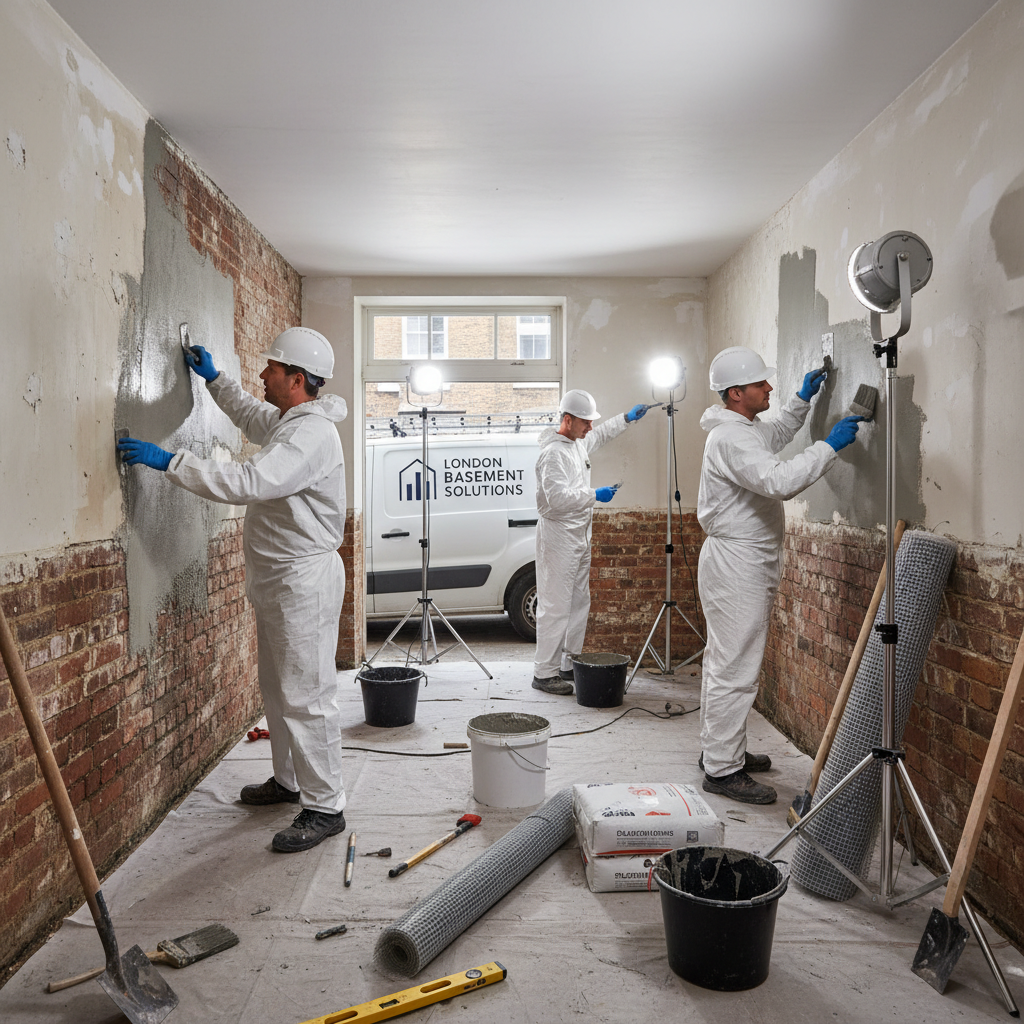
Waterproof Tanking vs Waterproof Plaster in London Homes
Waterproof Tanking vs Waterproof Plaster London
As a London homeowner, you know how unpredictable the weather can be. One moment the sun is shining, and the next, rain is pouring down, seeping into every crevice of your home. Picture this: you’re enjoying an evening at home, and suddenly, you notice damp patches creeping along your living room wall. The dilemma then arises — should you consider waterproof tanking or waterproof plaster to safeguard your property? In this blog post, we will delve deep into both solutions to help you make an informed decision.
Understanding Waterproof Tanking
Waterproof tanking is a method used to create a waterproof barrier on walls and floors to protect against moisture ingress. Particularly suitable for basements or areas prone to flooding, waterproof tanking solutions can be the perfect shield against the relentless London rain. Here are key points about tanking:
- Material & Technique: Tanking involves applying a thick coating, often made from cement-based materials, that creates a barrier against water.
- Application Areas: It is commonly used in basements, cellar conversions, and wet rooms.
- Cost: The average cost for waterproof tanking can range from £50 to £100 per square meter, depending on the extent of water damage and the area to be treated.
Pros of Waterproof Tanking
- Effective Moisture Control: Ideal for spaces that face continuous dampness, such as basements.
- Durability: Withstands external water pressure, ensuring long-term protection.
- Fast Installation: Typically quicker to apply than plastering methods.
Cons of Waterproof Tanking
- Appearance: Tanking can be less aesthetically pleasing compared to well-finished plastered walls.
- Requires Ongoing Maintenance: If the tanking layer is damaged, it may require reapplication.
Understanding Waterproof Plaster
Waterproof plaster, on the other hand, is a blend of plaster and additives designed to repel water. It’s an excellent choice for areas that need moisture control but still require a polished finish. Here’s what to know about waterproof plaster:
- Material: It consists of gypsum or cement with additives that enhance water resistance.
- Ideal Spaces: Typically used on interior walls, especially those in kitchens and bathrooms.
- Cost: Waterproof plastering ranges from £35 to £80 per square meter, which can be more cost-effective for extensive areas.
Pros of Waterproof Plaster
- Aesthetic Appeal: Smooth, attractive finish that is perfect for interior settings.
- Less Risk of Cracks: The flexibility of plaster allows for minor movements in the structure without cracking.
- Versatility: Can be applied in various environments, ideal for custom designs.
Cons of Waterproof Plaster
- Less Effective Against Flooding: Not as effective as tanking in heavy water pressure situations, such as flooding.
- Longer Application Time: The drying and application process can take longer.
Key Differences Between Waterproof Tanking and Waterproof Plaster
When deciding between waterproof tanking and waterproof plaster, consider the following differences:
- Application Area: Tanking is better for external walls and high-risk damp areas. Plaster works well for internal walls where moisture needs managing but isn’t as extreme.
- Cost Efficiency: Tanking can be more expensive due to material costs, while plastering may provide a more economical solution for extensive wall applications.
- Longevity & Maintenance: Tanking systems may require more frequent checks compared to waterproof plaster, which, although requiring proper care, can offer a longer aesthetic lifespan if maintained properly.
Practical Tips for Applying Waterproof Solutions
Steps for Waterproof Tanking:
- Prepare the Surface: Clean the walls thoroughly, removing any loose material or dampness.
- Apply Primer: Use a suitable primer to improve adhesion.
- Tanking Coat Application: Apply the waterproof tanking material in two coats using a trowel or roller.
- Seal the Edges: Pay attention to corners and junctions, sealing them well.
- Allow to Cure: Let it cure as per manufacturer instructions before rendering or plastering.
Steps for Waterproof Plastering:
- Surface Preparation: Ensure walls are clean, dry, and dust-free.
- Apply a Base Coat: Consider a bonding agent if needed.
- Mix the Waterproof Plaster: Follow the manufacturer’s instructions precisely.
- Plastering: Apply using the trowel, starting at the bottom and working upwards.
- Finishing Touches: Smooth out for an even finish, then allow it to dry completely before painting.
FAQ
1. Which solution is better for a basement?
Waterproof tanking is generally considered better for basements due to its ability to withstand hydrostatic pressure and prevent moisture ingress effectively. Waterproof plaster is better suited for areas that don’t face extreme moisture.
2. Can I apply waterproof plaster myself?
While homeowners can attempt DIY plastering, it’s advisable to hire a professional plastering team for waterproof plaster applications, especially in moisture-exposed areas. Professionals like London Plastering Service ensure a high standard of work.
3. How can I tell if I need tanking or waterproof plaster?
Evaluate the moisture levels in your home. If it’s subject to flooding or has severe damp issues, choose tanking. For minor dampness, waterproof plaster may suffice. Consulting professionals can also provide clarity and guidance on the best solutions tailored to your home.
4. What’s the average lifespan of each solution?
Waterproof tanking can last up to 25 years with proper maintenance, while waterproof plaster can last at least 10-15 years if maintained properly.
5. Are there any specific regulations for these applications in London?
Yes, applying waterproofing solutions in London may require building regulations compliance, depending on your property type. It’s best to consult with your local building authority or a trusted professional to ensure compliance.
Conclusion
Choosing between waterproof tanking and waterproof plaster largely depends on the specific moisture challenges your London home faces. Whether you opt for the robust protection of tanking or the aesthetic finish of plaster, understanding the differences, costs, and features will equip you to make the best choice for your property.
Ready to protect your home from damp issues? Contact London Plastering Service today for a consultation, or visit our Gallery to see our completed projects. Don't wait until it's too late – safeguard your investment today!
Related Plastering Guides & Services
Need Professional Plastering?
Get expert plastering services in London. Free quotes within 60 minutes.