
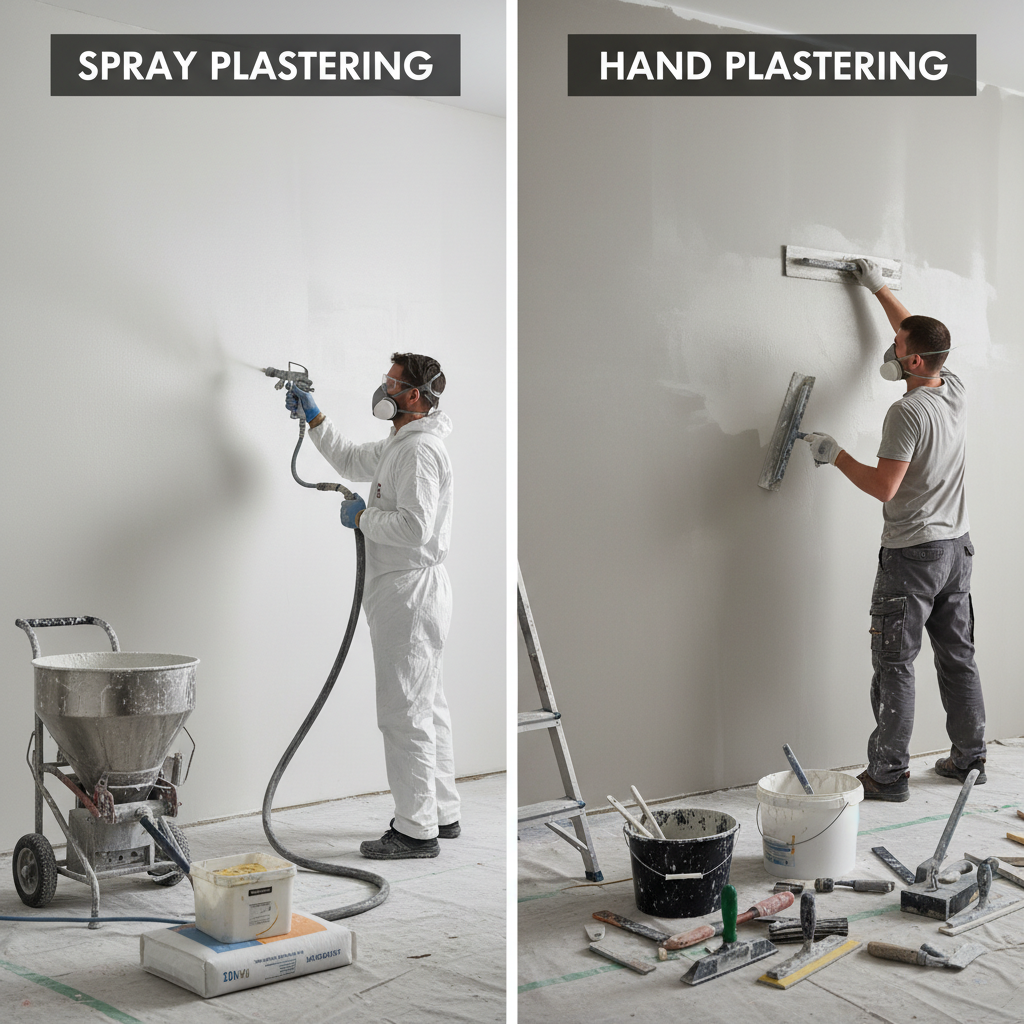
The Showdown: Spray Plastering vs Hand Plastering
Spray Plastering vs Hand Plastering: Pros & Cons Explained
Picture this: you're navigating through the bustling streets of Camden, London's cultural melting pot, on your way to a friend’s homewarming party when an unexpected shower of rain strikes. With no umbrella handy, you duck under a canopy, looking for shelter. This is much like the dilemma many London homeowners face when choosing a plastering technique—whether to go with the swift, modern method of spray plastering or the traditional touch of hand plastering.
In the world of home renovations, plastering your walls is often a pivotal step; it sets the stage for painting, wallpapering, or faux finishes. As each method boasts unique attributes, understanding the pros and cons of spray plastering versus hand plastering is essential for any homeowner, landlord, or property manager.
In this blog post, we will dive deep into both plastering methods, offering actionable insights and guidance while addressing common questions. Let’s paint a clearer picture of what best suits your needs, shall we?
What is Spray Plastering?
Spray plastering is a contemporary technique that utilizes a spray gun to apply plaster onto walls quickly and evenly. Here’s a breakdown of its key features:
- Speed: It can cover large areas faster than hand plastering. A room that would take hours to hand plaster can often be done in under an hour with spraying.
- Application: The automated process ensures a uniform thickness across the surface, reducing the chances of imperfections.
- Cost-Effective: Due to its speed, labor costs can be significantly lower, making it a more affordable option for larger jobs.
Pros of Spray Plastering
- Efficiency: Ideal for large spaces, saving time on mid-size and larger projects.
- Smooth Finish: Gives a consistently smooth surface, ideal for modern aesthetics.
- Less Waste: Typically creates less material waste than traditional methods.
Cons of Spray Plastering
- Skill Dependent: Requires experienced professionals. A poorly managed spray job can result in splatter or uneven coverage.
- Equipment Costs: Requires specialized tools, which may incur extra rental costs.
What is Hand Plastering?
Hand plastering, the traditional approach, involves manually applying plaster using tools like trowels and floats. It is often favored for its craftsmanship and attention to detail.
Pros of Hand Plastering
- Artistry: Allows skilled plasterers to create textured finishes and specific shapes tailored to the homeowner’s vision.
- Versatility: Suitable for both small and complex architectural designs, perfect for period homes in areas like Notting Hill or Kensington.
- Control: More control over the application, enabling adjustments during the process.
Cons of Hand Plastering
- Time-Consuming: Can take significantly longer than spray plastering; expect to wait several days for larger projects.
- Cost: Higher labor costs due to its time-intensive nature, typically in the range of £20-£35 per square meter in London.
Choosing the Right Method for Your Project
When faced with the decision between spray plastering and hand plastering, consider the following factors:
- Project Size: Large areas favor spray plastering, while intricate designs may benefit more from hand application.
- Finish Needed: If a smooth finish is a priority, spray plastering might be the way to go.
- Budget: Assess the total costs of materials and labor for your specific project scope.
Practical Tips for Homeowners
- Consult with Professionals: Always engage with qualified plasterers to discuss what works best for your specific situation. Our professional plastering team can help guide you.
- View Completed Projects: Check our gallery to see examples of both spray and hand plastering to inspire your choice.
- Prepare Your Space: Regardless of the method, clear the room of furniture and cover the floors to catch any debris or spills.
- Ask About Finishing Options: Whether you go for spray or hand, inquire about your finishing options, including paint choices that suit your refurbished areas.
FAQ
What are the costs associated with spray vs. hand plastering?
Spray plastering generally costs between £10-£25 per square meter due to reduced labor time, while hand plastering can range from £20-£35 per square meter, depending on complexity and area.
Can I do spray plastering myself?
While DIY spray plastering is possible, it requires a certain skill level and specialized equipment. Hiring professionals ensures a more consistent and high-quality finish.
How long does each method take?
Spray plastering can complete a room in a few hours, whereas hand plastering might take several days, especially for larger rooms or complex designs.
Are there specific types of plaster suitable for spray plastering?
Yes, pre-mixed and ready-to-use plasters work best with spray methods. Always consult with professionals to ensure compatibility with spray applications.
What’s best for a damp environment, like kitchen or bathroom?
For damp environments, hand plastering is often preferred due to the ability to better manage adhesion and control over texture. Opt for moisture-resistant plaster when possible.
Conclusion
Deciding between spray plastering and hand plastering ultimately boils down to your project’s requirements, budget, and desired finish. Both techniques can elevate your home in lively neighborhoods like Shoreditch or Hampstead, but understanding their strengths and weaknesses is key.
Ready to give your walls the makeover they deserve? Contact us today at London Plastering Service to get started on your plastering project!
Don’t forget to check out our blog for more tips and guides on plastering and renovation!
Related Plastering Guides & Services
Need Professional Plastering?
Get expert plastering services in London. Free quotes within 60 minutes.