
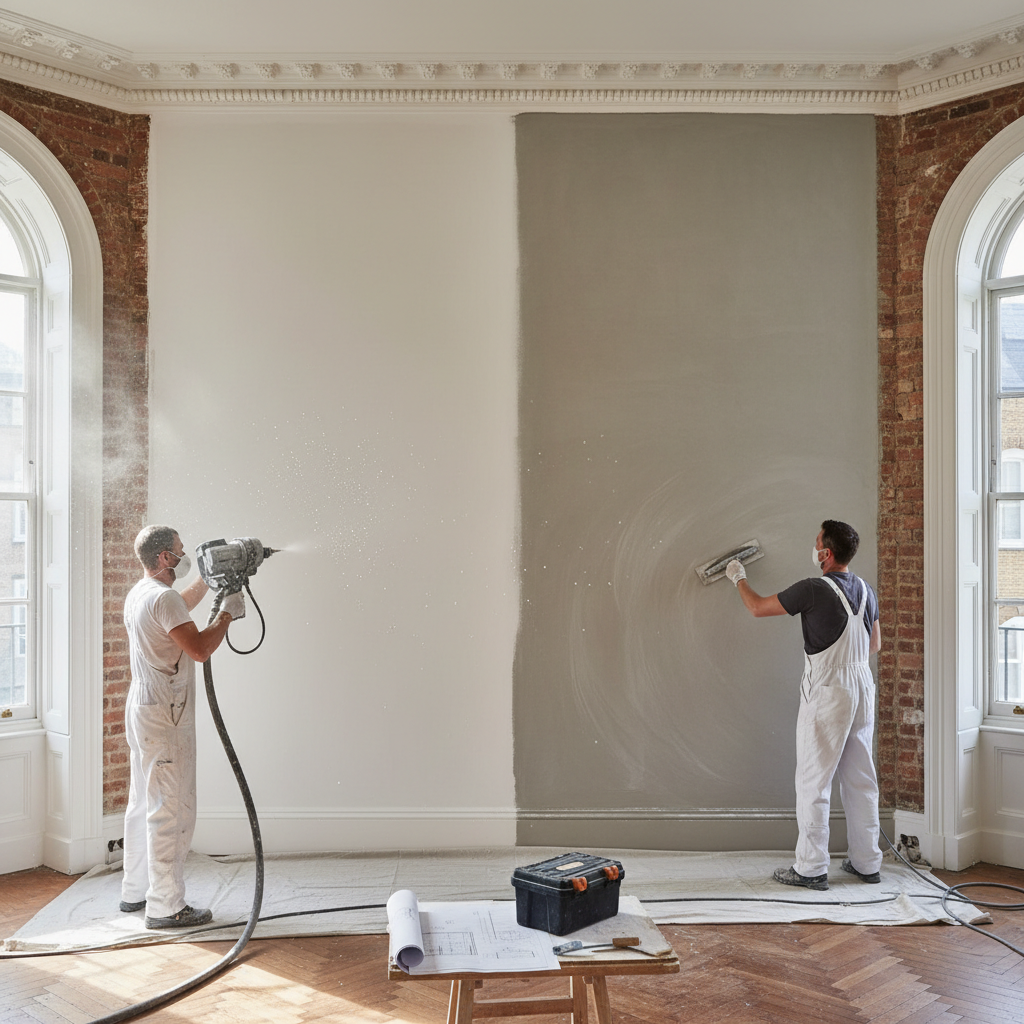
Spray Plastering vs Hand Plastering: Pros & Cons Explored
Spray Plastering vs Hand Plastering: Pros & Cons Explored
Imagine walking through your newly renovated London flat in Clapham, feeling the smoothness of freshly plastered walls that whisper elegance and charm. The decision of how those walls were finished often leads homeowners down a rabbit hole of choices, particularly between spray plastering and hand plastering.
Both techniques offer unique benefits and drawbacks that can significantly impact the overall aesthetics, time investment, and cost of your project. But which is right for your home? Let’s delve deep into this plastering debate!
What is Spray Plastering?
Spray plastering, often referred to as machine plastering, utilizes a specialized machine to spray a mixture of plaster on walls. This method allows for a more uniform application, reducing the amount of labor involved.
Advantages of Spray Plastering
- Speed: A large area can be covered quickly, making this method suitable for big jobs or new builds.
- Smooth Finish: The machine ensures a consistent thickness, leading to a high-quality finish.
- Less Manual Labor: This can reduce labor costs as fewer hands are needed on-site.
- Fewer Joints and Seams: This helps avoid visible lines and improves the overall texture.
Disadvantages of Spray Plastering
- Initial Equipment Cost: The machinery and setup can be expensive to hire.
- Skill Required: Although it requires less manual labor, it demands skill to operate the machinery effectively.
- Not Ideal for Small Projects: For smaller spaces, the setup time may outweigh the benefits.
What is Hand Plastering?
Hand plastering, the traditional method, involves skilled plasterers applying plaster using trowels to achieve a smooth finish. It's often preferred for smaller projects or intricate designs.
Advantages of Hand Plastering
- Detail-Oriented Finish: Allows for a textured or detailed finish that can be stylistically superior, especially for restoration work in heritage properties.
- Flexibility: Hand plastering can be adjusted on-the-fly to meet specific needs or architectural details.
- Established Skill: Many skilled plasterers have perfected this technique over generations, ensuring high quality.
Disadvantages of Hand Plastering
- Time-Consuming: More labor-intensive, leading to longer project completion times.
- Higher Labor Costs: Due to the time and skill required, labor costs can be higher than spray plastering.
- Inconsistent Finish: Variability in application can lead to inconsistencies if not done by an experienced professional.
Practical Tips for Choosing the Right Method
When deciding between spray plastering and hand plastering, consider the following:
- Project Size: Larger projects benefit more from spray plastering, while smaller or detailed projects may be better suited for hand plastering.
- Budget: If you're constrained by budget, hand plastering might be more economical in small doses, while spray plastering is effective for larger scales.
- Desired Finish: For a perfectly smooth and modern look, spray plastering often wins, but for character-filled homes in heritage areas like Hampstead, hand plastering may serve better.
- Timeline: Consider how soon you need the job done. Spray plastering typically means shorter timelines.
Cost Estimates in London
While costs can vary based on several factors, here are general estimates for plastering services in London:
- Hand Plastering: Expect around £20-£30 per square meter.
- Spray Plastering: This ranges around £15-£25 per square meter but can increase based on equipment rentals.
For more detailed quotes tailored to your specific project, consult our team at London Plastering Service or check out our Gallery to see previous work.
FAQ
1. Can I use spray plastering in a small room?
Yes, but it may not be cost-effective. Spray plastering is ideal for larger areas. For smaller rooms, hand plastering may provide better detail and accuracy and is often more economical.
2. How long does each method take?
Spray plastering can finish a job in a fraction of the time it takes hand plastering. A medium-sized room could take a day or less with spray plastering, while hand plastering typically requires several days, depending on the intricacy of the work.
3. Is one method better for damp areas?
Both methods can be fitted for damp areas; however, hand plastering allows for greater attention to detail and application of moisture-resistant products when necessary. Always consult a professional plasterer to assess specific conditions.
4. Which method is easier for DIY?
While both methods can be challenging, hand plastering is more accessible for those willing to learn traditional skills. Spray plastering requires knowledge of machinery and can be tricky for untrained individuals.
5. Do you offer warranty for your plastering work?
Yes, at London Plastering Service, we provide guarantees on our plastering work against defects for a set period, giving our clients peace of mind.
Conclusion
Deciding between spray plastering and hand plastering is crucial for your home's aesthetics and functionality. Both methods have their unique advantages and limitations, but understanding your specific needs will guide you to the right choice.
At London Plastering Service, our professional plastering team is ready to help you assess your project and recommend the best approach. Interested in transforming your walls? Contact us today for a free quote and let’s make your vision a reality!
For more plastering tips and guides, be sure to visit our Blog. For local plasterers, check out our PlasterersNearMe.
Related Plastering Guides & Services
Need Professional Plastering?
Get expert plastering services in London. Free quotes within 60 minutes.