
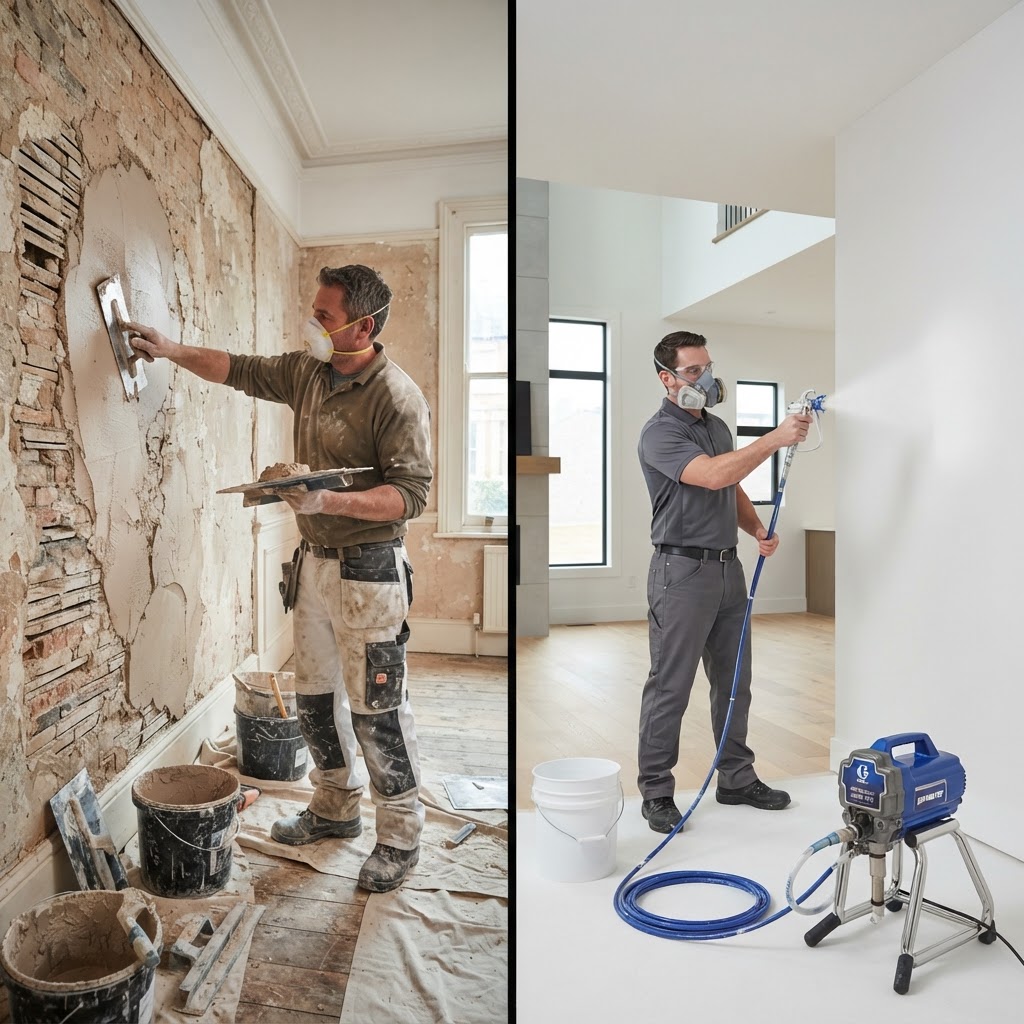
Spray Plastering vs Hand Plastering: A 2026 London Guide
Introduction to Modern Plastering in London: The 2026 Landscape
When renovating a property in the sprawling metropolis of London, from the ornate Victorian terraces of Kensington to the converted industrial warehouses of Hackney, the finish of your walls defines the entire aesthetic and structural longevity of your investment. At London Plastering Service, we have observed a significant shift in the construction industry as we navigate the demands of 2026. As property values in boroughs like Richmond and Clapham continue to soar, homeowners are increasingly focused on achieving a 'Level 5' smooth finish, suitable for high-end paintwork and decorative wallpaper. The debate between traditional hand plastering and modern spray application is one we address daily. Both methods achieve a high-quality finish, but they serve vastly different functional requirements in the London property market.
Understanding Hand Plastering: The Artisan Approach
Hand plastering remains the bedrock of British interior craftsmanship. It is a tactile, manual process where a professional uses a steel hawk and a finishing trowel to apply wet plaster onto substrates such as brickwork, lath, or plasterboard.
The Nuances of Hand Finishing
Hand plastering is not merely about covering a wall; it is about managing the 'set' of the plaster. A skilled plasterer can read the suction of the background—whether it is an old, porous Victorian wall or a new moisture-resistant board—and adjust their pressure accordingly. This level of intimacy with the material allows for a finish that is structurally sound and aesthetically superior in irregular spaces.
Pros of Hand Plastering
- Precision in Complexity: It is the only viable option for intricate corners, curved walls, and ornate Victorian cornicing that is common in Islington or Chelsea.
- Small-Scale Efficiency: Ideal for Emergency Plaster Repair London. When a ceiling suffers water damage, you do not want to set up an industrial spray rig; you need the agility of a hand-trowel specialist.
- Craftsmanship: Allows the plasterer to detect imperfections during the application process, ensuring that every square inch is perfectly plumb and level.
Cons of Hand Plastering
- Labor Intensity: The physical toll on the human body means that large-scale ceilings can cause significant fatigue, which can lead to inconsistencies in the finish if not managed by a rotating team.
- Time-to-Completion: For a project covering over 200 square metres, manual application can take several days longer than mechanical methods.
The Rise of Spray Plastering: The 2026 Technological Standard
Spray plastering has evolved from a niche commercial tool to a residential necessity. Using heavy-duty airless pumps, specialized airless spray plaster is atomized and applied to walls and ceilings at high pressure. This method has become the preferred choice for new-build developments in Nine Elms or Stratford, where sheer square footage makes manual application economically inefficient.
Pros of Spray Plastering
- Unrivaled Speed: A professional spray team can finish an average-sized living room in a fraction of the time, often covering 500-800 square metres in a single day.
- Superior Consistency: The atomization process ensures that the thickness of the plaster is uniform across the entire surface, eliminating the risk of 'trowel marks' which are often visible under the harsh, glancing light of modern LED spotlights.
- Material Economy: Modern spray materials are designed for high-build application, reducing waste and ensuring a finish that is ready for light sanding and immediate painting.
Cons of Spray Plastering
- Preparation Intensive: The 'overspray' factor means that every skirting board, window frame, and floor segment must be meticulously masked using high-grade protective film and tape. Failure to do so can result in thousands of pounds of damage.
- Equipment Logistics: Moving a bulky spray rig into a terraced property in a tight borough like Camden can be a logistical challenge.
2026 London Market Pricing Breakdown
In 2026, London pricing reflects a blend of rising material costs and the premium placed on skilled labor. For a standard 3-bedroom semi-detached property in areas like Clapham or Richmond, expect the following guide prices:
- Hand Plastering (Skimming): £20 - £30 per square metre. For high-end renovation, this price may increase if lime-based products or specialist heritage plasters are required.
- Spray Plastering: £15 - £22 per square metre. While the base rate is lower, please note that contractors often apply a 'mobilization fee'—typically ranging from £250 to £500—to cover the transport and setup of airless equipment.
- Full House Replaster: A standard 3-bed house might cost between £4,000 and £12,000.
- Expert Tip: In areas with high congestion charges or parking restrictions (like Westminster), ensure your quote explicitly includes parking permits and logistics, which can add 5-10% to the total bill.
Comparative Analysis for London Property Owners
When deciding between these methods, look at the project scope. If you are doing Artex Covering London, spray plastering is often the superior choice for creating a flat, level canvas over a textured ceiling. However, for Ceiling Plaster Repair London in a listed property in Knightsbridge, hand-applied lime plaster is often a legal requirement. For modern developments using Dry Lining London, spray skimming provides the best return on investment, as it creates a perfect surface for high-spec wall coverings.
Frequently Asked Questions (FAQ)
Q: Is spray plastering better than hand plastering?
It depends entirely on the project. Spray is mathematically faster and offers better consistency on large, flat surfaces. Hand plastering is superior for quality control in detailed, smaller rooms, period restorations, and intricate repairs where machine access is restricted.
Q: How much does it cost to replaster a whole house in London?
Based on our 2026 data, a full house replaster ranges from £4,000 to £12,000. Factors influencing this include ceiling height (taller ceilings in Victorian houses cost more), the condition of the existing substrate, and the complexity of the plaster profile (cornicing vs. flat edges).
Q: Does spray plastering create a lot of mess?
Because it uses high pressure, it creates an 'overspray' mist. A reputable company will spend as much time preparing the room as they do spraying it. We use hospital-grade masking to protect your home, ensuring the finish is immaculate.
Q: Can I use spray plastering in a listed building?
Generally, no. Listed buildings require traditional lime-based or breathable plasters, which have a specific viscosity that is often incompatible with standard airless spray machines. Always consult with your local conservation officer first.
Q: What is the drying time difference between the two?
Hand plaster usually has a slightly longer curing window, which allows for finer finishing. Spray plaster is formulated to set quickly, often allowing for light sanding within 24 hours, making it ideal for fast-track renovations.
Final Recommendation
For the majority of London homeowners, the decision comes down to the property age and the project end-goal. New-build apartments and modern conversions benefit from the efficiency of spray systems, whereas period homes in historic boroughs require the sensitive touch of an artisan plasterer. Professional execution is the single most important factor. Our team at London Plastering Service is equipped to handle both methods with the highest standard of excellence. Contact us today for a free site assessment and a custom quote.
Related Plastering Guides & Services
Need Professional Plastering?
Get expert plastering services in London. Free quotes within 60 minutes.