
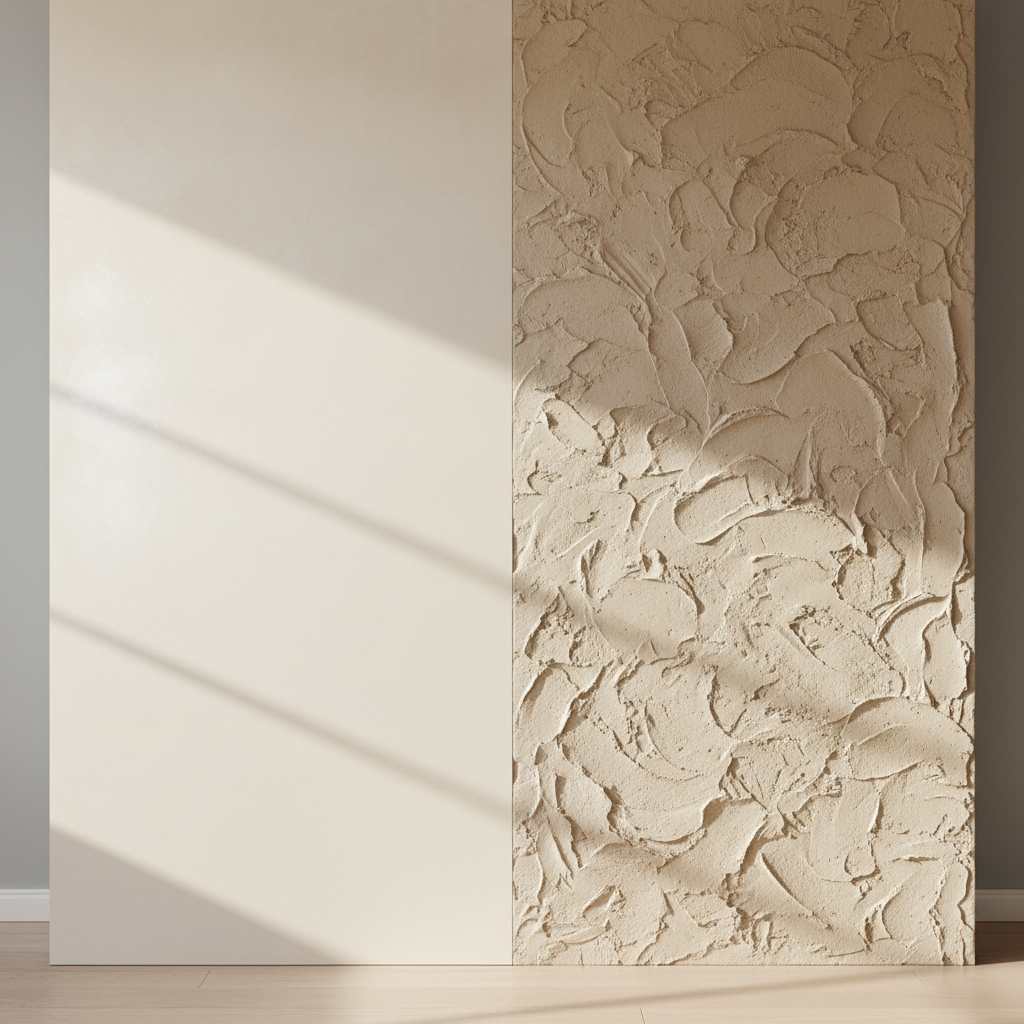
Smooth vs Textured Finishes: What’s Best for Your Plaster Walls?
Introduction
Imagine stepping into your freshly plastered room and feeling the surface of the walls. You run your fingers across them, and you’re met with either a glass-like smoothness or a tactile texture that catches your hand. In London, where every property carries its own character and charm, the finish of your walls can make or break the aesthetic.
Did you know that the finish of your walls can not only impact the visual appeal of your home but also affect the longevity and ease of maintenance? In this blog post, we’ll explore the age-old debate: should you go for a smooth or textured finish for your new plaster walls? Let’s delve into the details to help you make an informed decision.
What Are Smooth and Textured Finishes?
A smooth finish is achieved through meticulous plastering work that results in a clean, flat surface. Typically, this type of finish is preferred in contemporary homes, offering a sleek and modern appearance.
On the other hand, a textured finish involves adding depth or patterns to the plaster surface. This technique can create a rustic or traditional look, making it ideal for period homes in areas like Kensington or Notting Hill.
Pros and Cons of Smooth Finishes
Pros:
- Aesthetic Appeal: Smooth walls provide a modern, sophisticated look that accentuates bold furnishings and décor.
- Ease of Cleaning: Smooth surfaces are easier to clean and maintain. Dust and stains can be wiped off without leaving marks.
- Versatility: They work well with various wall colors, patterns, and styles, making them a versatile choice for homeowners.
Cons:
- Requires Skill: Achieving an impeccable smooth finish requires skilled plasterers, increasing labor costs.
- Susceptibility to Damage: Smooth finishes can be more prone to cracks if not properly prepared or if the underlying wall has issues.
Pros and Cons of Textured Finishes
Pros:
- Visual Interest: Textured finishes add character to walls and can hide imperfections more effectively than smooth surfaces.
- Variety of Styles: From knockdown to skip trowel, there are countless styles of texturing which can complement different interior designs, especially in vintage neighborhoods.
- Durability: Textured surfaces can be more durable and resistant to wear over time, making them ideal for high-traffic areas.
Cons:
- Cleaning Challenges: Textured surfaces can collect dust and grime, making them harder to clean effectively.
- Stylish Limitation: Some decor styles may clash with heavy textures, thus limiting your overall interior design.
Which Finish is Right for You?
Choosing between smooth and textured finishes often comes down to personal preference and the overall style of your property in London. For example:
- Modern and Minimalist: If your home has a sleek design, a smooth finish is likely the way to go.
- Traditional and Rustic: Homeowners with older properties, say in Hampstead or Richmond, may appreciate the charm of textured finishes.
Practical Tips for Choosing Your Finish
- Consider Your Space: Evaluate the architecture of your home. Smooth finishes suit more modern designs, while texture fits older, more ornate buildings.
- Think About Maintenance: If you’re a busy London homeowner, smooth plastered walls might require less maintenance over time.
- Budgeting Your Finish:
- Smooth Finishing Cost: Expect to pay between £25-£35 per square meter for a high-quality smooth finish, depending on the area.
- Textured Finishing Cost: Textured finishes range from £20-£30 per square meter, with variations based on the complexity of the texture.
- Lighting Considerations: Smooth walls can reflect light beautifully, while textured surfaces may diffuse light creating warmth, so consider how natural light interacts with your space.
FAQ
1. What is the ideal finish for bathroom plaster walls?
For bathrooms, a smooth finish is often recommended due to its ease of cleaning and mold resistance. Textured finishes can accumulate moisture, leading to mold if not properly maintained.
2. Can I change the finish of my walls later?
Yes, changing the finish is possible but requires significant work. A textured wall can be smoothed out, but texture cannot easily be added to a smooth finish without extensive work.
3. How long does it take to plaster and finish walls?
Typically, tearing down old plaster and applying a new finish can take about 3-5 days, depending on the size of the area and the type of finish being applied. Contact our professional plastering team for a personal estimate.
4. Are textured finishes more expensive to apply?
Not necessarily. The cost depends on the design complexity of the texture. Already defined textures tend to be less expensive, while custom works and intricate designs can raise the cost.
Conclusion
The finish on your new plaster walls is an essential decision that does more than just beautify your home; it also impacts maintenance and longevity. Whether you opt for a smooth modern aesthetic or a textured vintage charm, consider your lifestyle, the character of your home in London, and consult with experienced plasterers for guidance.
👉 Ready to give your walls the finish they deserve? Contact London Plastering Service today for a free consultation and let’s transform your space together! Check out our Gallery for inspiration from our previous projects and discover what’s possible for your home.
Related Plastering Guides & Services
Need Professional Plastering?
Get expert plastering services in London. Free quotes within 60 minutes.