
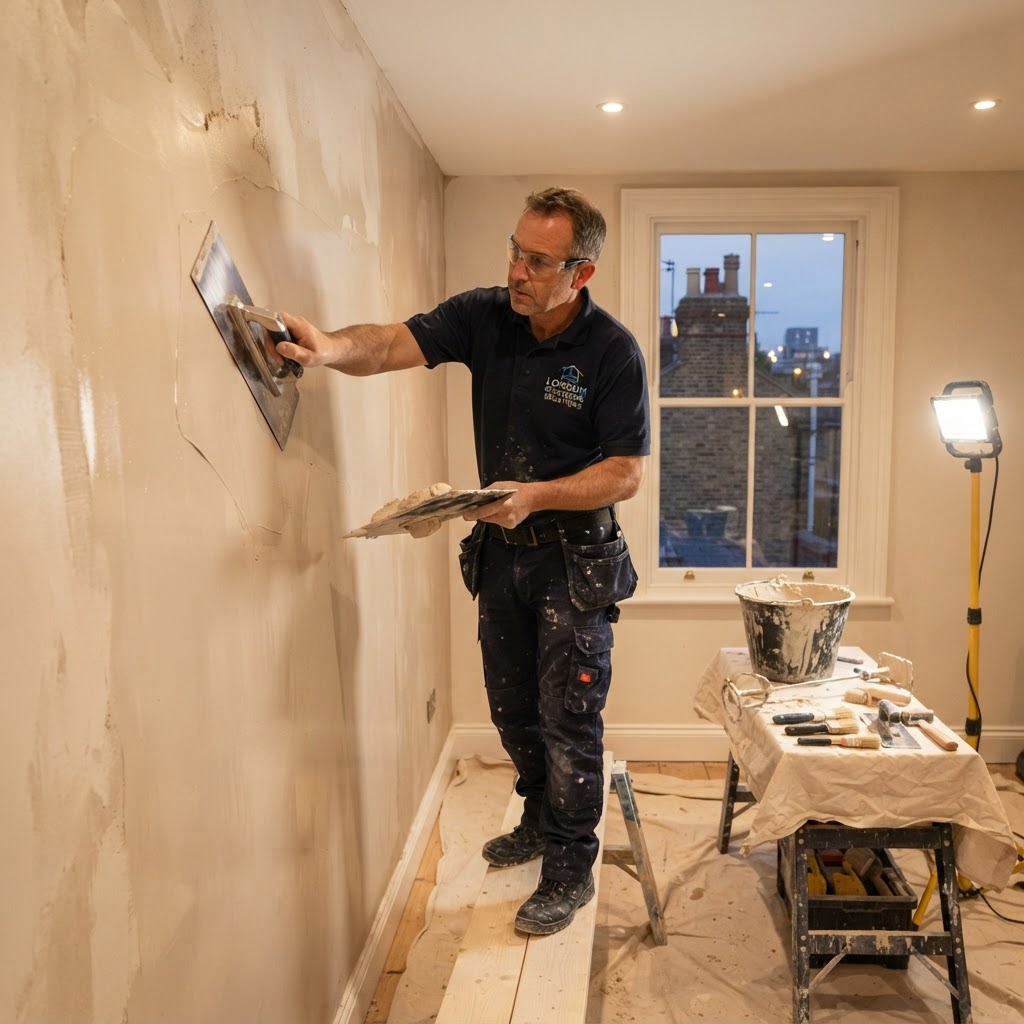
Skimming vs Plastering: What’s the Difference? | London Guide
Understanding the Fundamentals: Plastering vs. Skimming
When you are renovating a property in a borough like Islington, Hackney, or Hammersmith, the terminology used by contractors can often be confusing. At London Plastering Service, we frequently encounter clients asking about the difference between skimming and plastering. If you are looking for a professional plasterer London to assist with your home improvement, understanding these terms is the first step toward getting the right finish for your walls. Distinguishing between these two is critical for budgeting, timeline management, and structural longevity.
What is Traditional Plastering?
Plastering is the broader, comprehensive term for the application of mortar or plaster to walls and ceilings. In older Victorian terraces across London—particularly in conservation areas like Kensington or Hampstead—walls often require a full re-plastering approach. This involves applying a base coat (often known as a backing coat, such as bonding or hardwall) followed by a set coat. This is a robust, multi-layered process that addresses structural issues, replaces crumbling lath and plaster, or covers brickwork. You can find detailed breakdowns of our full house replastering services if your property needs a complete overhaul to meet current building standards.
What is Skimming?
Skimming is a specific, refined subset of plastering. It is the application of a thin layer of finishing plaster (typically Multifinish) to an existing surface to create a perfectly smooth, level area. If your walls are structurally solid but look tired, have deep gouges from electrical chasing, or feature uneven surfaces, wall skimming London is the ideal solution to prepare the room for high-end paint or wallpaper. In modern flats around Canary Wharf or Shoreditch, skimming is often the standard for achieving that 'new build' aesthetic.
Key Differences in Execution
- Depth and Build: Plastering is thick; it involves building up depth to create a flat plane. Skimming is thin (typically 2-3mm), meant only for surfacing.
- Application Process: Plastering builds a new wall surface; skimming polishes an existing one. Plastering requires a 'scratch coat' to provide a key for the backing coat.
- Primary Goal: Plastering is for structural integrity and thermal retention; skimming is for aesthetic perfection and visual appeal.
- Skill Level: True plastering requires deep knowledge of suction levels, drying times, and material mixing, whereas skimming focuses heavily on the 'trowel' skills required to achieve a glass-like finish.
2026 London Market Pricing & Budgeting
Costs in London fluctuate based on your specific borough and the logistical access (e.g., parking permits in Westminster add overheads). Prices are higher in Zone 1 compared to the Greater London suburbs. For an accurate quote, refer to our plastering cost London guide.
- Skimming an average bedroom (walls & ceiling): £550 – £850, depending on wall height.
- Full replastering of a large living room: £1,200 – £2,000, factoring in skip hire for debris removal.
- Ceiling repair and patch skimming: £350 – £600.
- Small hallway/corridor skimming: £400 – £700. Note: Add 20% for projects involving high-level scaffolding or complex period molding restoration.
When Do You Need Which Service?
Choose Full Plastering When:
- You are dealing with damp, salt-contaminated, or crumbling traditional lime plaster in a period property.
- You have stripped away heavy woodchip wallpaper and discovered 'blown' plaster that sounds hollow when tapped.
- You are undergoing a full renovation that includes dry lining London to improve thermal efficiency in drafty Victorian rooms.
- The wall surface is so degraded that the gypsum or lime has lost its chemical bond.
Choose Skimming When:
- You want to cover up textured ceilings or dated Artex patterns, commonly found in 1970s London conversions.
- You are renovating a kitchen or bathroom and need a flawless, moisture-resistant surface for tiling.
- You have had ceiling plaster repair London and need to blend the patches into the existing ceiling plane.
- You want to modernize a room that has previously been painted multiple times and has accumulated a 'bumpy' texture.
Expert Insights: The Chemistry of Plaster
In London’s damp climate, the chemical reaction of plaster (the hydration process) is vital. If a plasterer rushes a job in an unventilated room in Brixton or Croydon, the plaster will not cure properly. This leads to 'shrinkage cracks' and potential future delamination. We prioritize environmental monitoring during the application phase, ensuring the ambient temperature is suitable for the gypsum crystals to form correctly.
Frequently Asked Questions (FAQ)
1. Is skimming cheaper than full plastering?
Yes, generally, skimming is faster and requires less material, making it more cost-effective. Full plastering involves multiple days of work, material removal (skips), and drying times for the base coats. Skimming can often be done in a single day for a small room, whereas replastering is a 3-5 day commitment.
2. Can you skim over wallpaper?
No. We strongly advise against it. The wallpaper must be stripped, the backing paper removed, and the wall cleaned to ensure a proper bond. If you skim over wallpaper, the moisture from the plaster will cause the paper to bubble and eventually peel, ruining the entire finish.
3. How long does the plaster take to dry?
In the London climate, plaster typically takes 3-7 days to dry fully. We suggest waiting 14 days before applying high-pigment decorative paint. For emergency plaster repair London, we use high-grade setting agents to accelerate the process, but rapid-drying can sometimes risk micro-cracking.
4. Do I need to prime the walls before skimming?
Yes, a PVA or specialist bonding primer (like Bond-It or Thistle Bond-It) is essential. It controls the 'suction' of the background surface. Without it, the new plaster will dry too fast and lose its strength, resulting in brittle surfaces that crack easily.
5. Does the size of the room affect the cost per square meter?
Yes. In smaller rooms like utility cupboards or en-suites, there is more 'cutting-in' around edges, corners, and sockets. Labor efficiency drops, meaning the price per square meter is often higher for small, complex spaces compared to large, open-plan reception rooms.
6. Can skimming hide structural cracks?
If the crack is caused by movement in the building's foundation, simply skimming over it will result in the crack reappearing within weeks. We always recommend raking out the crack and reinforcing it with scrim tape or fiber mesh before skimming to provide the necessary tensile strength.
Final Thoughts and Call to Action
Whether you are dealing with minor cosmetic cracks or require a full structural room restoration in a historic building, selecting the right technique is vital. Don't leave your home finish to chance—choose the experts at London Plastering Service for a finish that stands the test of time.
Ready to get started? Contact our team today for a free estimate and let us restore the beauty of your London property!
Related Plastering Guides & Services
Need Professional Plastering?
Get expert plastering services in London. Free quotes within 60 minutes.