
Skimming vs Plastering: What Do You Need for Your London Home?
Understanding the Difference: Skimming vs Plastering
When undertaking home improvements in London, you will inevitably hear the terms 'plastering' and 'skimming' thrown around. While often used interchangeably by homeowners, they refer to distinct processes with different applications. At London Plastering Service, we believe that informed clients make for better renovation outcomes. If you are preparing for a home improvement project across boroughs like Camden, Islington, or Wandsworth, it is vital to understand exactly what work you are paying for. The London property market, ranging from period Victorian terraces in Clapham to sleek, glass-fronted apartments in the Nine Elms development, presents unique challenges that require specific expertise.
What is Plastering?
Plastering is the broader term that refers to applying a protective and decorative layer to walls and ceilings. In the context of the London building trade, this often involves a sophisticated multi-coat system designed to withstand the capital’s humidity and temperature fluctuations. If a wall is damaged, uneven, or has had the old lime or gypsum plaster removed back to the original brick or lath, a full plastering job is required. This usually involves a 'bonding' or 'hardwall' base coat to level the surface, followed by a finishing coat of multi-finish plaster. In older Kensington or Chelsea properties, for instance, we often find original lath and plaster walls that have degraded; these require a 'hard-wall' system to ensure the walls can support the heavy Victorian-era cornicing often found in these areas. For newer builds in places like Canary Wharf, plastering often involves damp-proofing layers to protect against the moisture ingress common in high-rise buildings near the Thames.
What is Skimming?
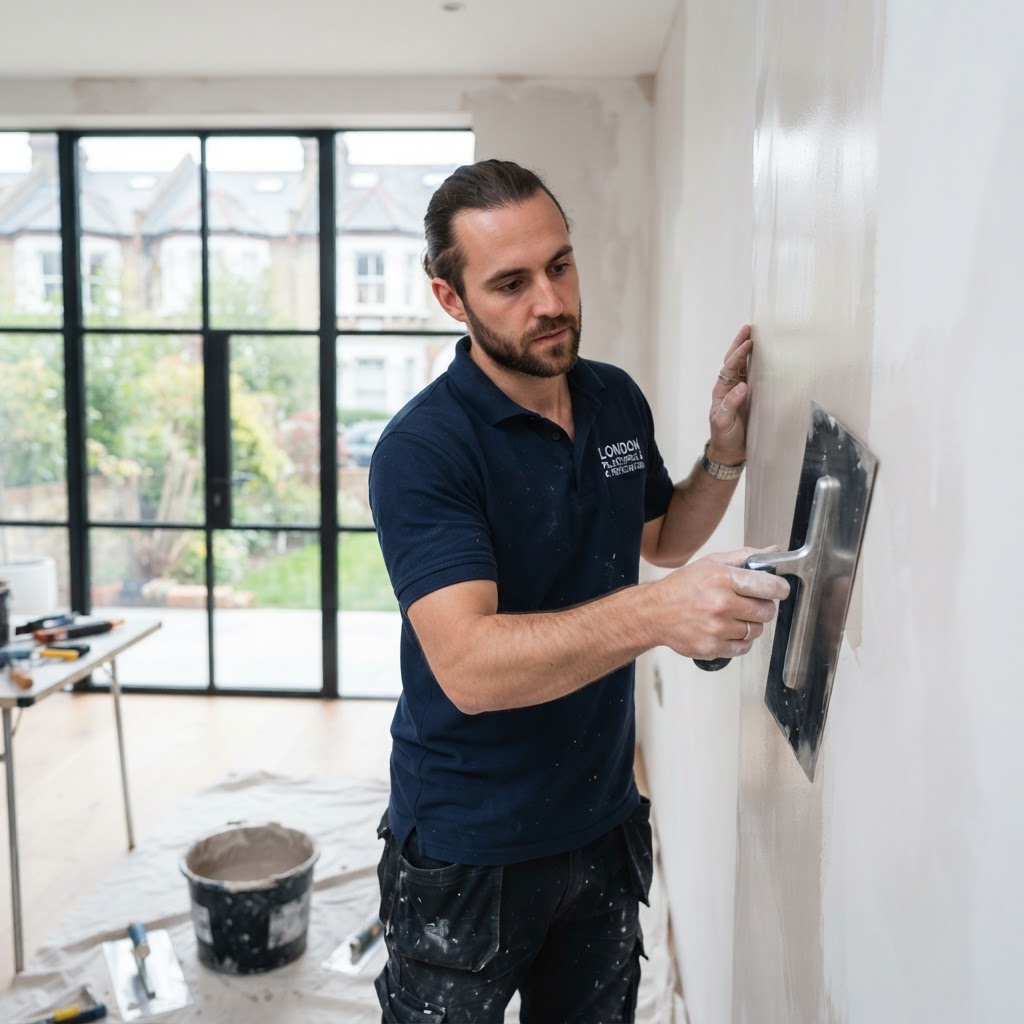
Skimming is a specific type of plastering—it is essentially the 'finishing' stage of the process. When we talk about Wall Skimming London, we are referring to applying a very thin layer (usually 2-3mm) of finishing plaster over an existing surface. Think of it as a resurfacing treatment. This is the go-to solution for refreshing tired, slightly marked walls, or for covering Dry Lining London plasterboards after they have been installed. In areas like Hackney or Shoreditch, where warehouse conversions are popular, skimming is often used to bring old, industrial brick-finish or mismatched wall patches up to a smooth, modern 'Grade A' finish suitable for high-end emulsion or luxury wallpaper. It requires a high level of skill to ensure that the skim coat feather-edges perfectly into door frames and skirting boards.
When Do You Need Each Service?
Choosing between these services depends on the condition of your substrate. If you are dealing with sagging ceilings or major damp issues, you may require Ceiling Plaster Repair London rather than just a simple skim.
- Choose Skimming if: Your walls are structurally sound but look dated, have minor scratches, or you are finishing new plasterboard installations. Skimming is the ideal aesthetic upgrade before a full repaint.
- Choose Plastering if: You have removed old, crumbling plaster (typical in older Kensington properties), need to repair significant water damage, or require Full House Replastering as part of a major strip-back renovation. If you hear a hollow sound when tapping the wall, or if the plaster is bowing away from the brickwork, skimming will not hold; you need full replastering.
2026 London Plastering Costs and Economic Factors
Understanding the Plastering Cost London market is essential for budget planning. As of 2026, labor rates in London reflect the high demand for skilled tradespeople, especially those qualified to work on heritage buildings with specific lime-based requirements. Costs are heavily influenced by the 'borough premium,' with logistics and parking permits in Central London (such as Westminster or the City of London) often adding 5-10% to the total quote due to congestion charges and limited access.
- Standard Room Skim (Walls only): £650 – £950. Prices vary based on the specific postcode. In areas like Richmond or Kingston, where larger room dimensions are common, costs drift toward the higher end.
- Full Replastering (Boarding and skimming a room): £1,400 – £2,600. This includes the removal of waste and the application of bonding agents.
- Artex Removal and Skimming: Often charged at a premium due to the heavy labor of scraping and the requirement for leveling coats. Prices start from £1,050 for a standard bedroom. See Artex Covering London for more details.
- Overhead for Central London: Be prepared for an additional £100-£200 per job in zones 1-2 to cover the logistical overhead of restricted parking in boroughs like Islington or Southwark.
Expert Deep Dive: Why Surface Preparation is Key
Many London DIYers fail because they underestimate the 'prep.' Professional plastering isn't just about the finish; it is about the PVA bond, the scrim tape used on plasterboard joints to prevent cracks, and the 'rule' used to ensure walls are plumb. In moisture-prone boroughs like Greenwich, we often apply a tanking membrane before plastering to prevent future damp issues, a step that amateur skimming skips, leading to bubbling and peeling paint within 18 months.
Frequently Asked Questions (FAQ)
1. Is skimming cheaper than full plastering?
Yes, skimming is significantly cheaper because it requires less material and less time. It assumes the underlying wall is already flat and stable. Full plastering involves 'hacking off' old materials and applying multi-layer systems.
2. Can I skim over existing Artex?
Yes, but it requires a bonding agent and often a leveling coat to ensure the surface is flat. We specialize in safe Artex Covering London techniques. We always test for asbestos in older Artex before work commences.
3. How long does the plaster take to dry?
In London's climate, a skim usually takes 48 to 72 hours to dry sufficiently for painting. High humidity, especially in winter, can extend this. Use a dehumidifier to ensure a consistent dry.
4. Do I need a professional for a small patch?
For minor dings, a DIY kit might suffice, but for consistent finishes, our Emergency Plaster Repair London team ensures invisible, professional results.
5. Does the age of my property affect the type of plaster I need?
Absolutely. Victorian and Edwardian properties, common in areas like Fulham, were built using lime plaster which 'breathes.' Modern gypsum plasters can sometimes trap moisture in these homes, causing damp. We offer specialist consultation to match the mortar and plaster type to your building’s era.
6. Will plastering create a lot of mess?
Yes, plastering is inherently dusty. We use industrial dust extraction systems and heavy-duty dust sheets. In high-end residential projects in Knightsbridge, we implement a full dust-containment protocol, sealing off rooms to protect your floors and furnishings from fine gypsum particles.
Ready to Start Your Project?
Whether you need a quick refresh with a professional skim or a full structural replaster, our team at London Plastering Service is here to provide top-tier craftsmanship across the capital. Don't leave your walls to chance. Contact us today for a free, no-obligation quote.
Related Plastering Guides & Services
Need Professional Plastering?
Get expert plastering services in London. Free quotes within 60 minutes.