
Skimming vs Plastering: Understanding Your London Home Needs
Understanding Plastering and Skimming in London: The Definitive Guide
When you are renovating a Victorian terrace in Islington or a modern high-rise flat in Canary Wharf, the walls and ceilings are the canvas of your interior design. At London Plastering Service, we frequently encounter clients who are confused by the terminology used by tradespeople. Are you looking for a full plastering job, or do you just need your walls skimmed? Choosing the wrong service can lead to unnecessary costs or, worse, a subpar finish that detracts from your property value. In London’s unique property market, where construction varies from Georgian masonry to modern metal-stud partitions, selecting the correct technique is crucial for a lasting finish.
What is Plastering? The Deep Foundation
Plastering is the comprehensive process of applying mortar or gypsum-based materials to walls or ceilings. In the context of a structural renovation—common in boroughs like Kensington and Chelsea—this often involves 'bonding out' a wall. When a wall is taken back to the bare brick or lath due to damp issues or historical degradation, it requires a base coat of render or bonding plaster. This base provides a flat, solid, and structural foundation. A skilled plasterer will ensure that this base is perfectly plumb before a top coat is applied. In period properties, this process is essential to maintain thermal regulation and sound insulation.
What is Skimming? The Aesthetic Perfection
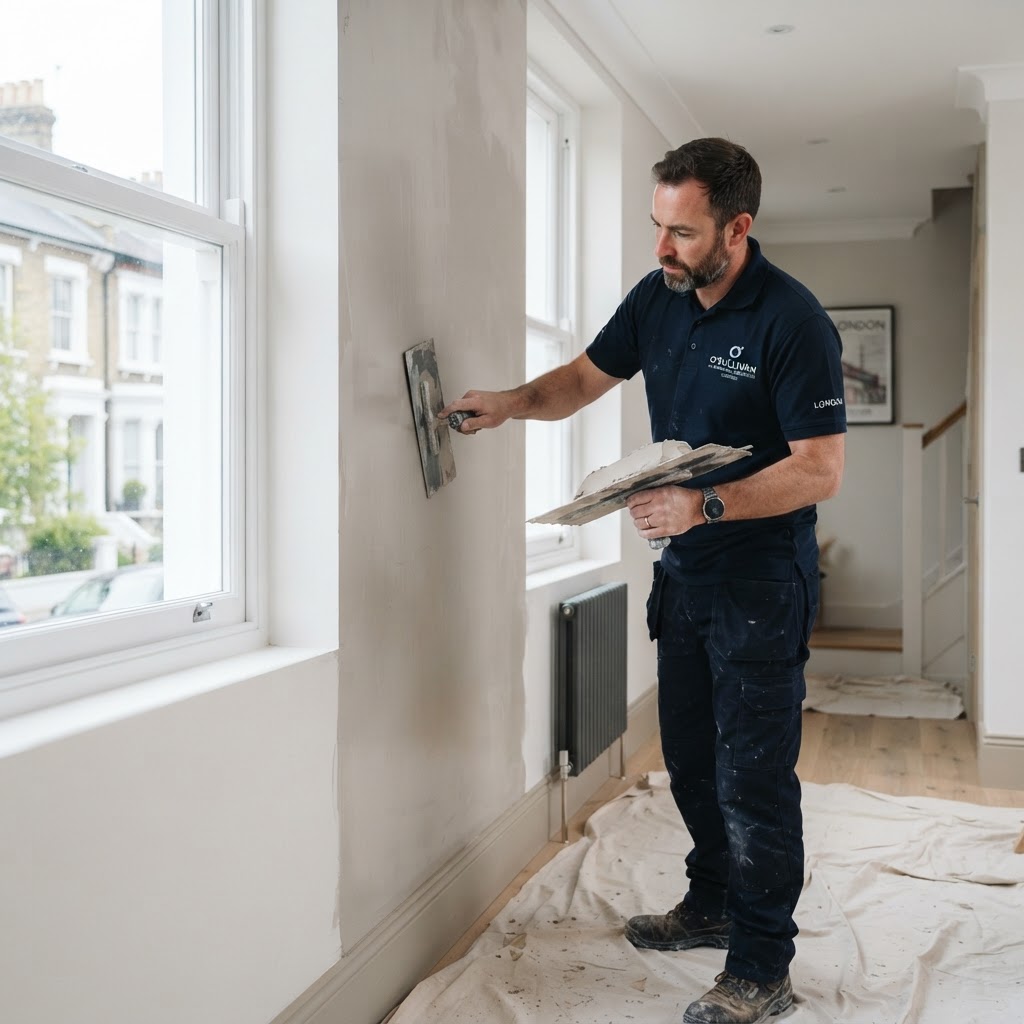
Skimming is the art of applying a thin, smooth layer of finishing plaster, typically 2mm to 3mm thick, over an existing surface. Think of it as a facelift for your walls. If you are dealing with dated Artex ceilings or tired, bumpy walls in your Clapham or Wandsworth home, Wall Skimming London is the professional approach to achieving a 'glass-like' finish. Skimming requires immense skill because the drying time is fast, and the window for polishing the plaster to a high sheen is narrow.
Key Differences at a Glance
- Depth: Full plastering is structural and thick (multiple coats); skimming is a thin, decorative 'finish' layer.
- Surface: Plastering is for bare substrates (brick, block, lath); skimming is for prepared, existing walls (plasterboard, old plaster).
- Time: Plastering is a multi-day process involving drying times between bonding and finishing; skimming can often be completed in a single day for a small room.
- Cost: Plastering Prices London reflect the higher material and labor intensity of full structural work compared to skimming.
Detailed Pricing Guide for London 2026
London homeowners face a premium market. Prices are influenced by the age of the building and logistics. Here is a breakdown of 2026 market expectations:
- Skimming a standard 4x4m bedroom: £450 - £650. This assumes standard ceiling heights of 2.4m. In high-ceiling Victorian properties in areas like Hampstead, expect a 20-30% premium due to tower scaffolding requirements.
- Full Re-boarding and Skimming: £1,200 - £1,800. If you are stripping back to brick, adding plasterboard, and skimming, this is the industry standard for a mid-sized room.
- Full Replastering (Traditional Bonding): £900 - £1,400 per room. This includes the application of a browning or bonding coat followed by a multi-finish skim.
- Patch Repairs: Minimal call-out charges start at £250. This covers small areas, such as filling channel cuts from electrical rewiring (common in E1 or N1 postcodes).
Logistics Note: Central London boroughs like Westminster (W1) or The City of London (EC) often involve Congestion Charging and ULEZ fees, which may be factored into your quote as a logistical overhead.
When Do You Need Which Service?
Choose Full Plastering If:
- Structural Integrity: The existing plaster is hollow, blowing, or cracking significantly away from the wall substrate.
- Damp Proofing: You have treated rising damp and need a breathable, salt-resistant plaster base.
- Renovation Scope: You are conducting a Full House Replaster London to replace outdated sand-and-lime mixes with modern, durable gypsum.
- Material Change: Moving from lath-and-plaster to plasterboard requires a complete replacement of the wall surface.
Choose Skimming If:
- Aesthetic Upgrade: Your walls are sound but have minor surface imperfections, scuffs, or uneven patches.
- Covering Texture: You are using Artex Covering London techniques to smooth out outdated 1970s ceiling patterns.
- Post-Dry Lining: You have recently had Dry Lining London installed; the joints must be taped and skimmed for a seamless paint finish.
- Paint Prep: You are transitioning from heavy patterned wallpaper to a minimalist, flat-paint finish that highlights every wall flaw.
Advanced FAQs for London Homeowners
Can I skim over old wallpaper or painted surfaces?
Strictly no. Skimming over wallpaper creates a 'soft' interlayer that will inevitably sag and peel. Even painting over oil-based gloss is dangerous; the new plaster won't bond, leading to delamination. Professional practice requires stripping, washing, and applying a high-quality PVA or bonding agent to ensure the new layer adheres to the wall permanently.
How long until I can safely paint my walls?
In the humid London climate, patience is vital. You should wait for the plaster to turn a uniform 'light pink' color. This typically takes 3-7 days. If you paint while the plaster is dark or grey (containing moisture), you risk trapping water, which leads to mold growth under the paint and eventual peeling. Always use a 'mist coat' (watered-down emulsion) first.
Does skimming actually fix deep structural cracks?
Skimming is a cosmetic solution. If you have deep, jagged cracks appearing in diagonal patterns (often caused by thermal expansion or foundation settlement in clay-heavy soil regions like South East London), you must address the source. Applying a skim over these without using fiber mesh tape will result in the crack reappearing within months. We advise professional inspection for any crack wider than 3mm.
Why does my quote vary so much between North and South London?
Labour costs, waste disposal fees, and parking accessibility vary significantly. A skip permit for a skip in Kensington may cost significantly more than in a driveway-heavy suburb like Bromley. Furthermore, period homes in historic districts require specialized lime-plastering skills, which command higher rates than standard gypsum skimming.
How do I protect my property during the work?
Plastering is inherently messy. A professional firm should use high-grade dust sheets, heavy-duty floor protection (like Correx boards), and sealed dust barriers for doorways. We prioritize your home’s cleanliness, ensuring that fixtures and fittings are protected against splashback.
Final Thoughts and CTA
Whether you are refreshing a room in Hackney or restoring a listed building in Richmond, understanding the distinction between these techniques ensures a superior outcome. Don't let a small job become a major renovation headache by choosing the wrong approach.
Ready to get started? Contact London Plastering Service today for a free, no-obligation quote and let our experts restore your walls to perfection.
Related Plastering Guides & Services
Need Professional Plastering?
Get expert plastering services in London. Free quotes within 60 minutes.