
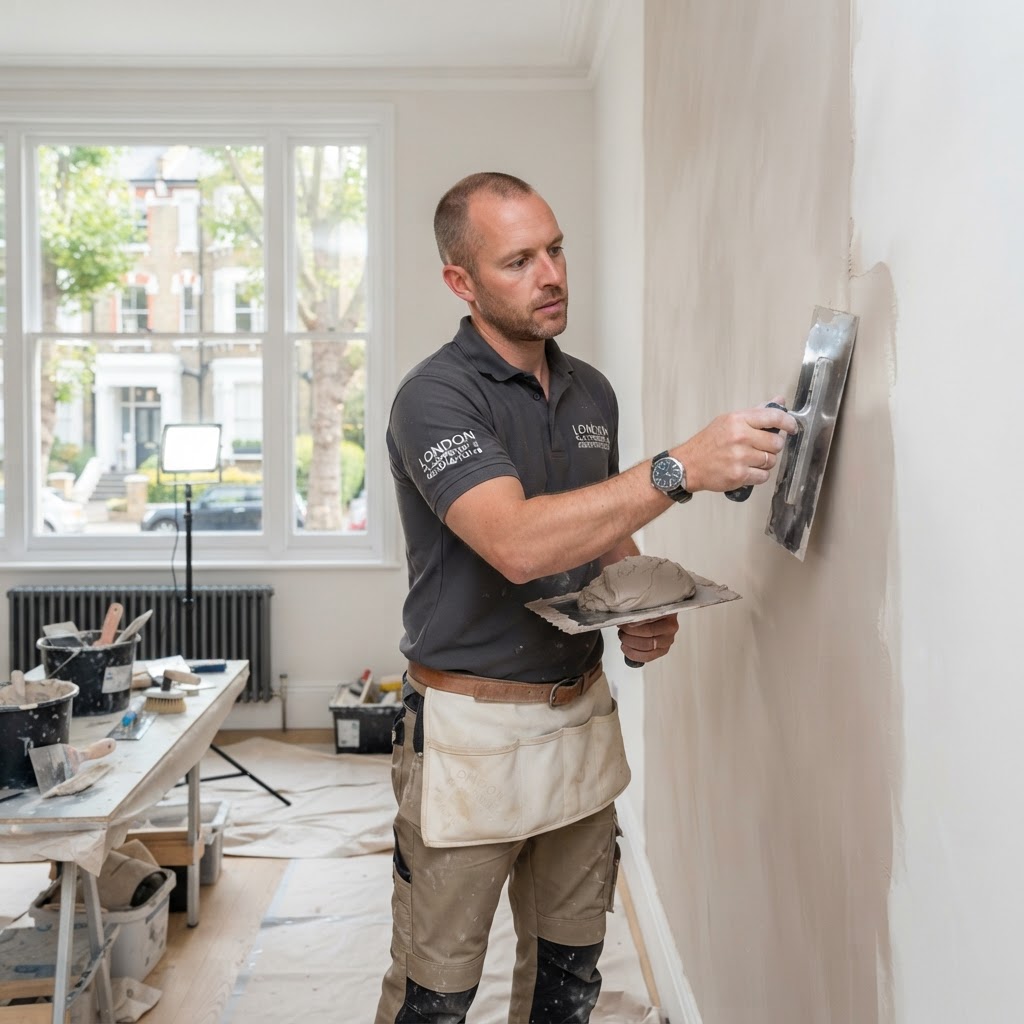
Skimming vs Plastering: A London Guide to Finishing Your Walls
Understanding Your Options: Skimming vs. Plastering
When renovating a property in iconic London boroughs like Chelsea (SW3), Islington (N1), or Richmond (TW9), you will inevitably encounter the distinction between 'plastering' and 'skimming'. While homeowners often use these terms interchangeably, they refer to fundamentally different technical stages of the wall-finishing process. Engaging a qualified plasterer London expert is the vital first step toward achieving a high-quality, professional finish that stands the test of time.
What is Plastering?
Plastering represents the comprehensive, structural application of wet trades to walls or ceilings. In a full plastering job, our professional team applies multiple distinct layers to achieve a flat, durable, and structurally sound surface. This process usually begins with a 'bonding' or 'hardwall' base coat applied directly to bare brickwork or modern dry lining London boards. This base layer is designed to provide structural integrity and a level plane. Following the base, a finishing coat (typically multi-finish plaster) is applied to provide a smooth aesthetic surface. This intensive process is essential for new-build projects, loft conversions in areas like Hackney, or scenarios where walls have been stripped back to the brick due to severe damp, salt contamination, or significant structural settlement.
What is Skimming?
Skimming is effectively the final, refined stage of the plastering process. It involves applying a very thin layer—typically 2mm to 3mm—of finishing plaster over existing, intact plaster. Our wall skimming London services are specifically designed to refresh tired, uneven, or aesthetically dated surfaces. Think of this as an advanced resurfacing technique rather than a structural repair. It provides a 'glass-like' smooth finish that is the perfect preparation for high-end paint finishes or luxury wallpapering. In older properties found in Kensington or Mayfair, skimming is often the go-to solution for correcting minor undulations in aging walls without the dust and upheaval of full strip-outs.
When Do You Need Each Service?
Choosing the correct technique depends on the condition of your substrate. Here is a guide to assist in your decision-making:
- Choose Skimming if: Your existing walls are structurally sound but look dated, have fine hairline cracks, or have had unsightly artex covering London applied in the past. If your existing plaster is firmly bonded, skimming is the most efficient aesthetic upgrade.
- Choose Full Plastering if: You are tackling a full house replaster London project, repairing significant water damage caused by burst pipes, or converting a period room where the original Victorian lath-and-plaster is blown, sagging, or crumbling.
2026 London Plastering Price Guide
As established experts in the local market, we understand that costs fluctuate based on the specific borough and the logistical challenges of the property. For current plastering prices London 2026, consider these baseline estimates:
- Skimming a 4x4m bedroom: £550 - £850. The variance depends on the ceiling height (common in Victorian high-ceiling properties) and whether the walls require heavy preparation (e.g., stripping wallpaper, scraping back flaky paint).
- Full replastering of a room (brick-to-finish): £1,200 - £2,000. This includes materials, labour, and debris removal. Projects in central zones like Westminster or Camden often incur a slight premium due to parking permits, congestion charging, and restricted site access.
- Ceiling plaster repair London: Starting from £350 for isolated patch work. For decorative period coving repairs or ornate ceiling roses, custom quotes are necessary.
Note: Plastering cost London is heavily influenced by the 'readiness' of the surface. If our team spends more time preparing your walls (removing adhesive, securing loose boards), the final labour hours will increase accordingly.
Deep Dive: Technical Preparation
One common pitfall in DIY home improvement is the failure to properly prepare a surface. Plastering is a chemical process that relies on adhesion. Before applying bonding or finishing plaster, surfaces must be treated with a P.V.A (Polyvinyl Acetate) or a specific bonding agent. In high-suction areas like dry-lined walls, a specialised grit primer is essential to prevent the plaster from drying too quickly and cracking. Furthermore, in period London homes with uneven walls, we utilize 'dot and dab' techniques to ensure a perfectly vertical finish before applying the skim coat. Professional plasterers will also install corner beads—either galvanized steel or PVC—to ensure that external corners are straight, sharp, and protected from impact damage.
Frequently Asked Questions (FAQ)
1. Is skimming cheaper than full plastering?
Yes, skimming is significantly more cost-effective. It requires less material, less time, and creates substantially less debris. While a full replaster involves multiple stages and heavy lifting, skimming focuses solely on the top-layer finish.
2. Can I skim over old wallpaper or painted surfaces?
Absolutely not. Old wallpaper must be stripped using steam or chemical removers. Any residual adhesive must be cleaned off the wall. If you skim over paint, the moisture in the new plaster can cause the old paint to bubble and eventually delaminate. The wall must be stripped back to the base layer (plaster or board) and primed for a successful bond.
3. How long does new plaster take to dry?
Generally, it takes between 3 to 7 days for plaster to dry thoroughly. This is highly dependent on ambient humidity and room temperature. During the drying process, the plaster will change from a dark, patchy brown/grey to a uniform light pink. We strongly recommend against using dehumidifiers too aggressively, as this can cause the plaster to dry too quickly and crack. Instead, rely on natural, consistent ventilation.
4. How can I tell if I need a full replaster?
The easiest test is the 'hollow tap'. Lightly tap the wall with your knuckles; if the sound is hollow or 'drummy', the plaster has 'blown' (lost its bond with the masonry). Additionally, if you see cracks running through the plaster or if the plaster is physically crumbling when you touch it, a full replaster is required. Skimming over loose plaster is a temporary fix that will inevitably fail.
5. Why does my plaster look patchy after a few days?
Patchiness is a natural part of the drying cycle. Because plaster dries at different rates depending on the thickness of the application and the porosity of the underlying wall, some sections will turn pink faster than others. This is normal. Do not paint until the wall is completely pink; painting onto damp plaster will seal in moisture and cause damp/mould issues.
6. Can you plaster over existing coving or period mouldings?
We can, but it is often better to remove old, degraded coving and install modern, lightweight fibrous plaster or high-density polyurethane coving. This ensures the clean, sharp lines demanded by modern interior design in high-end London renovations.
Professional Finish Guaranteed
Whether you are located in a leafy suburb like North London or the vibrant heart of the City, our team is equipped to handle your specific requirements. Getting the finish right is the cornerstone of great interior design—it sets the tone for your paint, lighting, and furniture. Contact our team today for a transparent, professional estimate, and let us restore your home to its optimal condition with a finish that truly lasts.
Related Plastering Guides & Services
Need Professional Plastering?
Get expert plastering services in London. Free quotes within 60 minutes.