
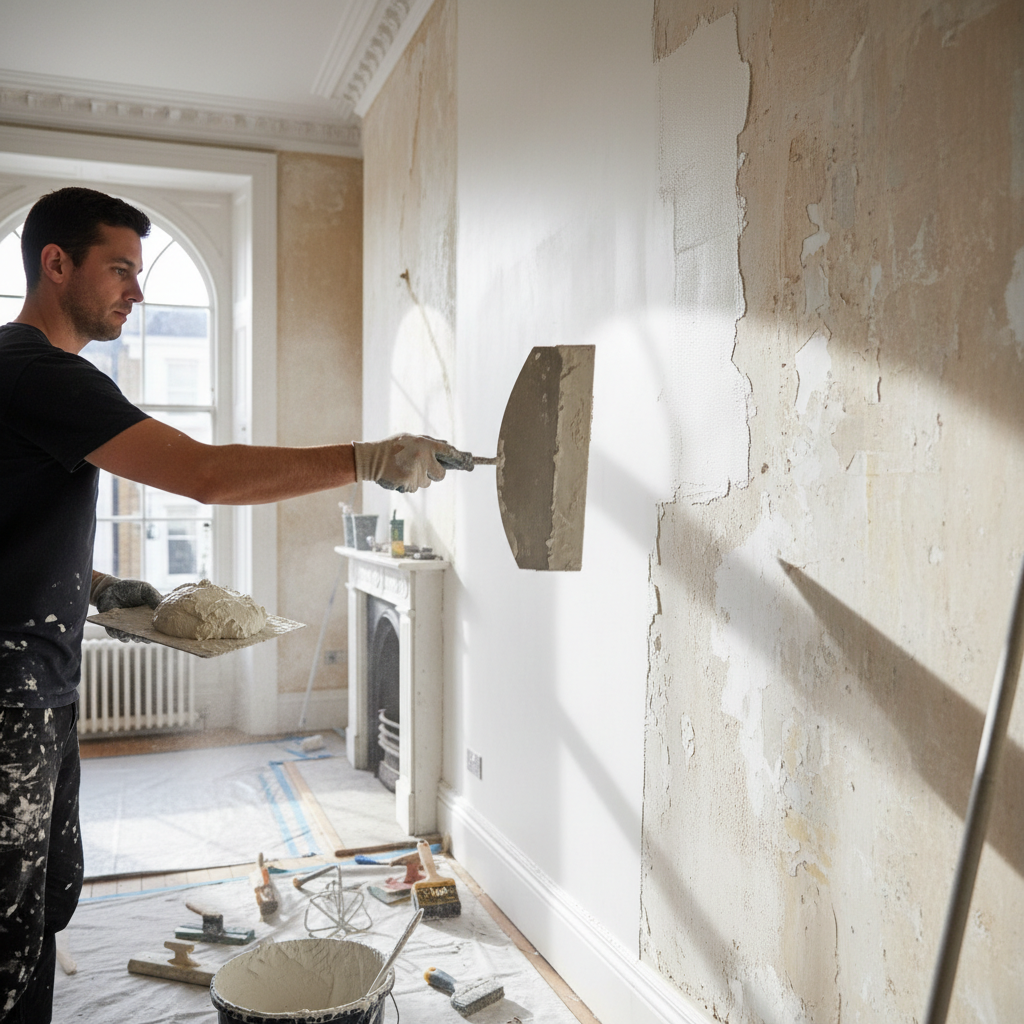
Plastering Over Old Walls: What You Need to Know
Can You Plaster Over Old Plaster? When It Works and When You Must Remove It
Yes — you can plaster over old plaster as long as the existing plaster is sound, dry and well-bonded to the wall. You skim a 2–3mm coat of MultiFinish straight over it after sealing with PVA. But if the old plaster is blown (hollow), cracked extensively, damp or delaminating, it must come off first — skimming over failing plaster just delays the problem and the new skim will crack and fall off within months.
This guide covers exactly when you can plaster over old walls, when you can't, how to test, the step-by-step process, and the cost difference between skimming over and removing.
Quick Decision: Can You Skim Over Your Walls?
| Old plaster condition | Can you skim over it? | What to do | |----------------------|----------------------|------------| | Sound, dry, minor cracks | ✅ Yes | Seal with PVA, then skim | | Loose, hollow, or "blown" | ❌ No | Cut out and patch or re-plaster | | Extensive cracking (many wide cracks) | ⚠️ Risk | Tape cracks, test adhesion, then skim | | Damp or water-stained | ❌ No | Fix moisture source first, then re-plaster | | Soft, crumbling (lime plaster gone soft) | ⚠️ Risk | Test firmness — may need removal | | Wallpapered | ⚠️ Prep | Strip all paper first, then PVA + skim | | Artex / textured | ✅ Usually | Seal, test for asbestos (pre-2000), then skim |
How to Tell If Old Plaster Is Sound (The Tap Test)
Before skimming over old plaster, every wall should be tap-tested:
- Knock the wall with your knuckle in several places — a solid thud means it's bonded; a hollow, drum-like sound means it's "blown" (separated from the brickwork underneath).
- Press firmly — soft or crumbling plaster has lost its key and must come off.
- Check for damp — brown stains, salt crystals (efflorescence) or a musty smell mean moisture is coming through. Skimming over damp traps moisture and fails.
- Look at the cracks — hairline cracks are fine (tape and skim). Cracks wider than 3mm or radiating from door frames may indicate movement — investigate the cause first.
Any hollow areas must be cut out to bare brick and re-plastered with bonding coat before the surrounding wall is skimmed.
The Process: Skimming Over Sound Old Plaster
1. Preparation (the most important step)
- Strip all wallpaper, paint flakes and loose material
- Fill deep holes with bonding coat; cut out any hollow plaster
- Clean the wall — grease, dust and soot prevent adhesion
- Apply PVA bonding agent (1:3 with water), let it go tacky, then apply a second coat
2. Skimming
- Apply two thin coats of Thistle MultiFinish (not one thick coat)
- First coat: lay it on and flatten, ~2mm
- Second coat: applied as the first is firming up, to fill and flatten
- Trowel back to a smooth, polished finish as it sets
- Work in manageable sections — MultiFinish sets in 30–45 minutes
3. Drying
- Allow 2–4 weeks before painting
- The plaster turns from dark pink to pale pink as it dries
- Mist-coat with watered-down emulsion (70% paint / 30% water) before the full topcoat
When You Must Remove Old Plaster
Remove the old plaster — don't skim over it — when:
- It's blown (hollow when tapped) — it has no bond and will pull the new skim off with it
- It's damp — skimming traps moisture; mould grows through the new surface
- It's extensively cracked from structural movement — the cracks will telegraph through
- It's soft or sandy — old lime or gypsum plaster that has lost its strength
- You're insulating — dry-lining with insulated board requires a flat, firm substrate
Removing old plaster adds £8–£15/m² in labour plus disposal, but it's the only correct fix when the substrate has failed.
Cost Comparison: Skim Over vs Remove & Re-Plaster
| Approach | Price per m² | When to choose | |----------|-------------|----------------| | Skim over sound plaster | £15–£25/m² | Existing plaster is solid and dry | | Cut out hollows + skim | £20–£30/m² | Localised blown patches, rest is sound | | Full remove + re-plaster | £25–£45/m² | Widespread damage or damp | | Dot-and-dab board + skim | £30–£45/m² | Badly damaged walls, faster finish |
Skimming over sound plaster is roughly half the cost of a full strip and re-plaster, so it's always the first choice when the substrate allows.
Common Mistakes
- Skipping PVA — old plaster has high suction and pulls moisture from the skim so fast it cracks and peels. Always seal.
- Skimming over blown plaster — the new skim cracks and sounds hollow within weeks.
- One thick coat instead of two thin ones — leads to cracking as it dries and shrinks.
- Skimming over grease or soot (kitchens, fireplaces) — the skim won't key and falls off. Use a degreaser and stabilising primer first.
- Painting too soon — traps moisture, causing the paint to blister and the plaster to craze.
Materials You'll Need
- Thistle MultiFinish — £8/bag (covers ~2.5m² per bag at two coats)
- Thistle Bonding Coat — £9/bag (for patching hollows)
- PVA adhesive — £15–£25 per 5L (diluted 1:3)
- Scrim tape — for bridging cracks (£2/roll)
- Stainless angle beads — £3–£5 each (for corners)
FAQs
Can you plaster directly over painted walls? Yes, if the paint is sound and well-adhered. Gloss paint must be sanded and primed. Flaking paint must be removed first.
How thick can you plaster over old plaster? A skim coat is only 2–3mm. Anything thicker needs a backing coat (bonding or browning) applied first.
Can you skim over damp plaster? No. The damp must be resolved and the wall fully dried before any new plaster is applied, or it will fail.
How long does new plaster take to dry over old plaster? 2–4 weeks, the same as over new board. Drying is faster in well-ventilated rooms.
Is it cheaper to remove plaster or board over it? Dot-and-dabbing new board over damaged walls is often faster and comparable in cost to full removal, and gives a perfectly flat surface.
Related Guides
- Plastering Prices in London — 2026 cost breakdown
- Plaster Crack Repair London — fixing cracked plaster
- Water Damaged Ceiling Repair — damp and water damage
- Skimming Over Artex — textured ceiling covering
- Dot and Dab Walls — dry-lining plasterboard
If you're unsure whether your walls can be skimmed over, send us a photo on WhatsApp and we'll tell you honestly whether removal is needed — we won't sell you a full strip if a skim will do.
Related Plastering Guides & Services
Need Professional Plastering?
Get expert plastering services in London. Free quotes within 60 minutes.