
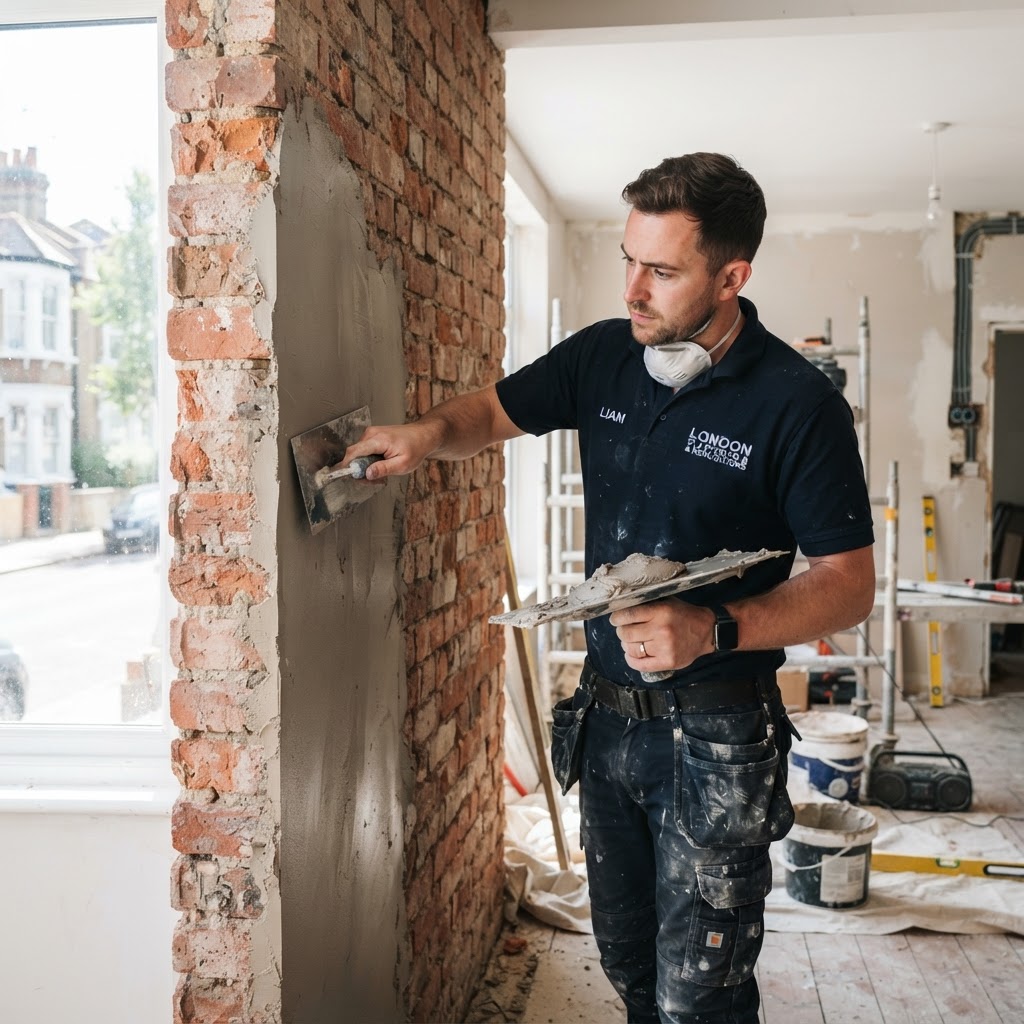
Plastering on Brick Walls: A Professional Guide for Londoners
When renovating period properties in areas like Islington or Victorian terraces in Clapham, the most common structural challenge is plastering on brick walls. As London's leading plasterer in London, we frequently encounter brick surfaces that require specialized treatment. Achieving a flawless finish on raw brick is not as simple as slapping on a coat of wet plaster; it is a technical process that demands professional expertise to prevent cracks and damp issues down the line. Whether you are refurbishing a basement in Kensington or updating a kitchen in Hackney, understanding the nuances of bonding, backing, and finishing is essential. ## Why Preparation is Key for Plastering on Brick Walls The primary challenge with plastering on brick walls is the variation in suction. Old London bricks are often uneven, porous, and covered in years of debris or old lime mortar. If you apply plaster directly to a dusty or overly porous brick surface, the water in the plaster is sucked out too quickly, causing the finish to crack before it can set. Professionals follow a rigorous prep process: 1. Cleaning the surface: Removing loose mortar, dust, and old paint residues. 2. Treating the brick: Applying a bonding agent or PVA slurry to manage suction. 3. Scratch coating: Applying a base coat to provide a flat, stable foundation. 4. Skimming: Finishing with a final layer for a glass-smooth surface. If you are considering a full renovation, you might also be interested in our Full House Replastering services to ensure consistency across the property. ## The Process of Plastering on Brick Walls If you are looking at plastering on brick walls, you generally have two main options: a traditional sand and cement render followed by a skim, or the modern approach of Dry Lining London which utilizes plasterboards fixed to the wall. For heritage properties, we often recommend traditional wet plastering to preserve the "breathability" of the walls. However, for modern extensions in areas like Wandsworth, dry lining can be a faster, cleaner alternative. ### Professional Techniques for Superior Finishes When working on bare brick, the quality of the finish depends entirely on the thickness of the scratch coat. We recommend a 10-12mm base coat to ensure all deviations in the brickwork are leveled out. For those dealing with uneven ceilings or walls in older properties, pairing this with Wall Skimming London ensures that every surface is perfectly uniform before painting. ## 2026 Pricing for Plastering Services in London In 2026, the cost of plastering on brick walls in London varies based on the size of the room and the state of the masonry. On average, you can expect: * Full prep and wet plastering on brick: £35 - £50 per square meter. * Dry lining and skimming: £25 - £40 per square meter. For more granular details, see our comprehensive guide on Plastering Prices London and Plastering Cost London to help with your project budgeting. ## FAQ: Plastering on Brick Walls ## Can I apply plaster directly to brick? While you can, it is highly discouraged. Bare brickwork has irregular suction levels, which will cause your plaster to shrink and crack. You must always use a bonding agent or a proper backing coat first. ## How long does it take for plaster on brick to dry? For standard plastering on brick walls using a backing coat and skim, it typically takes 7-14 days to dry completely, depending on the humidity in your London property and the temperature. ## Should I use lime or gypsum plaster? For period properties with potential damp issues, lime is often better as it is vapor-permeable. Modern homes usually benefit from gypsum-based plasters for their durability and speed of application. ## Do I need to remove old mortar before plastering? Only if the mortar is loose or crumbling. If the brickwork is sound, simple cleaning and the application of a bonding agent are sufficient. ## Why is my new plaster cracking? Cracking is usually a sign of 'fast drying' or poor suction control. If the wall was too dry when the plaster was applied, the water was sucked out of the mix too rapidly. ## Conclusion: Choosing the Right Professionals Whether you are dealing with a historic property in Westminster or a modern apartment in Canary Wharf, the quality of your finish is dictated by the skill of the plasterer. Improper application on brick can lead to long-term issues, including damp trapping and surface degradation. If you need Emergency Plaster Repair or are looking to start a major project, our team is here to help. Contact London Plastering Service today for a free, no-obligation quote and let us bring your walls back to life.
Related Plastering Guides & Services
Need Professional Plastering?
Get expert plastering services in London. Free quotes within 60 minutes.