
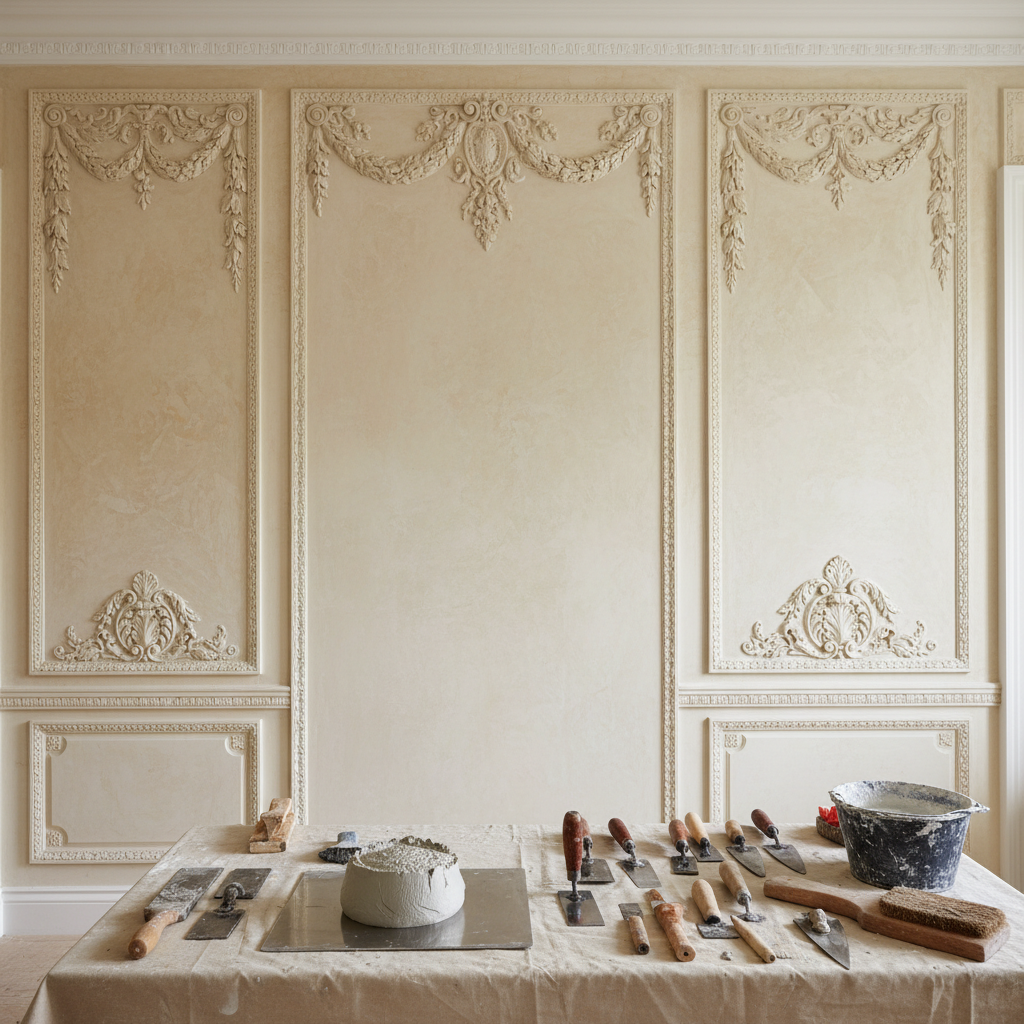
Perfectly Match Existing Plaster Texture in Your Home
How to Match Existing Plaster Texture (UK Plastering Guide)
Matching an existing plaster texture is one of the hardest jobs in plastering — especially in London's period homes where original hand-troweled lime finishes, artex ceilings and tyrolean exteriors have been built up over decades. A patch that doesn't blend is immediately visible, which is why most texture matching is best left to a plasterer who can read the wall and reproduce it by hand.
This guide covers the UK plaster textures you'll actually encounter, how to identify them, the technique for matching each one, and when it's not worth attempting a match.
The UK Plaster Textures You'll Meet in London Homes
| Texture | Where you find it | Difficulty to match | |---------|-------------------|---------------------| | Smooth skim (flat) | Most modern and re-skimmed walls | Easy — re-skim the area | | Hand-troweled (subtle waves) | Victorian/Edwardian lime plaster | Hard — depends on the plasterer's hand | | Artex / stipple | Ceilings 1960s–1990s | Medium — comb or brush pattern | | Swirl (textured ceiling) | 1970s artex variant | Hard — needs the right comb | | Tyrolean (spattered) | External render and some feature walls | Medium — flicked cement/lime | | Roughcast / pebbledash | External walls | Hard — aggregate size must match | | Lime plaster (historic) | Pre-1920 solid-wall homes | Expert — needs lime, not gypsum |
Step 1: Identify the Texture and Material
Before you can match it, you need to know two things: what the pattern is and what it's made of.
- Pattern: Photograph the wall in raking light (torch held low, parallel to the surface) — every ridge and valley becomes visible.
- Material: Lime plaster (soft, chalky, pre-1920), gypsum (harder, modern skim), artex (textured ceiling coating), or cement render (external).
You cannot match a lime-plaster texture with gypsum — the setting behaviour and finish are different. Historic textures need lime; modern textures use Thistle MultiFinish or artex compound.
Step 2: Match the Texture by Technique
Smooth skim finish
Re-skim the patched area with Thistle MultiFinish, feathering the edges into the surrounding wall. A perfect invisible join requires the existing surface to be flat — if the old skim has settled, you may need to skim a wider section to blend.
Hand-troweled lime finish
This is the hardest to match because the texture comes from the plasterer's individual trowel strokes. Reproduce it with a float on a lime-and-sand base coat, working wet and matching the stroke direction and pressure. Even then, an exact match needs the same lime mix and a similar hand.
Artex / stipple ceiling
Artex is matched with artex compound and the same tool that created the original pattern — a stipple brush, comb or wet brush. The pattern must be reproduced while the compound is still workable. Small patches are feasible; large ceiling repairs are often easier to overboard and re-artex the whole ceiling.
Tyrolean / spattered render
Use a tyrolean flicker brush (or a purpose gun) to flick a sand-cement-lime slurry onto the wall. Match the aggregate size and the throw density of the surrounding area. This is external work and weather-dependent.
Step 3: Blend the Edges
The join between new and old is where texture matching fails. To hide it:
- Feather the edge — taper the new plaster into the existing surface over 100–150mm
- Wet the surrounding surface before blending so the join doesn't flash
- Match the paint sheen — a patched area painted flat will look different from a satin wall even if the texture is perfect
- Work in raking light so you can see the join as you finish
When You Can't Match (and Shouldn't Try)
- Extensively damaged historic plaster — matching a small patch in a crumbling wall draws attention to the damage. Re-plaster the whole wall or section.
- Unknown original material — if you can't identify whether it's lime or gypsum, a gypsum match on a lime wall will fail and crack.
- Large ceiling areas — artex patterns drift across a ceiling; a patch never lines up. Overboard the whole ceiling and re-texture.
- Asbestos-containing artex (pre-2000) — do not disturb. Test first; overboard only.
Cost of Texture Matching in London
| Job | Typical cost | Notes | |-----|-------------|-------| | Small wall patch (match skim) | £150–£300 | Minimum charge applies | | Artex ceiling patch | £250–£500 | If asbestos-free and accessible | | Whole wall re-texture (blend) | £400–£800 | Feathers into surrounding walls | | Hand-troweled lime match | £500–£1,200 | Specialist lime plasterer | | Whole ceiling overboard + re-artex | £600–£1,200 | Cleanest fix for patterned ceilings |
Common Mistakes
- Using gypsum to match lime — the finish is different and it cracks on a solid-wall period home.
- Painting flat over a satin wall — the texture match looks perfect but the sheen difference gives it away.
- Matching a tiny patch in a damaged ceiling — the patch stands out; overboard instead.
- Skipping the raking-light check — what looks fine in flat light is glaringly obvious from the side.
FAQs
How do you match old plaster texture? Identify the pattern and the material (lime vs gypsum vs artex), reproduce the pattern with the original technique and tool, then feather the edges into the surrounding surface and match the paint sheen.
Can you match artex ceiling texture? Yes, with artex compound and the same stipple brush or comb, on asbestos-free ceilings. Large patches rarely blend — overboarding the whole ceiling is usually cleaner.
Is it cheaper to match a patch or re-plaster the wall? Small sound patches are cheaper to match (£150–£300). If the surrounding plaster is failing, re-plastering the whole wall prevents the patch from standing out.
Can a plasterer match lime plaster texture? Yes, but it needs a plasterer experienced with lime — gypsum plasterers cannot reproduce lime finishes because the materials behave differently.
Related Guides
- Types of Plaster in London — lime, gypsum and cement explained
- Lime Plastering London — period-property lime work
- Skimming Over Artex — textured ceiling covering
- Plaster Crack Repair London — cracked plaster fixes
- External Plastering London — render and tyrolean
Texture matching is genuinely one of the hardest plastering skills. Send us a photo of your wall on WhatsApp and we'll tell you honestly whether a patch can blend or whether the whole surface needs redoing.
Related Plastering Guides & Services
Need Professional Plastering?
Get expert plastering services in London. Free quotes within 60 minutes.