
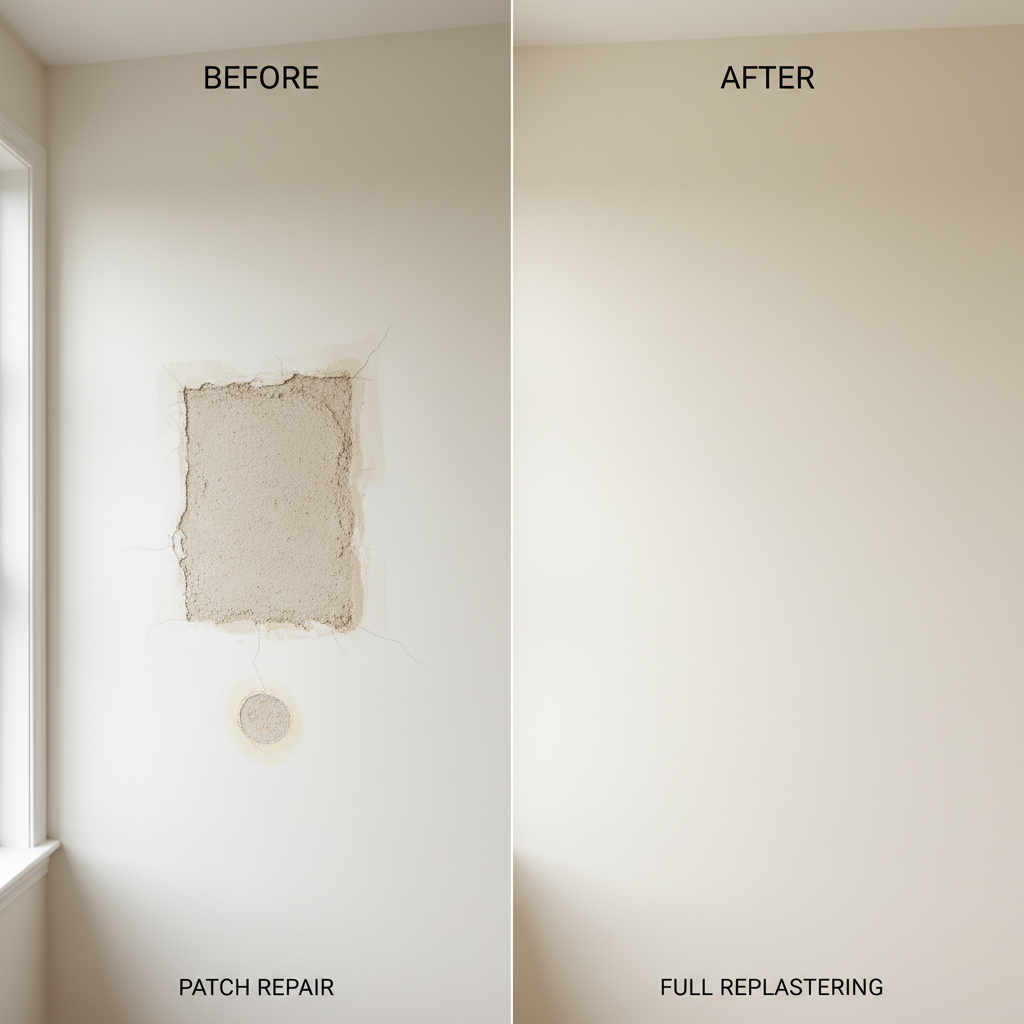
Patch Repair vs Full Replaster: Choosing the Best Option
Patch Repair vs Full Replaster: When to Choose Which
Imagine this: You’re curled up on your couch in your cozy Clapham flat, enjoying a rainy day inside when a small crack catches your eye. You brush it off at first, but over the weeks, it turns into a noticeable blemish on your wall. If you've ever faced a situation like this, you're not alone. Many London homeowners are faced with the haunting question: should I fix this with a patch repair or is it time for a full replaster?
In this blog, we’ll delve into the nitty-gritty of patch repair versus full replastering—helping you understand when to choose which option and ensuring your home remains as beautiful as the day you moved in.
Understanding Patch Repair and Full Replastering
What is Patch Repair?
Patch repair involves fixing just the damaged area of plaster on your walls or ceilings, rather than replacing the entire surface. This method is typically used when there are only small sections that need attention, such as minor cracks, chips, or holes.
Advantages of Patch Repair:
- Cost-Effective: Less expensive than full replastering, generally costing around £150 to £300.
- Quicker Turnaround: Typically completed within a few hours depending on the damage.
- Minimal Disruption: Ideal for small homes or apartments where full replastering would be too invasive.
What is Full Replastering?
Full replastering refers to the process of removing all the existing plaster from a wall or ceiling and applying a fresh layer. This is usually carried out when the plaster is extensively damaged or if you're renovating a property and want a fresh start.
Advantages of Full Replastering:
- Longevity: Provides a fresh surface that can last for years, making it a good long-term investment for properties in areas like Kensington or Chelsea, where home aesthetics are paramount.
- Uniform Finish: Ensures every part of the wall is even and smooth.
- Hidden Issues: Allows professionals to check and address underlying problems such as moisture damage or structural concerns.
When to Choose Patch Repair vs Full Replaster
Signs You Should Consider Patch Repair:
- Small Cracks or Dents: If you only notice minor imperfections, patching can be sufficient.
- Localized Damage: When the damage is confined to a small area, especially in homes with solid wall structures.
- Budget Constraints: If funds are limited, patch repairs can be feasible until full replastering is affordable.
Signs You Should Choose Full Replastering:
- Extensive Damage: If you’re seeing large cracks or sagging areas, it may be time for a full replaster.
- Old and Crumbling Plaster: In older homes, especially those in Central London, old plaster can decay and affect the structural integrity.
- Desire for a Fresh Look: If you’re revamping an entire room or space, full replastering can provide a pristine canvas.
Practical Tips for London Homeowners
To help you navigate your decision, consider these practical tips:
- Assess the Damage Closely: Check if the damage is superficial or indicative of a larger issue, especially if you live in areas like Islington or Camden where properties may age differently.
- Consult Professionals: If unsure, ask for an assessment from local plasterers in your area—PlasterersNearMe.
- Budget Wisely: Consider both the immediate costs and future maintenance when deciding between patch repair and full replaster.
- Timing is Essential: If you are preparing for a home sale, it might be better to invest in full replastering for a strong first impression.
- Explore Your Options: Have a look at our Gallery to view completed projects and get inspired by before-and-after images of varying levels of plaster work.
FAQ
## FAQ
Q1: How long does patch repair take?
A: Typically, patch repairs can be completed in a few hours, depending on the size and severity of the damage.
Q2: What is the cost of full replastering in London?
A: Costs can vary widely but expect to pay between £25 and £50 per square meter, with most rooms needing a total cost in the range of £800 to £2000.
Q3: How can I prevent future plaster damage?
A: Regular maintenance and inspection for leaks or moisture buildup, particularly in areas with high humidity, can help maintain your plasterwork.
Q4: Can I paint over patched areas?
A: Yes, once the patch has dried and been sanded smooth, you can paint over it to match the surrounding wall.
Q5: How do I choose a reliable plastering service?
A: Look for reviews, request a detailed quote, and check their portfolio. At London Plastering Service, we pride ourselves on our professional team and customer satisfaction.
Conclusion
Deciding between patch repair and full replastering can feel overwhelming, but with the right information and guidance, you can make the best choice for your home. Whether you're enhancing your rental property in Hampstead or revitalizing your family home in Tower Hamlets, understand your options and choose wisely to maintain the comfort and beauty of your living spaces.
Ready to restore your walls? Contact London Plastering Service today for a free consultation!
Related Plastering Guides & Services
Need Professional Plastering?
Get expert plastering services in London. Free quotes within 60 minutes.