
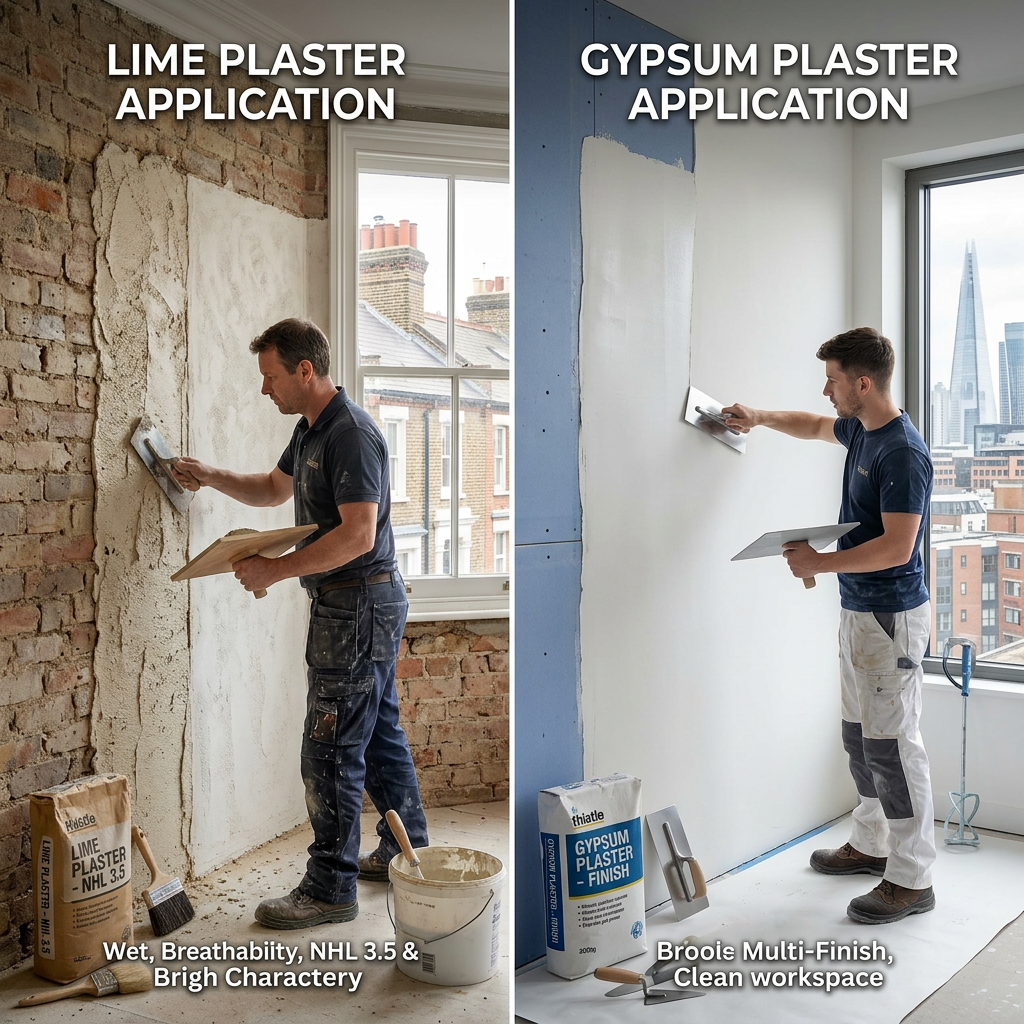
Lime Plaster vs Gypsum Plaster: Which is Better for Your Home?
Lime Plaster vs Gypsum Plaster: Which is Better for Your Home?
Imagine you're sitting in your charming London flat, the kind with period features and lots of character. Perhaps you're in Kennington, surrounded by historic Victorian buildings, and you begin to notice the wear on your walls. Cracks, peeling paint, and the subtle intrusion of dampness can disrupt the beauty of your living space. This scenario is all too common in older London homes, where the choice of plaster can significantly impact the longevity and health of your property. In this blog post, we will dissect the differences between lime plaster and gypsum plaster, equipping you with the knowledge to choose the best option for your home.
Understanding Lime Plaster
Lime plaster is a traditional building material that has been used for centuries, especially in the UK. Made from limestone, it offers several distinctive features:
- Breathability: Lime plaster allows moisture to escape, which helps prevent damp issues. This is particularly beneficial in older homes that may have moisture problems due to age.
- Flexibility: Lime plaster is more flexible than gypsum, which means it can better adapt to movements in the building without cracking.
- Natural: It is eco-friendly and made from natural materials, making it a favorite among conservationists and those looking to use sustainable materials in their renovations.
However, there are some downsides:
- Longer drying time: Lime plaster takes significantly longer to dry compared to gypsum, which can extend project timelines.
- Labor-intensive: Applying lime plaster requires skilled craftsmen, potentially increasing labor costs.
Understanding Gypsum Plaster
Gypsum plaster, on the other hand, is a modern alternative that is more commonly seen in contemporary building projects. Here’s what you should know:
- Fast drying: Gypsum plaster dries quickly, allowing for faster project completion.
- Smooth finish: It is known for creating a smooth surface that is ideal for painting and wall finishes.
- Availability: Gypsum is widely available and generally more affordable than lime plaster.
Yet, it comes with its own set of limitations:
- Less breathable: Gypsum does not absorb moisture as effectively, which can lead to damp issues in buildings that require ventilation.
- Rigid: While it provides a hard finish, it is less flexible than lime plaster, making it more prone to cracking if the building settles over time.
Pros and Cons: A Quick Comparison
| Feature | Lime Plaster | Gypsum Plaster | |-----------------------|---------------------------------------|-----------------------------------------| | Breathability | High | Low | | Drying Time | Longer | Quick | | Flexibility | High | Low | | Cost | Generally higher | Generally lower | | Environmental Impact | Eco-friendly | Less eco-friendly | | Finish | Natural and textured | Smooth and sleek |
Practical Tips for Choosing Between Lime and Gypsum Plaster
When it comes to deciding which plaster is best for your specific project, consider the following practical tips:
- Assess Your Property: If you're living in a historical home in areas like Hackney or Camden, lime plaster may be best to maintain authenticity and prevent dampness.
- Consider the Wall Condition: For newer builds or if your walls are in good condition without historical significance, gypsum plaster might serve you better due to its quick installation and smooth finish.
- Think About Final Look: If you’re looking for a rustic, textured finish, lime plaster will give you that. For a flat, modern look, opt for gypsum.
- Budget Appropriately: Be prepared to spend more if you choose lime plaster due to longer application times and skilled labor - expect costs around £50-£70 per square meter, compared to £20-£40 for gypsum.
- Get Professional Advice: Consult with a professional plastering team like the one at London Plastering Service to assess your needs.
FAQ
1. Is lime plaster more expensive than gypsum plaster?
Yes, lime plaster is generally more expensive due to higher material costs and the need for skilled labor. You can expect to pay around £50-£70 per square meter for lime plastering, while gypsum plastering may cost between £20-£40 per square meter.
2. Can I apply gypsum plaster over lime plaster?
While it is possible, it's not recommended. Gypsum plaster requires a different drying environment and may not adhere well to the properties of lime plaster, potentially leading to issues in the future. Proper assessment by a professional is advised.
3. Which plaster is better for damp environments?
Lime plaster is better suited for damp environments because it allows walls to breathe and moisture to evaporate, which helps in preventing mold and decay.
4. How long does it take for lime plaster to dry?
Lime plaster typically requires a drying time of about 2 to 4 weeks, depending on environmental conditions, whereas gypsum plaster can dry in just a few hours.
5. Where can I find local plasterers in London?
For quality plastering services, look for local plasterers who can help you with both lime and gypsum plastering needs.
Conclusion
In the battle of lime plaster vs gypsum plaster, neither option is strictly better than the other; it all comes down to the specific needs of your property. Lime plaster has the advantage in terms of breathability and flexibility, making it ideal for older homes like those found in Westminster or Richmond. Conversely, gypsum plaster is better suited for rapid, cost-effective renovations in modern spaces.
Ready to transform your walls? Whether you choose lime or gypsum plaster, make sure you enlist the help of professionals to ensure the best results. If you want to explore more or see completed projects, visit our Gallery or get in touch with our professional plastering team today! For even more tips, check out our blog.
Now that you're equipped with the knowledge, what's your next move? Don't hesitate to reach out to us for a consultation!
Related Plastering Guides & Services
Need Professional Plastering?
Get expert plastering services in London. Free quotes within 60 minutes.