
How to Stop Plaster Blowing on Internal Walls: A Guide
How to Stop Plaster Blowing on Internal Walls: A Practical Guide
Imagine coming home after a long day, only to notice that unsightly patches of plaster have formed on your walls, leaving behind a blistering, peeling facade. This frustrating phenomenon, known as plaster blowing, can disrupt the comfort and aesthetics of your living space. Not only is it an eyesore, but it may also signal underlying issues that could lead to more significant damage if not addressed promptly. Thankfully, you're not alone, and today we’ll explore how to stop plaster blowing on internal walls effectively.
What Causes Plaster Blowing?
Understanding the root causes of plaster blowing is crucial for effective preventative measures. Here are some common reasons:
- Moisture intrusion: Water is the most significant enemy of plaster. This can come from leaking pipes, condensation, or rising damp.
- Temperature fluctuations: Rapid changes in temperature can cause expansion and contraction, leading to cracks.
- Poor application: If plaster wasn’t applied correctly or the surface wasn’t properly prepared, it may weaken over time.
- Inadequate drying time: Plaster needs sufficient time to dry after application; rushing this process can lead to future problems.
Being aware of these factors helps us tackle plaster blowing head-on.
How to Stop Plaster Blowing: Step-by-Step Guide
Here’s a practical, step-by-step guide to help you stop plaster from blowing on your internal walls:
1. Identify the Problem Areas
Start by examining your walls thoroughly for signs of plaster damage:
- Check for bubbles or blisters in the plaster.
- Look for cracks that indicate structural issues.
- Pay attention to damp areas or any other signs of moisture.
2. Assess for Moisture Issues
Once you’ve identified heavily damaged areas, the next step is to check for moisture sources:
- Use a moisture meter to check humidity levels in your walls.
- If you detect leaks, repair them promptly. You may need to consult professionals for complex plumbing issues.
- Ensure adequate ventilation to prevent condensation buildup, especially in areas like kitchens and bathrooms.
3. Remove Loose or Blowing Plaster
To stop further damage, you have to tackle the affected plaster:
- Use a scraper to remove any loose plaster gently. Avoid damaging the underlying structure.
- For larger areas, a hammer and chisel can help break the plaster gently.
4. Prepare the Surface
Before reapplying plaster, ensure that the surface is ready:
- Clean the wall to remove dust, dirt, and any remnants of moisture.
- Apply a bonding agent to ensure the new plaster adheres correctly. This is particularly crucial if the plaster was blowing due to insufficient adhesion originally.
5. Replaster the Affected Section
Depending on the size of the area:
- Mix your plaster according to the manufacturer’s instructions.
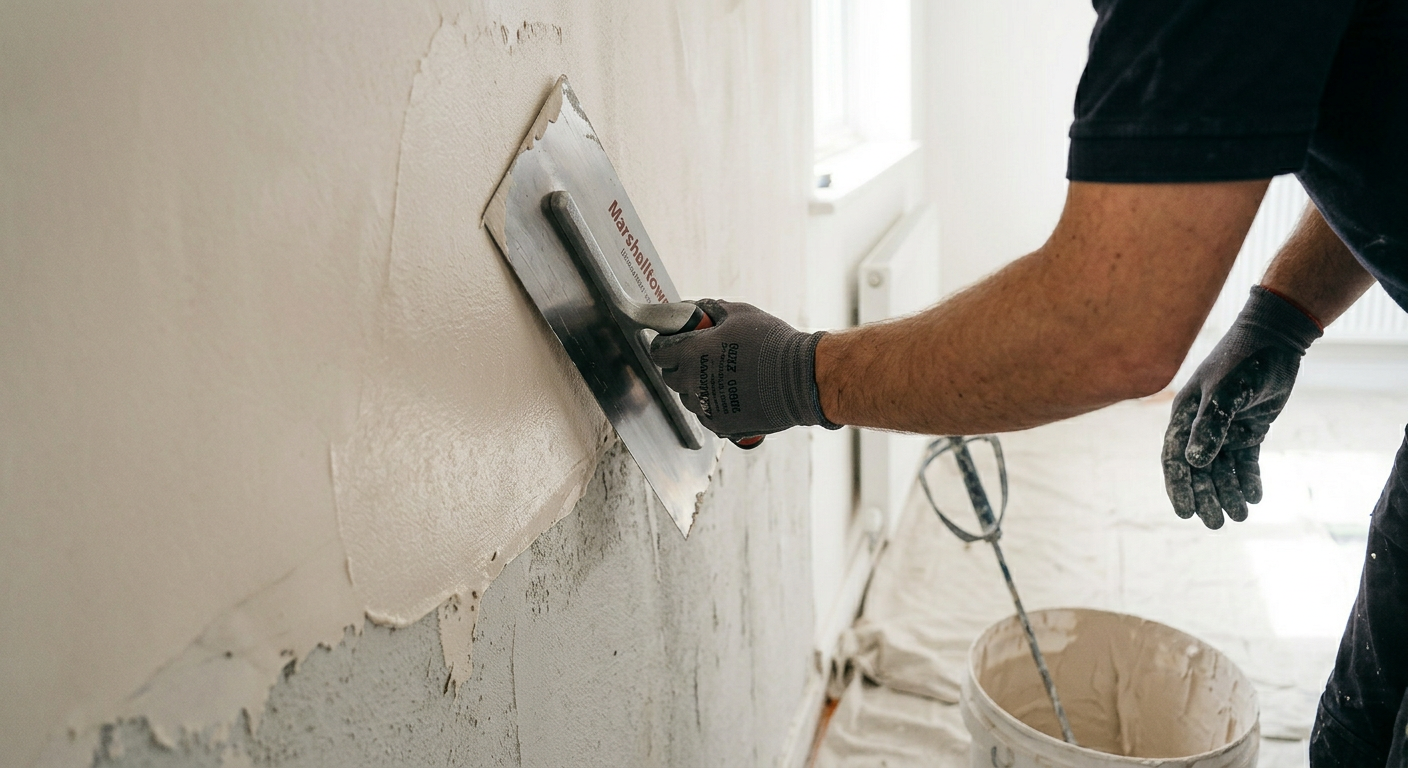
- Apply it evenly using a trowel, ensuring a smooth finish. Aim for a thickness of 5mm for standard plaster.
- Allow adequate drying time as specified. On average, plaster takes about 2-4 days to dry fully.
6. Implement Preventative Measures
To prevent future issues, here are some essential tips:
- Regularly check for and address moisture issues.
- Maintain proper heating and ventilation throughout your home.
- Consult with local plastering professionals for any persistent problems, as they can provide tailored solutions to your specific needs. For some expert help, visit London Plastering Service
Pricing Considerations
When it comes to addressing plaster blowing, costs can vary based on your location in London and the extent of the damage:
- Repairs can range from £150 to £500+ for minor to moderate issues.
- Complete replastering may cost anywhere between £900 to £2,500 depending on the room size. Neighborhoods like Chelsea or Kensington might see higher estimates due to cost of living.
Practical Tips for London Homeowners
- Monitor your plumbing: Regular inspections can help identify potential leaks quickly.
- Use dehumidifiers in moisture-prone areas to control humidity levels.
- Consider skimming walls for a fresh finish and to prevent plaster issues in the future. Check out our Wall Skimming Services for more details.
FAQ
Q1: Can I fix plaster blowing on my own?
Yes, you can fix minor plaster blowing issues on your own. Typically, removing the loose plaster and replastering may be sufficient. However, for extensive damage or underlying issues, consult professionals.
Q2: How can I identify if moisture is causing the plaster blowing?
Signs of moisture include damp spots, musty smells, and peeling paint or wallpaper. A moisture meter can also help confirm high humidity levels in your walls.
Q3: How long does plaster take to dry?
On average, plaster should dry for about 2-4 days. However, this can vary depending on the thickness and environmental conditions.
Q4: Is it worth hiring a professional plasterer?
Hiring professionals can ensure the job is done correctly and effectively, especially for larger repairs or complicated plumbing issues that may underlie the blowing plaster. Check out our About page to learn more about our expert team.
Q5: What can I do to prevent plaster blowing in the future?
You can prevent plaster blowing by ensuring proper ventilation, addressing moisture issues promptly, and regularly maintaining your plumbing systems. Additionally, using quality materials and proper applications will shield against future problems.
Conclusion
Dealing with plaster blowing on internal walls can be daunting, but it doesn't have to be. With the right understanding and practical steps, you can restore your walls to their former glory. Remember, if you encounter extensive issues, it's always best to reach out to our professional team at London Plastering Service for expert assistance tailored to your needs. Don’t let plaster issues get you down—act today! For more tips and guidance, check out our Blog for further insights.
Related Plastering Guides & Services
Need Professional Plastering?
Get expert plastering services in London. Free quotes within 60 minutes.