
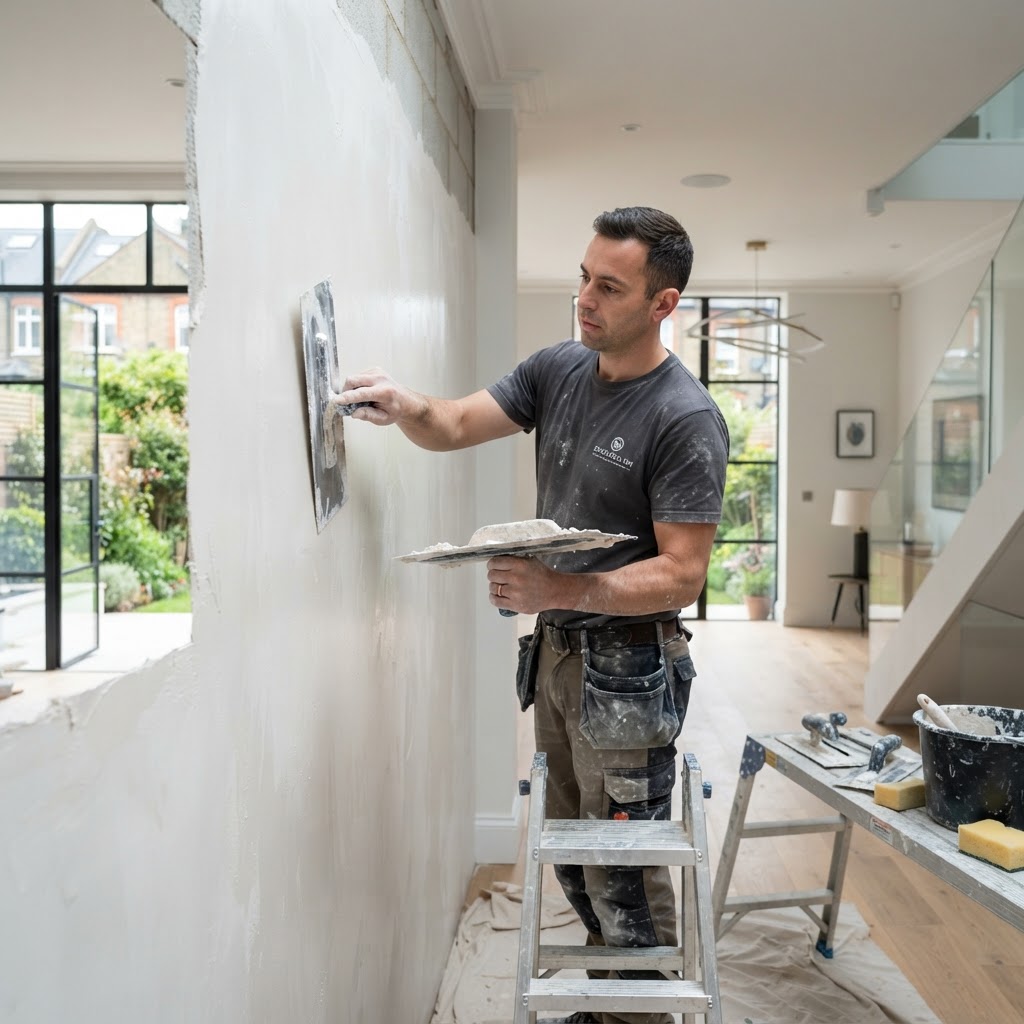
How to Spot Cowboy Plasterers in London: A Guide for Homeowners
Introduction: Why London Homeowners Need to be Vigilant
Renovating a classic Victorian terrace in Islington, restoring a period property in Hampstead, or updating a modern flat in Canary Wharf should be an exciting experience. However, the London home improvement market is unfortunately rife with unscrupulous individuals posing as tradespeople. Hiring a 'cowboy' plasterer isn't just a financial risk; it can lead to permanent structural damage, hidden health hazards from improper dust containment, and years of costly rectification. As a professional plasterer London team, we frequently witness the devastating aftermath of amateur workmanship. From sagging ceilings in Southwark to bubbling skim in Barnet, the cost of fixing a 'cheap' job often doubles the original investment. This guide is designed to help you navigate the minefield, protect your equity, and ensure your home improvements meet the rigorous standards expected in the capital.
The Top Red Flags of Cowboy Plasterers
Before you hand over any money or let someone start stripping your walls, keep your eyes open for these critical warning signs that separate pros from amateurs:
- Cash-Only Demands: If a contractor insists on cash payments to avoid VAT or official records, walk away. Professional companies issue digital invoices, hold valid UTR numbers, and operate transparently. If they refuse to provide a tax invoice, you have no recourse if they walk off the job.
- No Physical Address or Business Registration: Check Companies House. If their website only shows a generic mobile number and a Gmail address, or if they have no registered office in a London borough, they lack accountability. Always verify their address in person or via Google Street View.
- Unsolicited Door-Knocking: Genuine, high-demand plasterers in cities like London are booked months in advance. They never need to knock on doors in areas like Dulwich or Wandsworth to find work. If someone approaches you claiming they were 'just working in the neighbourhood and had spare materials,' be extremely wary.
- Vague, Handwritten Quotes: A professional will provide a detailed quote on letterhead, specifying the brand of materials, the number of coats, and the waste disposal method. A cowboy will often give a 'back of the envelope' figure that magically increases once the work starts, citing 'unforeseen wall issues.'
- Lack of Portfolio Depth: Look for consistency. Does their gallery show actual site photos, or are they stolen stock images? A true professional will have a diverse range of work, from heritage lime plastering to modern boarding in new-builds.
Understanding the Market: What Should You Pay in 2026?
Price is often the primary bait used by rogue traders. If a price seems too good to be true, it almost certainly is. In 2026, London labor rates, materials, and disposal fees are at an all-time high due to inflation and skilled labor shortages. For a deep dive, check our guide on Plastering Prices London.
Typical London Pricing (2026 Estimates)
- Wall Skimming: For a standard bedroom (3m x 4m), expect to pay between £350 and £550. If you need Wall Skimming London services, always ask for a fixed-price quote that includes PVA priming and corner bead installation.
- Ceiling Repair: Prices are influenced by floor height and the presence of intricate cornicing. Full Ceiling Plaster Repair London typically ranges from £400 to £750. Beware of quotes under £250; these often indicate the use of sub-par bonding agents that will crack within months.
- Dry Lining: The cost for dot-and-dab boarding is generally £25–£40 per square metre. This includes labour and boards. Always ensure fire-rated boards are used where required by building regulations. Learn more about professional Dry Lining London standards.
- Full House Replastering: A full Full House Replaster London project in a typical three-bed semi-detached home can range from £5,500 to £9,500. This price variation depends heavily on whether the walls are being stripped to the brick or if you are over-boarding existing, stable plaster.
The Technical Reality: Why Preparation Matters
The biggest difference between a professional and a cowboy is how they treat the substrate. A cowboy will rush to apply a skim coat over dusty, loose, or damp surfaces. A professional will:
- Conduct Moisture Testing: Essential in older homes in areas like Chelsea or Greenwich to prevent damp from bubbling the new plaster.
- Use Quality Primers: Applying the correct PVA or bonding agent ensures the new coat adheres to the wall. Skipping this is the #1 cause of 'drummy' plaster that falls off after a year.
- Corner Bead Accuracy: Using high-quality galvanized corner beads is vital for straight, impact-resistant edges. Cowboys often use cheap, thin plastic that bends.
How to Properly Vet Your Plasterer
Don't just trust a flashy social media profile or a sponsored Google ad. Follow this strict verification checklist:
- Request Insurance Proof: A legitimate business will hold at least £2M in Public Liability Insurance. Ask to see the digital certificate or the policy number and confirm it with the insurer.
- Check Local References: Request contact details for three recent jobs in your borough—whether it is Westminster, Camden, or Ealing. Ask the previous client: 'Did they protect your floors?', 'Did they clear up the rubble daily?', and 'Did the final price match the quote?'
- Detailed Written Contracts: Never start a job without a contract outlining the scope, finish level (e.g., Q1 to Q4), the timeline, and the payment schedule.
- Review Professional Affiliations: Look for members of the Federation of Master Builders or equivalent industry bodies. While not mandatory, it shows a commitment to industry standards.
Specialized Services and Where They Go Wrong
Cowboys often struggle with technical tasks. Be especially cautious if you are quoted for:
- Artex Covering: This requires specialized bonding and expertise to ensure the finish is smooth. If done incorrectly, the weight of the new plaster can pull down the old, brittle Artex, creating a major hazard.
- Emergency Repair: If you have Emergency Plaster Repair London needs due to water leaks, don't rush. A quick patch often masks the underlying rot. Demand an investigation into the source of the water before sealing it behind new plaster.
Frequently Asked Questions (FAQ)
Q: Why is my quote significantly cheaper than others?
A: It is almost certainly because the contractor is using inferior gypsum materials, plans to cut corners on wall preparation (such as skipping PVA or proper cleaning), or is not paying for necessary insurance and local waste disposal fees. In London, skip hire and debris disposal are expensive; if a quote doesn't include these, the contractor may be fly-tipping your waste, leaving you legally liable for the illegal disposal.
Q: Should I pay a deposit upfront?
A: It is reasonable to pay for the initial materials order (roughly 20-30%) once you have a signed contract. Avoid paying the full labour cost until the job is completed. If a contractor demands 50% or more upfront, it is a massive red flag. Always use trackable payment methods like BACS so there is a paper trail.
Q: How do I know if the plastering is of good quality?
A: Inspect the walls under a bright, directional light (a site torch held against the wall is the 'gold standard'). The finish should be uniform with no ripples, perfectly smooth to the touch, and free of 'trowel marks.' Corners should be plumb and square. The site should also be left spotless—professional teams always use protective sheeting on flooring and clear up thoroughly each evening.
Q: What should I do if the work is sub-par?
A: Stop the work immediately and take high-resolution photos of the defects. Communicate your dissatisfaction in writing via email, citing the specific clauses in your initial contract. Contact a reputable firm to assess the damage before paying the final balance. Often, you may need an independent damp or structural surveyor if the rogue plasterer has caused underlying damage.
Q: Can I supply my own materials to save money?
A: Generally, no. Professional plasterers prefer to use their own supply chains because they can guarantee the quality and freshness of the gypsum. Plaster has a shelf life and can be compromised by humidity in improper storage. If you supply your own materials, a professional cannot warranty their work because they cannot attest to the condition of the materials.
Q: How long should I wait before painting new plaster?
A: You must wait for the plaster to be 'bone dry' or turn a consistent, light pink color. This usually takes 7-14 days in a well-ventilated room. Painting too early (before it is dry) will cause the paint to flake off or cause damp issues. If a plasterer tells you it is safe to paint the next day, they are wrong.
Final Word and Call to Action
Don't take unnecessary risks with your property value or your peace of mind. Quality plastering is a vital investment in your home’s structural health and aesthetic appeal. If you want a job done right the first time, contact our team at London Plastering Service for a transparent, professional, and high-quality assessment of your project today. We offer fixed-price quotes and a satisfaction guarantee on all our work.
Related Plastering Guides & Services
Need Professional Plastering?
Get expert plastering services in London. Free quotes within 60 minutes.