
How Many Coats of Plaster Do You Really Need?
Introduction
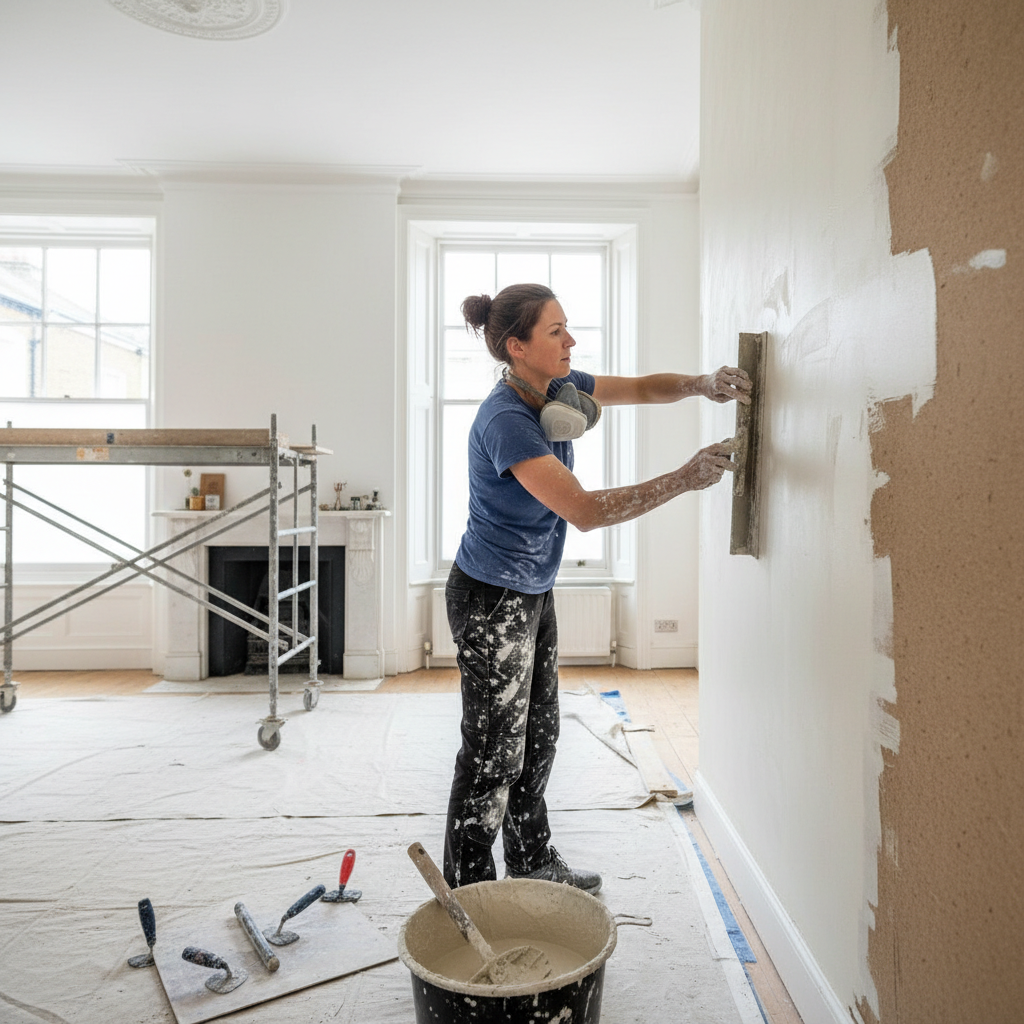
Picture this: You’ve just bought a charming Victorian terraced house in Clapham, filled with character but with walls that tell tales of age and neglect. As you navigate the intricate mazes of renovation, your heart sinks as you notice the crumbling plaster. You wonder, ‘How many coats of plaster do I actually need?’ This confounding question isn’t just a technical detail; it can significantly impact both the appearance and integrity of your home.
Understanding the number of plaster coats required can save you time, money, and ultimately, heartache. In this guide, we’ll delve into the ins and outs of plastering, revealing the nuances of different plastering methods and the typical number of coats necessary for achieving that smooth, flawless finish you desire.
Why is Plastering Important?
Before we tackle the number of coats needed, let’s understand why plastering matters:
- Protection: Plaster acts as a protective layer against damp and moisture, keeping your property safe from harm.
- Aesthetic Appeal: A well-plastered wall enhances the visual appeal of your space, making it look fresh and modern.
- Longevity: Quality plastering lasts for years, reducing the need for frequent renovations.
How Many Coats of Plaster Are Required?
The answer to how many coats of plaster do you need largely depends on the condition of your walls and the type of plastering methods you use. Here are the common scenarios:
1. For New Walls
If you’re working with new plasterboard or masonry walls, you typically need:
- Two coats of plaster:
- First coat (also known as the base coat): This is often a rough finish that offers good adhesion. It serves as a foundation.
- Second coat (skimming coat): A smooth finish that provides the refined surface popularly seen in finished interiors.
2. For Old or Damaged Walls
When dealing with older walls that may have cracks or peeling:
- Three coats of plaster might be needed:
- Preparation coat: To repair and make the surface level.
- Base coat: Following the preparation, this coat will build up strength.
- Finish coat: To provide smoothness for painting.
3. Repairs and Patching
For smaller areas where repairs are necessary:
- One or two coats depending on the extent of the damage.
- One coat to fill in minor imperfections and to level out the area.
- Second coat for additional coverage and smoothness.
Why Coat Counts Vary
Several factors influence how many coats you'll need:
- Type of plaster (Screed, lime, thin-coat, thick-coat)
- Current wall condition (Pre-existing damage, moisture)
- Desired finish (Texture required)
Practical Tips for Plastering Success
Here are some actionable tips to help with your plastering project:
- Assess Your Walls: Inspect for any damp, cracks, or severe unevenness that might need addressing first.
- Choose Quality Materials: Invest in high-quality plaster; it may initially seem costly but saves you money in the long run.
- Prior Preparation: Clean the walls well and consider applying a bonding agent if they're particularly porous.
- Stay Consistent with Technique: Use consistent pressure and strokes to ensure even coverage, particularly on the final skim.
- Plan for Drying Time: Allow each coat to dry thoroughly before applying the next (typically around 1-2 days).
Frequently Asked Questions (FAQs)
## FAQ
Q1: Can I plaster over paint?
A1: Yes, you can, but the surface needs to be adequately prepared. Clean the walls thoroughly, and consider using a bonding agent to ensure adhesion.
Q2: How long does each coat of plaster take to dry?
A2: Each coat generally takes about 24 hours to dry; however, this may vary based on humidity and the type of plaster used.
Q3: What should I do if I notice cracks after plastering?
A3: Minor cracks can be filled and skimmed over. For larger cracks, underlying issues such as dampness or structural problems should be addressed first.
Q4: How much does plastering cost in London?
A4: The prices can range from £20 to £50 per square meter. A full room, depending on the size, typically runs between £400 and £800.
Q5: When should I hire a professional plasterer?
A5: If the task feels daunting or if you are dealing with extensive damage, hiring a professional, like the experts at London Plastering Service, can save you time and ensure quality.
Conclusion
In conclusion, the number of plaster coats needed greatly depends on your project’s specifics, from the wall’s condition to the type of finish you desire. Whether you are undertaking a full renovation in Camden or just patching walls in a Kensington flat, understanding the plastering process is crucial.
Don’t let the process overwhelm you. If you’re unsure, consult with professionals who can offer guidance tailored to your unique home. At London Plastering Service, we pride ourselves on providing expert advice and pristine finishes. Ready to start your plastering journey? Visit our Gallery to view completed projects or reach out for a consultation today!
Call to Action
For all your plastering needs in London, whether it’s a small repair or a complete wall makeover, contact us today. Let our team of skilled plasterers deliver the quality finish your home deserves!
Related Plastering Guides & Services
Need Professional Plastering?
Get expert plastering services in London. Free quotes within 60 minutes.