
HMO Plastering Requirements for Fire Safety in London 2026
HMO Plastering: Ensuring Fire Safety Compliance in London
Houses in Multiple Occupation (HMOs) face some of the strictest fire safety regulations in the UK. As a property owner in boroughs like Hackney, Lambeth, or Newham, or managing high-density residential properties in Westminster or Kensington and Chelsea, you are legally responsible for ensuring your building meets the necessary standards to protect your tenants. When it comes to renovations or maintenance, selecting a qualified plasterer in London is not just about aesthetics; it is about life safety. Fire-rated plastering is a critical component of passive fire protection, designed to delay the spread of fire and smoke throughout the structure, giving occupants precious time to escape.
Why Fire-Rated Plastering Matters in London HMOs
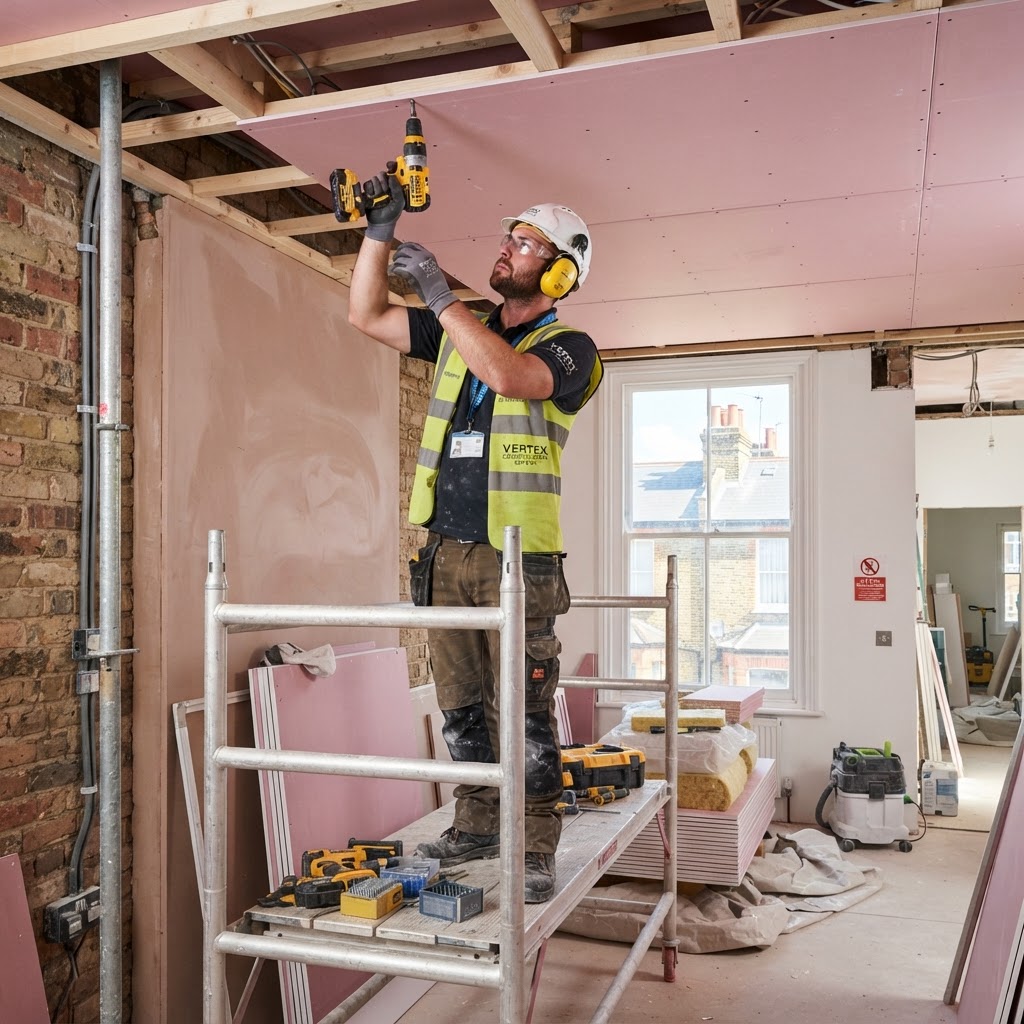
In an HMO, walls and ceilings serve as vital fire barriers that must contain fire for a specific period—typically 30 or 60 minutes depending on the building's design, age, and occupancy level. Standard plasterboard is often insufficient for these stringent requirements. Professional fire-rated boards (commonly referred to as Type F or 'pink board') contain glass fiber, vermiculite, and other fire-retardant additives that make them significantly more resistant to direct flame and extreme thermal stress.
In older Victorian and Edwardian terrace houses commonly converted into HMOs in areas like Islington or Camden, the joists and structural timbers are often dry and potentially compromised. Using fire-rated boarding provides an essential layer of insulation between the room space and the structural skeleton of the building. If you are planning an upgrade, consider our Dry Lining London services to ensure your fire-rated boards are installed to current building control standards, accounting for the unique challenges of London's diverse housing stock.
Fire-Rated Boarding and Regulation Compliance
Building Regulations Part B sets out the requirements for fire safety in dwellings. In HMOs, this often necessitates the use of fire-resistant plasterboards on escape routes, stairwells, and around communal kitchens—the highest risk areas.
Key Considerations for 2026 Compliance:
- Fire Resistance Levels: Always specify Type F plasterboard. For high-risk areas like communal kitchens or boiler rooms, 15mm board is the industry baseline.
- Double Boarding Requirements: In many commercial-grade HMO conversions in boroughs like Southwark or Tower Hamlets, local fire officers may mandate two layers of 15mm fire-rated board to achieve a 60-minute fire rating (FD60). This is particularly common in stairwells.
- Joint Treatment: Simply boarding is not enough. Ensuring all joints are properly taped and filled using professional Wall Skimming London techniques is vital. Gaps, even small ones, can act as chimneys for smoke to penetrate through to structural timbers, bypassing your fire barrier.
- Ceiling Integrity: For older properties in areas like Greenwich, Ceiling Plaster Repair London is often necessary before installing fire-rated systems. Heavy fire-rated boards can stress aged, sagging lath and plaster ceilings, potentially causing a collapse during a heat event.
- Intumescent Fire-Stopping: All penetrations for light fixtures, sockets, and pipes must be sealed with intumescent putty or collars. A fire-rated wall is useless if there is a hole for a downlight.
Estimated Costs for HMO Plastering (London 2026)
Understanding your budget is essential for HMO landlords. Costs in London vary wildly based on logistics—specifically whether the property has lift access, parking restrictions, or requires permit-heavy skip placement. Below are the estimated figures for 2026:
- Fire-rated boarding and skimming (labor & materials): £45–£65 per square meter. In high-demand zones like Mayfair or Chelsea, expect the upper end of this spectrum due to logistical constraints.
- Full fire-rated ceiling upgrade (including skip hire and disposal): £800–£1,200 per standard room. Larger open-plan communal areas may see costs scale to £1,500+.
- Intumescent sealant and fire-stopping work: £250–£500 per unit, depending on the complexity of electrical retrofits and fire-stopping for pipework penetrations.
- Fire Door Lining/Upgrading: Adding an additional £350–£600 per door opening to ensure the surrounding frame meets 30-minute integrity requirements.
For a transparent view of pricing, please consult our Plastering Prices London guide. If your project involves renovating an entire building, you can request a quote for Full House Replastering to ensure consistent fire safety across every level of the HMO.
Addressing Artex and Older Finishes
Many London properties, particularly those converted in the 1970s and 80s, contain old Artex or damaged plaster that hides structural issues. If you are worried about the integrity of your ceilings, professional Artex Covering London services can provide a clean, fire-resistant finish. Covering over Artex is often safer than scraping it, as many older Artex coatings contain trace amounts of asbestos. Professional over-boarding seals these materials safely behind a new fire-rated layer.
Frequently Asked Questions (FAQ)
Is standard plasterboard enough for an HMO?
No. Standard wallboard provides virtually zero fire-delay performance. HMOs require fire-rated plasterboard (Type F) which is specifically tested to resist fire for a set duration (30 or 60 minutes). Standard board will rapidly degrade, allowing fire to jump through to floor voids and structural beams.
Do I need fire-rated boards in bedrooms?
Usually, yes. Building Control often mandates fire-rated materials for walls abutting escape routes and between sleeping areas to achieve the necessary 'protected corridor' status. This prevents fire from moving from an individual room into the main staircase, which is your tenants' primary means of egress.
How long does it take to plaster a 5-bedroom HMO for fire safety?
Depending on the current condition and the extent of the boarding required—such as whether you are doing just ceilings or full wall linings—a typical job takes between 2 to 4 weeks. Multi-room projects often require phased access to allow tenants to remain or to minimize disruption.
Can I paint over fire-rated plasterboard?
Yes, but you must ensure the joints are finished to a high standard, typically through skimming. Importantly, if the plasterboard has been installed as part of a fire-rated system, the paint used in communal corridors should ideally be a fire-retardant grade intumescent paint to further slow flame spread across surfaces.
What happens if I fail an HMO inspection regarding plastering?
Failure to provide adequate fire-rated partitioning can lead to an improvement notice from your local council, heavy fines, or even the loss of your HMO license. In severe cases of neglect where fire safety is compromised, local authorities can prosecute landlords under the Regulatory Reform (Fire Safety) Order 2005.
How do I prove the work was done to code?
Always request a formal Certificate of Conformity from your installer. For significant fire-stopping works, you should also keep a photographic record of the installations before they were skimmed or painted over, as Building Control officers may request to see these during a safety audit.
Protect Your Property and Your Tenants
Fire safety in HMOs is non-negotiable. Don't risk your license or your tenants' lives by cutting corners with inferior materials. Our team of expert plasterers specializes in fire-compliant installations across London, from zone 1 luxury conversions to suburban multi-lets. Contact London Plastering Service today for a professional site assessment and ensure your property meets the highest standards of safety and quality.
Related Plastering Guides & Services
Need Professional Plastering?
Get expert plastering services in London. Free quotes within 60 minutes.