
HMO Plastering Requirements: Fire Safety Guide for London Landlords
Understanding HMO Fire Safety and Plastering Regulations
For landlords operating in vibrant, high-density areas like Camden, Islington, or Tower Hamlets, managing a House in Multiple Occupation (HMO) requires strict adherence to stringent fire safety regulations. As an expert plasterer London team, we frequently assist property owners in upgrading their units to meet local council standards, which are often intensified due to the age of London's housing stock. Fire safety in HMOs is not just about smoke alarms; it is about the fundamental physical structure of the walls and ceilings that protect occupants during a fire incident.
The Critical Role of Fire-Resistant Linings in London Housing
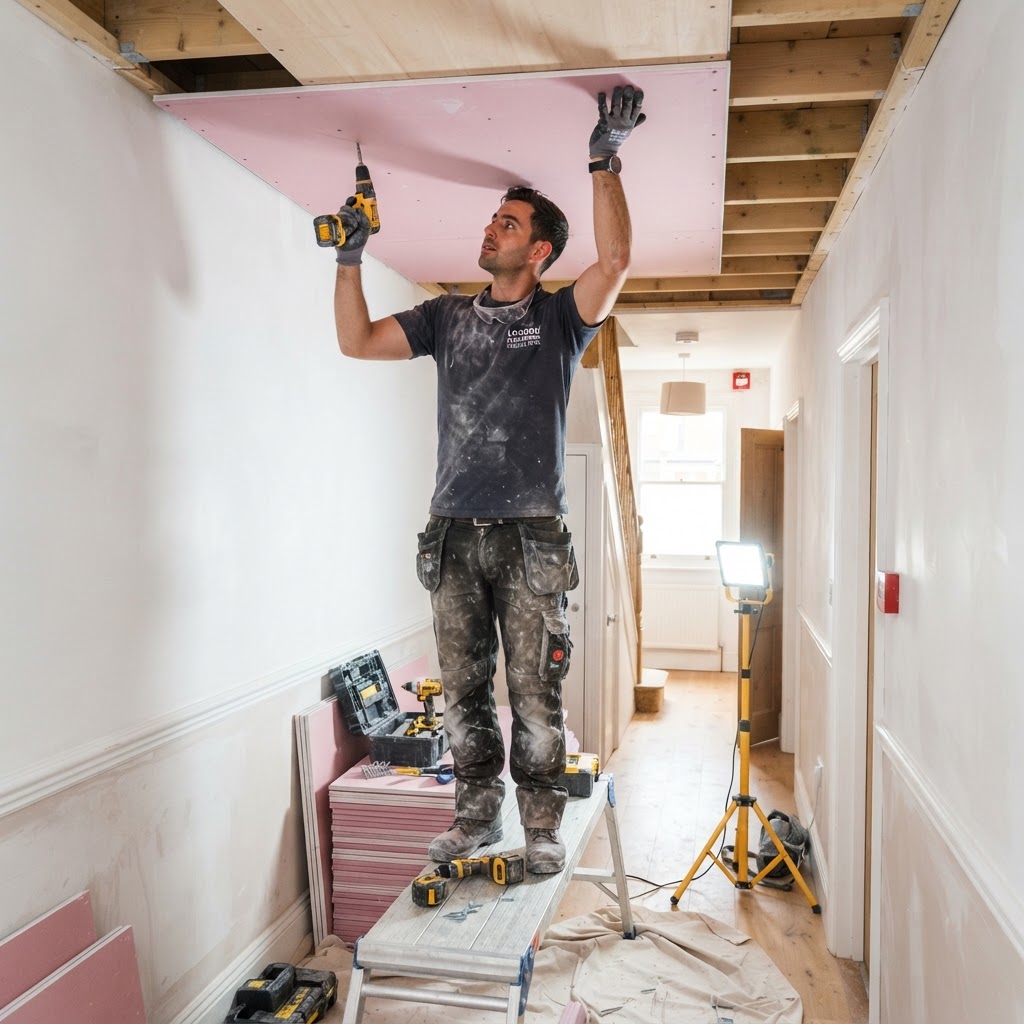
When converting or maintaining an HMO, the internal walls and ceilings must provide adequate fire resistance to prevent the rapid spread of flames and toxic smoke between rooms and along designated escape routes. This is where Dry Lining London services become absolutely essential. Standard plasterboard is often insufficient for fire-rated partitions; instead, specialized fire-rated boards, typically identified by their distinctive pink color and higher density, must be installed. These boards are engineered with glass fiber and other additives to achieve specific fire-resistance ratings, typically spanning 30 to 60 minutes.
In boroughs like Kensington and Chelsea or Westminster, where properties often feature complex layouts and high ceilings, the installation process requires extreme precision. A 30-minute fire-rated system is generally required for standard partitions, while 60-minute systems are often mandatory for ceiling separations between floors and specifically around the staircase enclosures that form the primary escape route.
Fire Safety Requirements and Regulatory Compliance
To pass a council inspection in London, your plastering and dry lining work must strictly adhere to Building Regulations Part B. Here are the key technical requirements:
- Fire-Resistant Plasterboard: Must be used on all walls and ceilings that form part of a protected escape route. This includes the walls separating the staircase from the rest of the property.
- Tape and Jointing vs. Skimming: While you might consider Wall Skimming London for aesthetic purposes, all joints between fire-rated boards must be correctly taped with fire-resistant mesh tape and filled, or fully skimmed, to ensure no micro-gaps allow smoke passage. Smoke inhalation is the leading cause of death in domestic fires, making this sealing process non-negotiable.
- Penetration Sealing: Any holes for electrics, downlights, or plumbing pipes must be sealed with intumescent fire-resistant sealant. Standard silicone or foam is not acceptable and will result in an immediate inspection failure.
- Sub-frame Integrity: In older conversions, the timber stud work must be checked. If the studs are fire-damaged or decayed, they must be treated or replaced before the new fire-rated board is applied.
Deep Dive: Pricing and Budgeting for HMO Compliance (2026)
Budgeting for HMO compliance is a significant task for London landlords. With rising material costs and labor demands in hubs like Hackney or Southwark, here is the granular breakdown for 2026 professional rates:
- Fire-Rated Boarding (Supply & Labour): Expect £25 – £45 per square meter. The higher end accounts for properties with difficult access, such as upper-floor flats in W1 or EC postcodes where material transport is constrained.
- Full Skimming (Finish Plastering): £18 – £30 per square meter. Prices vary based on the number of corners and the requirement for corner beads, which are essential for fire-resistant edge protection.
- Full House Replastering: For a standard 4-bedroom terraced HMO, comprehensive work—including removing old lath, installing new fire-rated studs, boarding, and skimming—ranges from £5,500 to £9,500. This variance depends on whether the property is occupied during works, which requires additional site protection.
- Intumescent Treatment: Specialized fire-rated sealants and gap-filling services are often charged as a supplementary fee of £300–£600 for a medium-sized HMO, ensuring the 'fire envelope' is perfectly sealed.
Navigating Age-Related Risks in London Architecture
Many HMOs in boroughs such as Lambeth or Haringey are situated in Victorian or Edwardian buildings. These structures often feature failing lath and plaster ceilings, which are a major fire risk due to the voids behind them allowing fire to travel between floor joists. Covering these with modern, fire-rated boards is often more cost-effective than attempting to repair historic, brittle plasterwork. Furthermore, where Artex is present—common in 1970s conversions—it must be assessed for asbestos. Our Artex Covering London service provides a compliant, smooth finish that encapsulates these surfaces safely while ensuring the new fire-rated board layer is structurally sound.
Frequently Asked Questions (Expert Edition)
Can I use double-layer plasterboard instead of fire-rated board?
While double-layer boarding can increase fire resistance, it must be installed according to a verified design specification (such as British Gypsum systems). Simply doubling up standard boards without the correct fire-rated tapes, fixings, and intumescent sealant will not meet council HMO standards. Always use certified fire-rated plasterboard (Type F) for compliance.
Do light switches and sockets compromise fire-rated walls?
Yes, they can. When installing electrical points in a fire-rated partition, you must use fire-rated socket boxes or 'putty pads' that expand when exposed to heat. Without these, the penetration creates a weak point where fire can burn through the plasterboard. Our experts ensure all electrical penetrations are fully fire-stopped.
What happens if I fail my HMO fire safety inspection?
If your plastering work fails the inspection, the council will issue an Improvement Notice. This gives you a strict timeframe (often 28 days) to rectify the issues. Failure to comply can result in substantial fines, forced closure of the HMO, and in severe cases, criminal prosecution. Always ensure your contractor provides a certificate of compliance for the materials used.
Are there specific requirements for ceiling voids?
Yes. If your HMO has a crawl space or ceiling void, fire-stopping must be installed to prevent fire from jumping between rooms. This involves 'cavity barriers' made of mineral wool or fire-rated boards, installed between the joists, which we can integrate during the ceiling replastering process.
Strategic Importance of Professional Installation
DIY attempts at fire-rated plastering rarely stand up to scrutiny from Building Control. Professional installation ensures the 'fire envelope' of your property is seamless. This is not just about the surface finish; it is about the structural integrity behind the wall. Whether you are addressing Ceiling Plaster Repair London or undertaking a full structural overhaul to secure an HMO license, hiring a specialist is a legal and moral necessity. We utilize high-grade intumescent materials that are specifically tested to withstand the heat intensity of a house fire, providing your tenants with the critical minutes required for safe evacuation.
Final Recommendations for London Landlords
Fire safety is the cornerstone of responsible property management in London. Non-compliance is not an option when the safety of multiple tenants is at stake. By investing in high-quality fire-rated plastering and ensuring all penetrations are properly sealed, you protect your investment, your legal standing, and your tenants.
Ready to bring your property up to code? Contact London Plastering Service today for a comprehensive site assessment and a detailed, compliant quote for your HMO project. Let's make your building safer, stronger, and fully compliant for the years ahead.
Related Plastering Guides & Services
Need Professional Plastering?
Get expert plastering services in London. Free quotes within 60 minutes.