
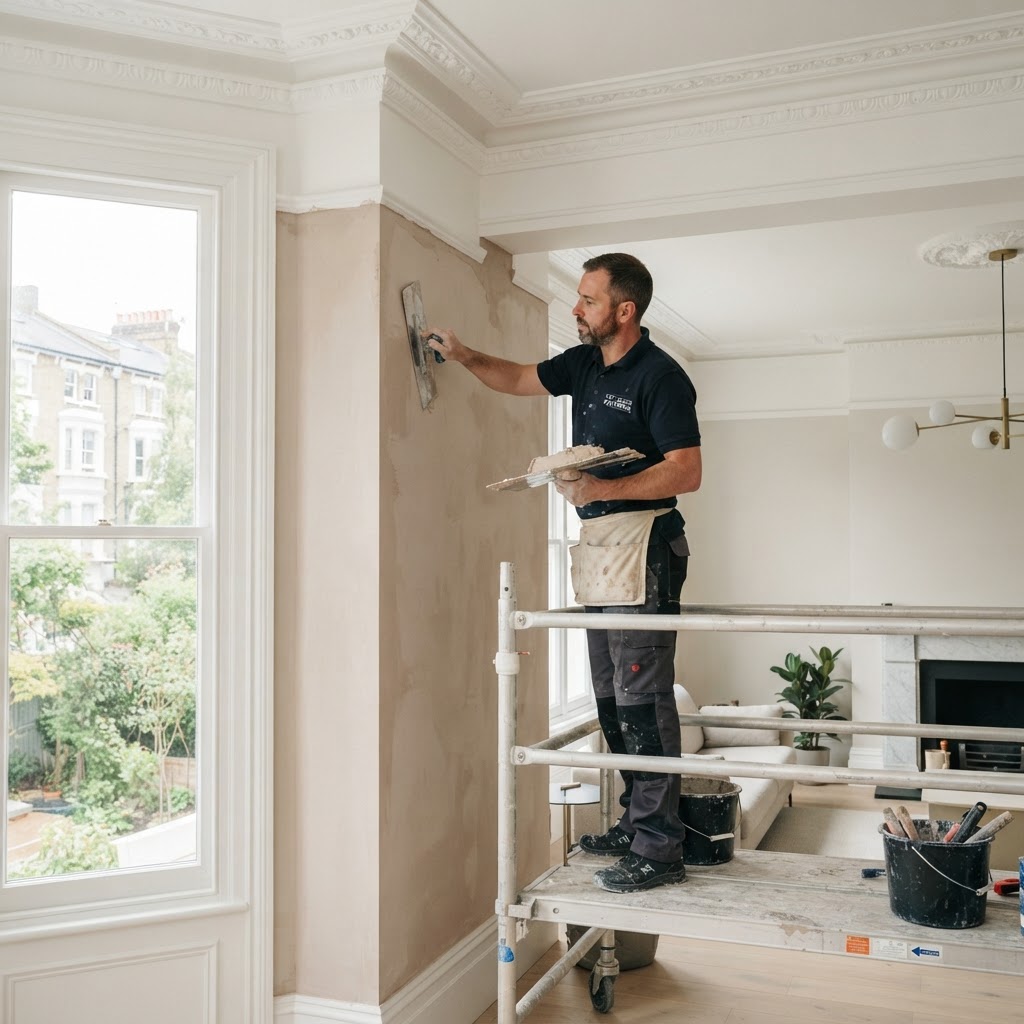
Expert Plastering Services in West London: Quality You Can Trust
Expert Plastering Services Across West London
When it comes to maintaining the structural integrity and aesthetic appeal of your home, finding a reliable plasterer in London is essential. West London, with its rich tapestry of architectural styles, from grand Victorian townhouses in Kensington (W8) and elegant Edwardian residences in Ealing (W5), to charming period properties in Chiswick (W4) and Richmond (TW9), demands specialized attention. These properties, often built between the late 19th and early 20th centuries, possess unique characteristics, including intricate cornices, high ceilings, and sometimes, original lath and plaster walls, which require a delicate, expert touch. At London Plastering Service, we pride ourselves on delivering premium, bespoke finishes that not only restore but also enhance the inherent character of your building, ensuring longevity and beauty.
Our commitment extends beyond mere surface repair. We understand that the plaster is the canvas for your interior design, a foundational element that dictates the final look and feel of your home. Whether you're embarking on a full home renovation, a single-room makeover, or require urgent repairs, our skilled artisans are equipped to handle projects of any scale with precision and care. We serve a wide geographical area, including but not limited to affluent postcodes like Chelsea (SW3), Fulham (SW6), Notting Hill (W11), and affluent areas further west such as Pinner (HA5) and Ruislip (HA4).
Why Choose Our West London Specialists?
Our team comprises seasoned plastering professionals who possess an intimate knowledge of the construction nuances specific to West London's housing stock. We understand the challenges posed by older buildings, such as subsidence, damp issues, and the particularities of different plastering techniques employed historically. We don't just cover walls; we create durable, flawless foundations for your interior decor, ensuring longevity and a superior finish. If you are concerned about your budget, our detailed guide to plastering prices in London offers full transparency on what you should expect to pay for high-standard craftsmanship, empowering you to make informed decisions.
Understanding West London's Architectural Heritage
West London is renowned for its stunning Victorian and Edwardian architecture. These homes, often characterized by their high ceilings, large windows, and decorative features like coving and ceiling roses, require a specific approach to plastering. Original lath and plaster walls, common in these older properties, can be prone to cracking due to age, moisture, or structural movement. Our specialists are adept at assessing these issues and employing the appropriate techniques, whether it's repairing existing lath and plaster, or upgrading to modern plasterboard and render systems while respecting the original aesthetic. For instance, a Victorian townhouse in Bayswater (W2) might require careful cornice repair, a task our experts handle with meticulous attention to detail.
Our Commitment to Quality and Durability
Quality craftsmanship is the cornerstone of our service. We use only the highest quality materials, including British Gypsum products and specialist lime plasters for heritage properties, ensuring a finish that is not only beautiful but also resilient. Our meticulous preparation process, which involves thoroughly cleaning surfaces, repairing underlying damage, and applying appropriate bonding agents, guarantees a superior bond and a long-lasting finish. This attention to detail is particularly crucial in areas like Hammersmith (W6) and Shepherd's Bush (W12), where many properties are subject to the stresses of urban living.
Our Core Plastering Services
We provide a comprehensive range of services to cover all your wall and ceiling needs, ensuring a seamless finish for any project:
- Wall Skimming London: This is our most popular service, involving applying a thin layer of plaster over existing surfaces (like old plaster or plasterboard) to achieve a perfectly smooth, glass-like finish. This creates an ideal base for painting or wallpapering, transforming tired walls into immaculate backdrops for your decor. We expertly skim walls in homes across Chiswick (W4), Brentford (TW8), and Ealing (W5), achieving flawless results for even the most demanding clients.
- Ceiling Plaster Repair London: Ceilings are susceptible to damage from water leaks, impact, or simply age. Our specialists can repair cracks, water stains, sagging areas, and holes, restoring your ceiling to its former glory. We address issues from minor hairline cracks in a Richmond (TW10) flat to significant damage in a larger property in Kew (TW9).
- Artex Covering London: Many West London homes feature dated Artex ceilings and walls. We offer a professional solution to cover these textured finishes with a smooth, modern skim coat, effectively modernizing your living space without the mess of complete removal. This is a cost-effective way to update rooms in properties across areas like Acton (W3) and South Ealing (W5).
- Dry Lining London: Also known as plasterboarding, dry lining is an efficient, clean, and fast method for creating new internal walls or lining existing ones. It's ideal for renovations, extensions, or improving insulation and soundproofing. We expertly install plasterboard systems in new builds and refurbishments throughout West London, from Notting Hill (W11) to Holland Park (W14).
- Full House Replastering: For homeowners undertaking major renovations or restoring period properties, we offer a complete replastering service. This involves stripping old plaster, preparing surfaces, and applying new plaster throughout the entire property, providing a fresh start for your interior. This extensive service is often required for Victorian properties in areas like Maida Vale (W9) and St John's Wood (NW8).
- Coving and Cornice Installation/Repair: We specialize in the installation and meticulous repair of decorative coving and cornices, restoring or adding elegant period details to ceilings and walls. Our team can replicate existing patterns or install new designs in properties across Kensington (W8), Notting Hill (W11), and Hampstead (NW3).
- External Rendering London: Beyond interior work, we also provide robust external rendering services to protect and enhance the façade of your property, ensuring a cohesive and well-maintained exterior. This is crucial for properties in areas prone to weathering, such as those closer to the Thames in Hammersmith (W6) or Richmond (TW10).
2026 Plastering Pricing for the West London Market
We believe in fair, transparent pricing. The figures below represent average costs for professional plastering services in the West London area for 2026, based on standard room sizes and typical conditions. Please note that complex jobs, extensive repairs, or specialized materials may incur additional costs. We always provide a detailed, no-obligation quote after an on-site assessment.
- Skimming a standard 4x4m bedroom: £650 - £850. This includes preparing the walls, applying one or two coats of multi-finish plaster, and ensuring a smooth surface ready for decoration.
- Skimming a standard 4x4m living room (walls and ceiling): £950 - £1,300. This price reflects the larger surface area and the additional work on the ceiling.
- Ceiling repair and skim (average size): £350 - £500. This covers minor to moderate repairs (e.g., cracks, small holes) and skimming the entire ceiling.
- Artex covering on a standard ceiling: £400 - £600. This price assumes the Artex is sound and can be skimmed over directly after preparation.
- Dry lining a single internal partition wall (approx. 3m x 2.4m): £450 - £600. This includes labour and materials (plasterboard, studs if necessary, tape, and jointing compound).
- Full house replaster (3-bed semi-detached house): £3,500 - £5,500. This is a comprehensive estimate covering all walls and ceilings, assuming standard ceiling heights and no major structural issues. Costs can vary significantly based on the property's condition and the extent of work required.
- Coving installation (standard room): £300 - £500. Price depends on the length of coving and complexity of the profile.
For a detailed breakdown based on your specific square footage, room dimensions, and the exact nature of the work required, we encourage you to view our full plastering cost London guide or contact us directly for a personalized quote.
Dealing with Urgent Issues
If you have a ceiling collapse, significant water damage requiring immediate attention, or any other urgent plastering emergency, do not wait for the situation to escalate. Structural issues can compromise your home's safety and integrity. Our emergency plaster repair London team is on standby, ready to mobilize quickly to stabilize your home, prevent further damage, and initiate necessary repairs. We understand the stress these situations cause and prioritize rapid, effective response for our clients in Kew (TW9), Chiswick (W4), and across West London.
Deeper Expert Explanation: The Art and Science of Modern Plastering
Modern plastering is a blend of traditional techniques and advanced materials, crucial for achieving durable, aesthetically pleasing interiors. Our expertise lies in understanding the nuances of different plaster types and application methods suitable for various West London properties.
- Substrate Preparation: Before any plaster is applied, the substrate (the underlying surface) must be meticulously prepared. This involves removing loose paint, wallpaper, dust, and debris. For older properties with lath and plaster, we assess the condition of the laths (thin strips of wood) and the plaster key. If the laths are sound but the plaster is damaged, we might inject bonding compound to stabilize it before skimming. However, if the laths are deteriorating or there's significant sagging, it often necessitates removing the old plaster entirely and boarding the wall before applying a new plaster finish. This ensures a stable and long-lasting result, preventing future cracking.
- Choosing the Right Plaster:
- Gypsum Plasters (e.g., Plaster of Paris, Multi-finish): These are the most common for interior work in modern construction and renovations. They are fast-setting, offer a smooth finish, and are excellent for skimming over plasterboard or existing sound plaster. Brands like British Gypsum are industry standards.
- Lime Plasters: Essential for heritage properties, especially listed buildings in areas like Richmond (TW10) or Kensington (W8). Lime plaster is breathable, allowing moisture to escape the building fabric, which is crucial for preventing damp and preserving original construction materials. It has a softer, more traditional aesthetic and requires skilled application, often with longer drying times.
- Cement Renders: Primarily used for external applications or in high-moisture areas like bathrooms, providing a durable, water-resistant finish.
- Skimming Technique: Skimming involves applying a thin, even layer (typically 2-3mm) of finishing plaster over a prepared surface. The key to a perfect skim lies in the plasterer's skill in achieving uniform thickness, smooth trowel movements to eliminate imperfections, and careful control of drying conditions. We employ techniques such as 'laying off' to remove trowel marks and ensure a sheen that indicates readiness for decoration.
- Dry Lining vs. Traditional Plastering: Dry lining involves fixing plasterboard sheets to walls or ceilings, either directly (dot and dab) or using metal studs. The joints are then taped and filled with jointing compound, creating a seamless surface. It's significantly faster and cleaner than traditional wet plastering, making it ideal for new builds and extensions. However, for uneven or irregular surfaces in older homes, traditional wet plastering might be more suitable for achieving a truly flat finish without compromising the wall's integrity.
- Moisture Management: Understanding moisture is critical. Water damage from leaks or condensation can compromise plaster. We address the root cause of dampness before undertaking plaster repairs. Furthermore, ensuring proper ventilation during and after plastering allows the plaster to dry evenly, preventing issues like mould growth or efflorescence (white powdery deposits).
Our team's deep understanding of these principles ensures that every project, whether a simple repair in a flat in Hammersmith (W6) or a full house renovation in a Wimbledon Village (SW19) mansion, receives the appropriate treatment for optimal results.
Frequently Asked Questions (FAQ)
1. How long does plaster take to dry and cure?
This is a common and important question. Generally, plaster will appear 'surface dry' within 24 to 48 hours, meaning it feels hard and looks lighter in colour. However, this is deceptive. Full curing, which is the process where the plaster achieves its final strength and releases all residual moisture, can take significantly longer. For standard gypsum plaster, allow at least one week per 6mm of thickness to cure properly. This means a typical skim coat might take one to two weeks, sometimes longer in cooler or more humid conditions, before it is fully ready for painting or wallpapering. Painting too early can trap moisture, leading to peeling, blistering, or mould growth. We always advise clients on the expected drying times based on the specific plaster used and site conditions.
2. Do you protect my floors and furniture during plastering?
Absolutely. We understand that having work done in your home can be a significant disruption. Protecting your existing furnishings and property is a top priority. Our team uses professional-grade, heavy-duty dust sheets, protective floor coverings (such as plastic sheeting or carpet protectors), and masking tape to thoroughly cover and safeguard all furniture, flooring, fixtures, and fittings in and around the work area. We aim to leave your home as clean and tidy as we found it, with minimal disruption to your daily life. This careful protection is standard practice for all our projects, whether in Ealing (W5) or Chelsea (SW3).
3. Can you skim over existing wallpaper?
While technically possible in some very rare cases with specific primers, we highly discourage and generally do not recommend skimming over existing wallpaper. Wallpaper, especially older types, may not adhere well to the plaster underneath, and it can contain adhesives that interfere with the new plaster's bond. Furthermore, the wallpaper itself might bubble or degrade once exposed to the moisture in the plaster. For the best, most durable, and professional finish, we always recommend thoroughly stripping all wallpaper, preparing the underlying surface (cleaning, making good any damage), and then applying the plaster. This ensures a smooth, lasting finish that will not fail over time.
4. Do you work in apartments and listed buildings?
Yes, we have extensive experience working in a variety of West London properties, including apartments, flats, and sensitive heritage or listed buildings. Working in apartments, particularly in blocks like those found in Kensington (W14) or Hammersmith (W6), requires careful consideration of neighbourly noise and building regulations. For listed buildings or those in conservation areas, we often use traditional techniques and materials, such as lime plaster, which are sympathetic to the original construction and approved by conservation officers. Our team is experienced in navigating the specific requirements these unique properties entail.
5. What is the difference between plastering and rendering?
Plastering typically refers to the application of gypsum-based or lime-based materials to internal walls and ceilings to create a smooth, decorative finish. Rendering, on the other hand, is usually applied to external walls (though it can be used internally for specific effects or in damp areas) and often uses cement or lime-cement mixes. Rendering provides a protective, weather-resistant layer to the exterior structure. While both involve applying a cementitious or gypsum-based material, their primary use, material composition, and purpose differ significantly. We offer both internal plastering and external rendering services across West London.
6. How do I prepare my room for plastering?
To prepare your room for plastering, we recommend clearing the area as much as possible. Remove all furniture, or move it to the centre of the room and cover it completely with dust sheets. Remove wall hangings, pictures, mirrors, and any fixtures that might be in the way. Cover the floor with protective sheeting. Ensure adequate ventilation is possible, but also protect the room from extreme drafts. If there are any specific concerns about existing damage, such as leaks or cracks, please point them out to us during the initial consultation. Our team will handle the final masking and protection of the immediate work area.
Book Your Consultation Today
Don't settle for mediocre finishes or unfinished projects. Contact London Plastering Service today to discuss your project requirements. Whether you are in Fulham (SW6), Kensington (W8), or further west towards Uxbridge (UB8), our team of expert plasterers is ready to deliver quality you can rely on. We offer free, no-obligation quotes and consultations to help you understand the scope of work, timelines, and costs involved. Call us today to schedule your appointment and take the first step towards transforming your home with professional, high-quality plastering services.
Related Plastering Guides & Services
Need Professional Plastering?
Get expert plastering services in London. Free quotes within 60 minutes.