
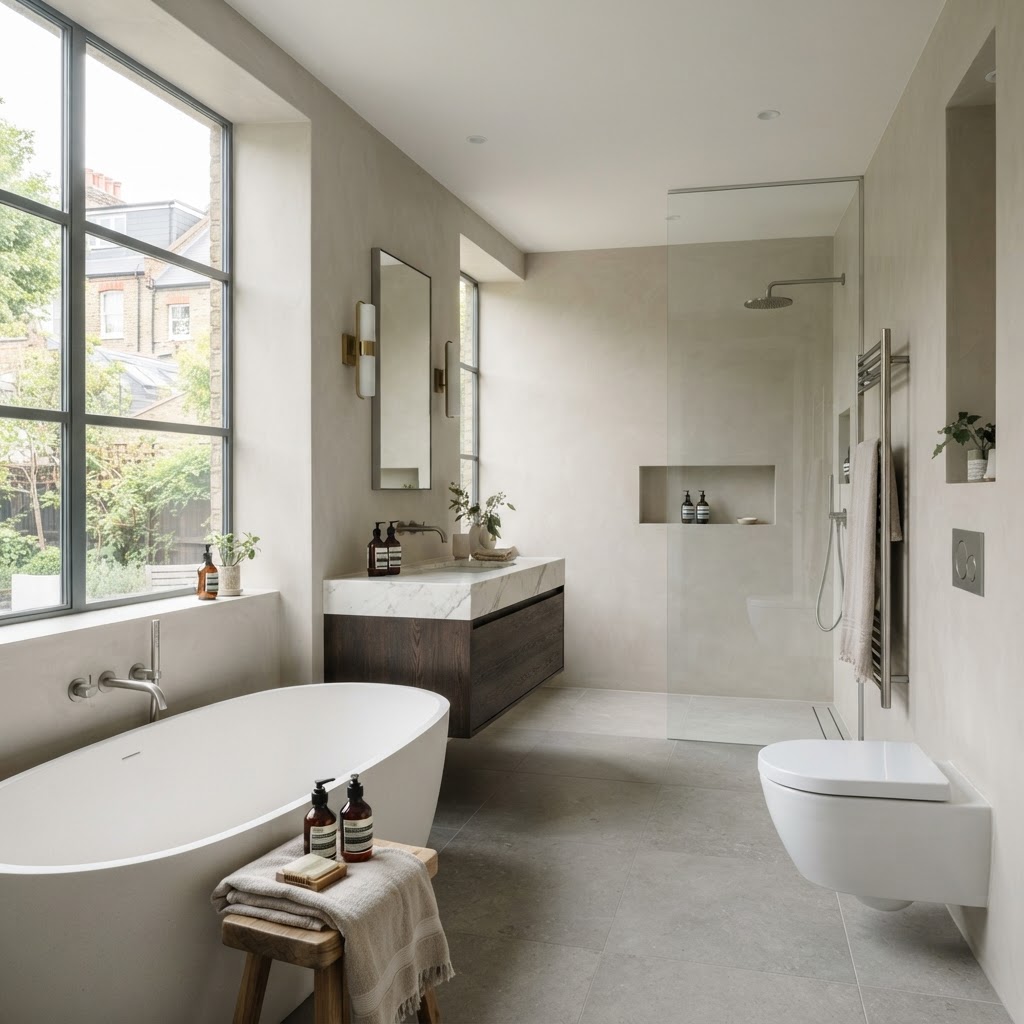
Best Plaster for Bathroom Walls: Expert Guide 2026
Understanding Bathroom Plastering Requirements in London
When renovating a luxury bathroom in prestigious London boroughs like Kensington, Chelsea, or Islington, the choice of wall finish is arguably the most critical technical decision you will make. While the aesthetic choice of tiles or bespoke vanity units grabs the attention, the substrate—the plaster and backing board—is the unseen foundation that dictates the longevity of your renovation. Bathrooms represent high-humidity, high-temperature microclimates. In period properties across NW1 or W1, standard gypsum plaster is essentially a sponge that will quickly succumb to moisture absorption, leading to crumbling, peeling paint, bubbling plaster, and deep-seated black mould growth that can compromise indoor air quality.
As a professional plasterer London service, we frequently enter properties in SW3 or N1 where previous renovations failed within 24 months due to incorrect material selection. For a long-lasting, pristine finish, you require materials engineered to withstand the unique environmental stressors of a steaming, multi-user shower room.
The Anatomy of Moisture Resistance: Choosing Materials
1. Cement-Based Backing Plaster (Hardwall/Sand & Cement)
For the primary foundation of bathroom walls, especially in shower enclosures, we strongly advocate for cement-based renders rather than standard gypsum bonding. In buildings across areas like Westminster or Camden, where Victorian masonry might have existing damp issues, a sand and cement render acts as a robust, non-porous base. If you are starting from bare brick or block, applying a tanking membrane—essentially a waterproof 'rubber' coating—followed by a cement-based render is the industry-recognized gold standard for wet rooms. Unlike gypsum, cement does not break down when saturated, providing a rigid surface that resists the hydrostatic pressure of moisture trying to penetrate your wall cavities.
2. Moisture-Resistant Plasterboard (The 'Green Board')
Standard gypsum plasterboard, while versatile, acts like a wick in a candle when exposed to bathroom steam. You must specify moisture-resistant (MR) boards, commonly identifiable by their distinct green-tinted paper face, for any dry lining London project involving a bathroom. These boards feature a treated gypsum core impregnated with silicone or wax, which significantly reduces water absorption. In high-end projects in Mayfair or Knightsbridge, we often double-board walls where heavy natural stone tiles are used, providing both the moisture resistance required and the necessary load-bearing capacity for heavy vanity installations.
3. Dedicated Bathroom Skim Finishes and Breathability
Once the walls are prepared with MR board or cement render, the final finish requires a skim that balances durability with finish quality. In period properties, there is a technical tension between sealing a room and allowing the structure to 'breathe.' In boroughs like Islington or Hackney, where older stone or brick walls need to manage vapour transfer, using specialized breathable skim finishes is essential. This prevents moisture from getting trapped behind the plaster, which is a common cause of internal wall dampness. A high-quality finish should be smooth, consistent, and primed with an anti-mould fungicide-impregnated sealant before any decorative painting is applied.
Plastering Prices London: Detailed Cost Breakdown 2026
Budgeting for a high-specification bathroom renovation in London requires transparency regarding regional labour rates and material inflation. As of 2026, costs fluctuate based on the specific borough; tradespeople in high-demand areas like Chelsea or Kensington often carry higher overheads, impacting final quotes. Below are the estimated costs for plastering prices London:
- Moisture-resistant board installation (Labour & Materials): £450 - £700 per medium-sized bathroom.
- Sand and cement rendering (Substrate preparation): £55 - £80 per square metre, depending on the need for bonding agents.
- Professional wall skimming London (Bathroom Grade): £300 - £500 per wall face, ensuring a level, high-finish surface for tiling.
- Tanking Membrane Installation: £25 - £40 per square metre (critical for shower zones).
For a full, premium-standard bathroom refurbishment, most clients in London spend between £1,200 and £2,200 on professional preparation, waterproofing, and finishing works. If you are concurrently dealing with ceiling plaster repair London due to historical leaks from an upstairs neighbor, these costs are typically bundled into a package, offering some economy of scale in your overall project spend.
Common Mistakes to Avoid
- Skipping the Tanking Stage: Many DIYers mistakenly assume that tile adhesive is waterproof. It is not. Never tile directly onto fresh gypsum plaster in a shower area. Failure to use a professional tanking kit results in water seeping into the plaster, causing tiles to delaminate and walls to rot behind the surface.
- Improper Joint Treatment: Using standard paper tape on MR boards is a mistake. Use moisture-resistant mesh tape that does not deteriorate when damp.
- Ignoring Ventilation Standards: Even with the most expensive MR board and tanking, if your extraction fan does not meet current building regulations (typically 15-30 litres per second for bathrooms), moisture levels will remain too high, leading to surface-level mould that will eventually bloom through your paint.
FAQ: Bathroom Plastering Experts
Can I use standard plaster for bathroom walls?
Absolutely not. Standard gypsum plaster is inherently porous. It will absorb atmospheric moisture, soften, and lose structural integrity. Once compromised, it becomes a breeding ground for black mould spores. Always use cement-based renders or MR plasterboard for any wall surface within a bathroom environment.
How much does it cost to fix damp-damaged plaster?
Plastering cost London for remediation depends on the severity. If the plaster is crumbling, it must be removed to the brickwork, the area treated with fungicide, and then re-rendered and skimmed. For a localized wall section, expect to pay between £350 and £700 for the full remediation cycle, including waste disposal.
Is artex covering London recommended for bathrooms?
We strongly advise against skimming over existing Artex in bathrooms. Artex contains textured plaster that is difficult to bond to and creates uneven surfaces. In a bathroom, you need a flat, sealed, moisture-proof surface. The best approach is to remove the Artex or over-board it with thin MR boards to achieve a smooth, reliable finish.
How long should I let the plaster dry before tiling?
While the "drying time" varies based on temperature and ventilation, plastering is a chemical process, not just evaporation. In the humid environment of a London bathroom, we recommend a minimum of 7 to 10 days for a full cure. Tiling too early traps moisture behind the tiles, leading to bond failure and potential long-term dampness.
Can I paint directly onto new plaster in a bathroom?
No. You must apply a "mist coat" (thinned emulsion) followed by a high-grade, moisture-resistant bathroom paint that contains built-in anti-fungal properties. Avoid standard vinyl matt paints, which can trap moisture against the wall.
Does my bathroom renovation require building control approval?
In many cases, yes. If you are modifying the room structure or adding significant new electrical and plumbing services, you may need a building control assessment. We assist clients in navigating these standards to ensure your bathroom is fully compliant and safe.
Final Recommendations
If you are planning a renovation, do not cut corners on your substrate. The most beautiful tiles in the world are worthless if the wall underneath is failing. Investing in premium moisture-resistant products and professional installation today will save you thousands of pounds in future remedial works. For expert assistance with your project, contact our team to discuss your full house replastering or specific bathroom needs. If you notice cracks, soft spots, or a musty smell in your current bathroom, do not wait—reach out for emergency plaster repair London before the damage reaches your joists and structural floorboards. Your home deserves a foundation that lasts.
Related Plastering Guides & Services
Need Professional Plastering?
Get expert plastering services in London. Free quotes within 60 minutes.