
Back to Blog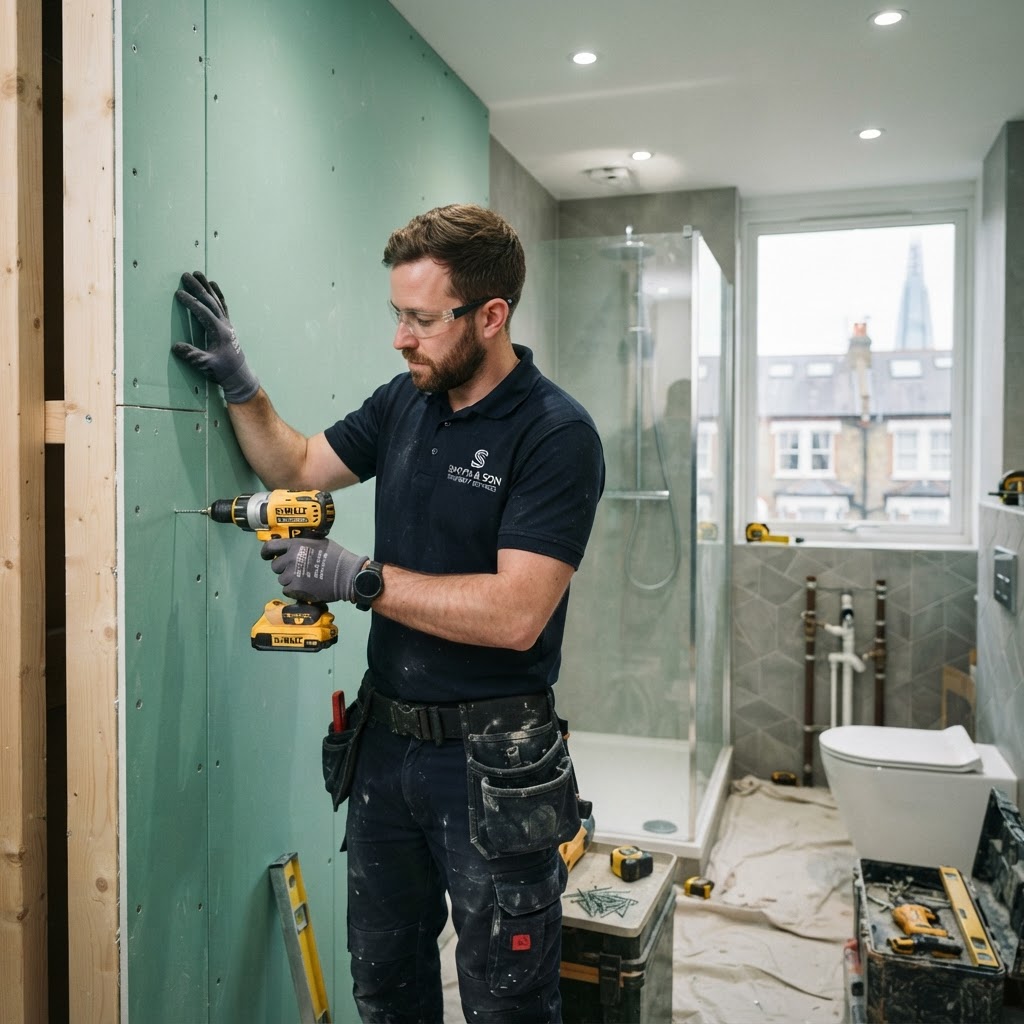
Best Moisture-Resistant Plaster for London Bathrooms
October 19, 2026
5 min read
plasteringbathroom renovationdamp proofingLondon construction
Why Bathroom Plastering Requires Specialist Attention In London Bathrooms are the most challenging environments for any wall finish. In a city like London, where Victorian and Edwardian properties often struggle with structural humidity and cold spots, choosing the wrong material leads to peeling paint, unsightly mould, and costly long-term structural repairs. If you are looking for a professional plasterer in London, it is vital to discuss moisture management and building materials before any work begins. Traditional gypsum plaster is highly absorbent and hygroscopic. In a humid bathroom, this creates a sponge-like effect that wicks steam into the fabric of the walls, leading to soft plaster, crumbling surfaces, and internal decay. At London Plastering Service, we focus on high-performance materials designed to stand up to the unique humidity levels of London homes, whether you are dealing with the damp-prone lower ground floors of a period terrace in Fulham, a mid-terrace conversion in Hackney, or a modern, high-rise flat in Canary Wharf where condensation issues are frequent. ## The Best Materials for Moisture-Resistant Walls ### 1. Cement-Based Backing Plasters For areas exposed to direct water, such as wet rooms or walk-in shower enclosures in postcodes like SW1 or W1, we highly recommend sand and cement renders or modern equivalents like hydrated lime-based plasters. These materials provide a robust, breathable, and alkaline barrier that resists moisture far better than standard calcium sulphate-based plasters. Lime-based mortars are particularly beneficial in older properties as they allow the walls to 'breathe,' preventing trapped moisture from blowing the plaster off the brickwork. ### 2. Moisture-Resistant Plasterboard (MR Board) Often referred to in the industry as 'green board', this is the absolute gold standard for dry lining bathrooms. The paper liner is specially treated with water-repellents, and the gypsum core is impregnated with silicone-based additives during manufacture. In our experience working across Greater London, we find that fitting these boards correctly is essential; they should always be installed with staggered joints and paired with a high-grade tanking membrane for maximum protection in high-splash zones. ### 3. Tanking Membranes If you want to ensure your walls stay bone-dry for decades, Dry Lining London services should always include a comprehensive waterproof tanking system. This involves applying a liquid latex or flexible polymer membrane to the boards before tiling, creating a completely sealed environment. For bathroom renovations in basement conversions—common in areas like Notting Hill or Chelsea—tanking is non-negotiable to prevent groundwater ingress alongside internal steam. ## Expert Insights into Plastering Costs 2026 When planning your bathroom renovation, understanding the fluctuating London market is crucial. Based on the 2026 London construction sector averages, here is what you can expect to pay for specialist bathroom preparation: * Moisture-Resistant Boarding: £450 - £750 per room depending on size and wall complexity. * Specialist Tanking Application: £300 - £600 depending on area square footage (e.g., a standard 3sqm shower enclosure). * Professional Skimming: If you need a smooth, glass-like finish for painting or wallpapering, our Wall Skimming London rates start from £250 per wall, with discounts available for whole-room packages. * Waste Removal: Given the cost of skip hire in London (often £200-£350 for a small builder's skip), ensure your contractor includes disposal in their quote. For a complete breakdown, consult our Plastering Prices London guide. If you are dealing with legacy moisture damage from historic leaks, we also provide Emergency Plaster Repair London to get your bathroom back to a usable state. ## Technical Differences: Gypsum vs. Cementitious Systems The technical disparity lies in solubility. Standard gypsum plaster is water-soluble; once it becomes saturated, the crystal bond fails, resulting in a 'mushy' wall. In London homes—particularly those with poor insulation (common in North London Victorian stock)—the 'dew point' is often reached on the bathroom surface. When warm, humid air hits a cold wall, condensation forms. If the plaster is standard gypsum, it absorbs this condensation. By switching to cementitious boards or lime renders, you ensure that even if surface condensation occurs, the substrate remains physically sound, preventing the need for frequent replastering. ## Common Mistakes to Avoid Many DIY enthusiasts make the fatal mistake of using standard multi-finish over ordinary plasterboard in bathrooms. This is a recipe for disaster. Even with good ventilation, the latent humidity in a cramped London apartment or en-suite can cause this combination to fail within 24 months. Furthermore, failing to prime the boards with a high-quality SBR (Styrene Butadiene Rubber) bond is a common oversight that leads to tiles popping off walls. If you are also addressing ceiling issues, ensure you check our Ceiling Plaster Repair London options, as bathroom ceilings are prone to blistering due to rising steam. For those looking for a full home makeover, check our Full House Replaster London options for a unified, damp-proof strategy. ## Frequently Asked Questions (FAQs) ### Can I use standard plaster in a bathroom? No. Standard gypsum plaster is hygroscopic, meaning it absorbs moisture from the air. This leads to mould growth, plaster softening, and eventually the paint bubbling and the plaster flaking off. We always recommend moisture-resistant board or cement-based renders for any room with a shower or bath. ### How much does it cost to re-plaster a standard bathroom? For a standard 3x3m bathroom in London, you should budget between £900 and £1,400 for high-quality, moisture-proof preparation and skim finishing. Complex layouts with many alcoves or boxings will sit at the higher end of this range. ### Does painting with anti-mould paint solve the problem? No. Anti-mould paint is a surface-level chemical treatment. It cannot prevent the substrate beneath it from becoming damp. You must ensure the wall is constructed from moisture-resistant materials first; the paint is merely the final, aesthetic layer. ### What if I have Artex on my bathroom walls? Artex can often be hidden beneath moisture-resistant boarding rather than being scraped off, which is safer if the Artex contains asbestos (common in pre-1990s London homes). See our Artex Covering London service for details. ### How long does the moisture-proofing process take? A full bathroom wall preparation, including boarding and tanking, typically takes 2-4 days, depending on the drying time required for the tanking membrane and the size of the room. ### Can moisture-resistant plastering prevent mould permanently? While the plastering system won't produce mould, you still need adequate mechanical ventilation (an extraction fan). If you stop the wall from absorbing moisture, the moisture will sit on the surface, so a combined approach of moisture-resistant materials and ventilation is the key to a healthy bathroom. ## Protect Your Home Today Don't let moisture compromise your property's long-term value. Whether you need a full bathroom refurbishment, structural damp-proofing, or minor repairs, our expert team is ready to help. Visit Plastering Cost London to request a custom quote or call us directly to book a site visit anywhere in the Greater London area.
Related Plastering Guides & Services
Need Professional Plastering?
Get expert plastering services in London. Free quotes within 60 minutes.